
Black eyed peas porridge
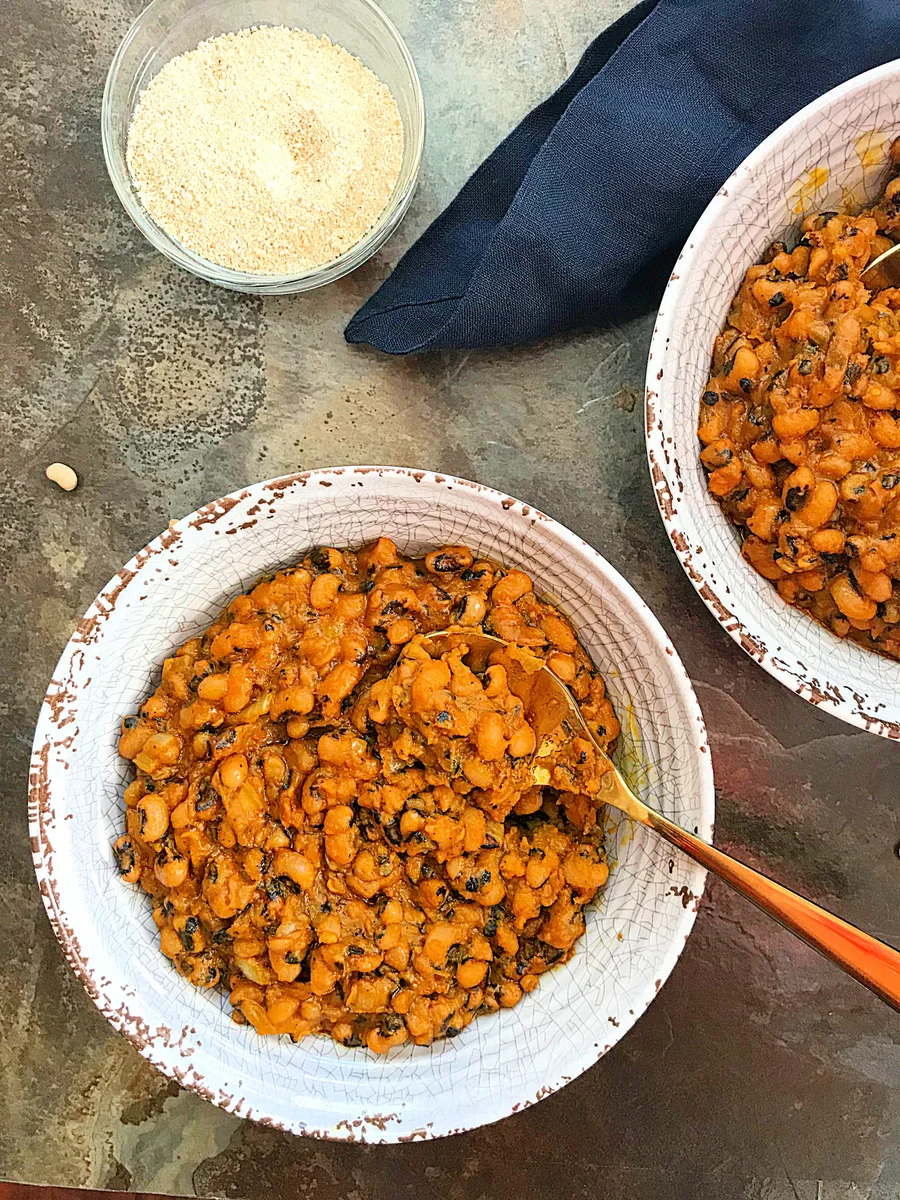
A hearty black-eyed pea porridge simmered until tender, then finished with a punchy palm oil, onion and habanero sauce. Soaking the peas ahead helps them cook more evenly, while the sweetener rounds out the savoury, spicy flavours.
Ingredients
- 450 g (2¼ cups)black-eyed peas, cleaned and soaked overnight
- 2 mediumonions, chopped and divided in half
- 240 ml (1 cup)palm oil
- 1habanero pepper
- 2 clovesgarlic, crushed
- to tastesalt
- 2 packets or 1 tbspsecret ingredient: Truvia sweetener or granulated sugar
Instructions
- 1
Start the beans
Rinse the soaked peas, put them in a pot and add about 1.2 litres (5 cups) of water. Bring to the boil and start cooking.
- 2
Season the peas
Once the peas are boiling and the water has reduced, add half the chopped onions, the crushed garlic and salt to taste. You may also use bouillon powder to taste. Add the secret ingredient: either 2 packets of Truvia sweetener or 1 tbsp of granulated sugar.
- 3
Cook until tender
Reduce the heat to medium-low and continue cooking. Add a little water at a time as needed, keeping a close eye on the pot, until the peas are cooked through and soft to the touch but not mushy.
- 4
Make the sauce
While the peas cook, heat the palm oil. Sauté the remaining chopped onion and the chopped habanero in the oil.
- 5
Keep some liquid
When the peas are cooked, leave a little liquid at the bottom of the pot rather than letting it dry out completely.
- 6
Combine and simmer
Pour in the prepared sauce and mix thoroughly. Simmer on low for about 2 minutes, stir, then turn off the heat.
- 7
Serve the porridge
Serve with plantain, yam, soaked garri or pap, or enjoy it on its own.
What is black-eyed pea porridge?
This is a West African-style bean dish in which black-eyed peas are cooked until tender and coated in a savoury, chilli-spiked palm oil sauce. It is a filling home-cooked meal, often served with a starchy side such as yam or plantain.
Here, the peas simmer with onion and garlic before a separate sauce is stirred through at the end. That finishing step keeps the palm oil, onion and habanero flavours vivid.
Nutrition and macros by portion
The nutrition label shows one serving as written: 563 calories, 0g protein, 0g carbs, 0g fat.
| Portion | Adjustment | kcal | Protein | Carbs | Fat |
|---|---|---|---|---|---|
| Lighter | Use less palm oil | 394 kcal | 0g | 0g | 0g |
| This serving | As written | 563 kcal | 0g | 0g | 0g |
| Hungry | Add more peas | 845 kcal | 0g | 0g | 0g |
The black-eyed peas provide most of the carbohydrate and plant protein, while the palm oil contributes most of the fat and energy. Serve a moderate portion with vegetables alongside, or pair it with a smaller amount of yam or plantain to balance the plate.
Soaking and choosing the peas
Soaked peas: clean them and leave them covered in water overnight, then rinse well before cooking. This gives them a head start and helps them cook more evenly.
Water: begin with about 1.2 litres, then add more in small amounts as the pot simmers. The goal is tender peas with a little liquid left to help the sauce coat them.
Build flavour in stages
First seasoning: half the onion and the crushed garlic go into the pot once the initial water has reduced. The sweetener is added here too, balancing the savoury seasoning without making the dish taste like a dessert.
Finishing sauce: sauté the rest of the onion and chopped habanero in heated palm oil. Stirring this into the cooked peas at the end gives the dish its rich colour and a concentrated layer of heat.
How to judge doneness
Tender peas: test one by pressing it gently; it should feel soft but still hold its shape. Keep the heat at medium-low and add water gradually if the pot is getting dry before the peas are ready.
Saucy finish: leave a small amount of liquid in the pot before adding the oil mixture. Simmer for about 2 minutes after combining, just long enough for the flavours to come together.
Control the heat
Habanero: chopping it into the palm oil sauce spreads its heat through the dish. For a milder result, use less chilli or remove its seeds and inner membrane before chopping.
Oil temperature: heat the palm oil before adding the onion and pepper, but avoid letting it smoke. Stir the sauce so the onion softens and picks up the chilli flavour without scorching.
What to serve with it
Starchy sides: serve the porridge with boiled or fried plantain, yam, soaked garri or pap, as suggested in the recipe. Each makes the beans part of a more substantial plate.
On its own: the peas are also filling enough to serve without a side. If adding one, choose a portion that suits how substantial you want the meal to be.
Recipe notes & tips
- Rinse the soaked peas well before adding them to the pot.
- Keep extra hot water nearby so you can top up the pot a little at a time.
- Check the peas regularly as they approach tenderness to prevent them becoming mushy.
- Chop the habanero carefully and avoid touching your eyes afterwards.
- Leave a little cooking liquid in the pot so the sauce can coat the peas.
Variations
- Milder chilli: Use less habanero or remove its seeds and inner membrane before chopping.
- Sweetener choice: Use the listed Truvia or granulated sugar, according to preference.
- Bouillon seasoning: Add bouillon powder to taste along with the salt, as described in the method.
- More sauce: Increase the onion and pepper sauce proportionally if you prefer a more heavily coated porridge.
- Side dish: Serve with yam, plantain, soaked garri or pap for a different meal combination.
Common mistakes to avoid
- Adding too much water at once: Top up gradually so the peas do not end up swimming in excess liquid.
- Cooking on high heat: Keep the pot at medium-low after seasoning to help the peas soften without scorching.
- Overcooking the peas: Start testing for tenderness as they soften and stop when they hold their shape.
- Letting the pot dry out: Leave a little liquid at the bottom before adding the sauce.
- Scorching the sauce: Heat the palm oil without letting it smoke, and stir the onion and pepper as they sauté.
How to store
Cool leftovers promptly and refrigerate in a covered container for up to 3 days. Reheat gently in a saucepan, adding a splash of water if the porridge has thickened; stir until piping hot throughout.
Frequently asked questions
Do I need to soak the black-eyed peas overnight?
The recipe calls for an overnight soak, which helps the peas cook more evenly. Rinse them before cooking.
How much water should I use?
Start with about 1.2 litres (5 cups), then add small amounts as needed while the peas cook. Leave a little liquid in the pot for the sauce.
How can I tell when the peas are cooked?
They should be soft when pressed but not falling apart. Check a few peas, as they may not all soften at exactly the same time.
Can I make the porridge less spicy?
Yes. Use less habanero, or remove its seeds and inner membrane before chopping. Handle the pepper carefully.
What can I serve with black-eyed pea porridge?
The recipe suggests plantain, yam, soaked garri or pap. You can also serve the porridge on its own.
Can I use sugar instead of Truvia?
Yes. The method gives the choice of 2 packets of Truvia sweetener or 1 tbsp of granulated sugar.
Cook it from the original
This recipe comes from mydiasporakitchen.com. Their page has the author’s own photos, notes and tips — the best place to cook it from.
Open the recipe on mydiasporakitchen.com