
Purple Cabbage Parathas
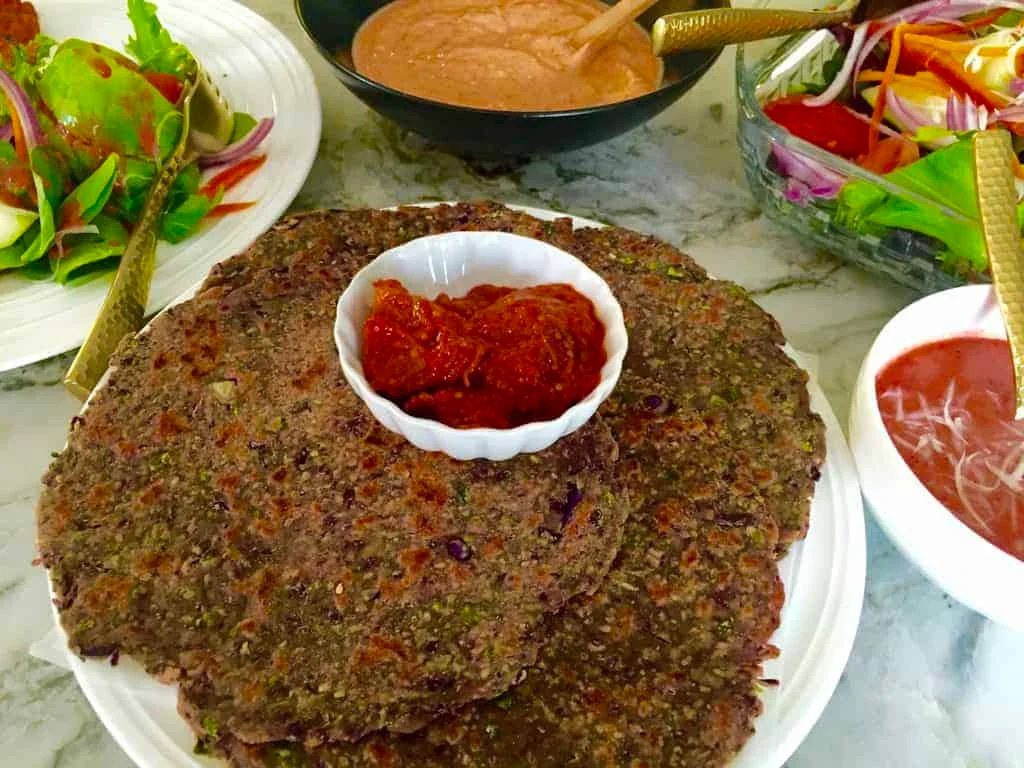
These Indian whole wheat parathas fold purple cabbage, kale, jalapeño and warming spices into a soft dough. They make a flavourful meal or side, cooked on a griddle and finished with ghee.
Ingredients
- 180 g (2 cups)purple cabbage, minced
- 20 g (½ cup)kale, minced
- 1jalapeño, minced
- 1.3 cm (½ inch)ginger, grated
- ⅛ teaspoonground turmeric
- 1 teaspoonbrown sesame seeds
- 1 teaspooncarom seeds
- 240 g (2 cups)whole wheat flour
- 60 g (½ cup)whole wheat flour, for rolling
- to tastesalt
- 1 tablespoonoil
- 2 tablespoonsghee
Instructions
- 1
Mix the dough
Combine the minced cabbage, kale, and jalapeño with the ginger, 240 g whole wheat flour, carom seeds, sesame seeds, turmeric, and salt. Mix well, then add a little water to form a soft, pliable dough. Add the oil and knead thoroughly. Leave the dough to rest for 10 minutes.
- 2
Roll the parathas
Divide the dough into balls. Dust each with some of the reserved dry flour and roll into a thin paratha 20–25 cm (8–10 inches) across.
- 3
Cook on the griddle
Heat a griddle or pan over medium-high heat. Cook each paratha evenly on both sides. When it is almost cooked on both sides, add some ghee to each side.
- 4
Serve hot
Serve the parathas hot with pickle and yoghurt.
What are purple cabbage parathas?
Parathas are Indian flatbreads, often cooked on a griddle and served alongside a meal or filled with savoury ingredients. This version mixes finely chopped purple cabbage and kale into whole wheat dough, with chilli, ginger and spices for flavour.
The vegetables add colour and moisture, while sesame and carom seeds bring a distinctive savoury note. Cooking the rolled dough on both sides and finishing it with ghee gives the breads a tender, lightly rich finish.
Nutrition and macros by portion
The nutrition label shows one serving as written: 380 calories, 11g protein, 59g carbs, 13g fat.
| Portion | Adjustment | kcal | Protein | Carbs | Fat |
|---|---|---|---|---|---|
| Lighter | Use less ghee | 266 kcal | 8g | 41g | 9g |
| This serving | As written | 380 kcal | 11g | 59g | 13g |
| Hungry | Serve an extra paratha | 570 kcal | 17g | 89g | 20g |
The whole wheat flour supplies most of the carbohydrates, while the flour and vegetables contribute some of the protein. Ghee and oil provide most of the fat. Pair a paratha with yoghurt and extra vegetables for a more balanced plate.
Choosing and preparing the vegetables
Fine chopping: Mince the cabbage, kale and jalapeño finely so they distribute through the dough and are easier to roll. Grate the ginger so its flavour is spread evenly.
Moisture: The vegetables release some moisture as they are mixed with the flour. Add water gradually, stopping when the dough is soft and pliable rather than sticky.
Building flavour with spices
Carom and sesame: Carom seeds have a warm, savoury flavour, while sesame adds a gentle nuttiness. Mixing both into the dough seasons each bite.
Chilli and ginger: Jalapeño gives the parathas heat, and ginger adds a fresh, warming edge. Adjust the chilli's intensity by removing its seeds before mincing.
Getting the dough texture right
Kneading: Knead after adding the oil until the dough comes together smoothly. Rest it for 10 minutes so it is easier to handle and roll.
Rolling: Use the reserved flour to dust the work surface and dough lightly. Roll each ball into a thin round about 20–25 cm across, keeping the thickness as even as you can.
Cooking evenly
Heat: Bring the griddle or pan to medium-high before cooking. If it is too cool, the bread can dry out before it colours; if it is excessively hot, the outside may brown too quickly.
Doneness: Cook both sides evenly, then add ghee when the paratha is almost cooked through. The recipe gives no fixed cooking time, so use the bread's appearance and an even cook on both sides as your guide.
How to serve them
Traditional accompaniments: Serve the parathas hot with pickle and yoghurt, as suggested in the recipe. Their tangy and cool flavours complement the spiced flatbread.
At the table: They can be served as a side with a meal or enjoyed on their own with the accompaniments. Keep cooked parathas covered while finishing the batch so they stay warm.
Recipe notes & tips
- Chop the vegetables finely to make rolling easier.
- Add water in small amounts so the dough does not become sticky.
- Rest the dough for the full 10 minutes before shaping.
- Dust with the reserved flour as needed, but brush away excess before cooking.
- Cook on a properly heated griddle for even results.
- Add the ghee near the end of cooking, as directed.
Variations
- Milder chilli: Remove the jalapeño seeds before mincing for less heat.
- More kale: Replace some of the cabbage with extra minced kale while keeping the vegetable mixture finely chopped.
- Seed change: Use another type of sesame seed if brown sesame seeds are unavailable.
- Tangy side: Serve with extra yoghurt alongside the pickle.
- No ghee finish: Leave off the ghee for a less rich finish.
Common mistakes to avoid
- Large vegetable pieces: They can make the dough harder to roll; mince the vegetables finely.
- Too much water: A sticky dough is difficult to handle; add water gradually.
- Skipping the rest: The dough may be harder to roll; leave it for 10 minutes.
- Too much rolling flour: Excess flour can dry the surface; dust lightly and shake off what remains.
- Uneven thickness: Thin spots may cook faster; aim for an even round.
- Ghee added too early: It can make the cooking less even; wait until the paratha is almost cooked on both sides.
How to store
Cool leftover parathas, then store them in an airtight container in the fridge for up to 3 days. Reheat in a dry pan over medium heat until hot, adding a little ghee if desired.
Frequently asked questions
Can I make the dough ahead?
The recipe calls for a 10-minute rest. You can prepare the dough ahead and keep it covered in the fridge, then bring it back towards room temperature before rolling.
How can I tell when a paratha is cooked?
Cook until both sides are evenly done, then add ghee when the bread is almost cooked through. The method does not specify a precise cooking time.
Can I make these less spicy?
Yes. Remove the jalapeño seeds before mincing, or use less jalapeño.
What can I serve with purple cabbage parathas?
The recipe suggests pickle and yoghurt. They also work as a side alongside a meal.
Can I freeze the cooked parathas?
Yes. Cool them first, separate with baking paper and freeze in a sealed container. Reheat from thawed in a pan until hot.
Cook it from the original
This recipe comes from ministryofcurry.com. Their page has the author’s own photos, notes and tips — the best place to cook it from.
Open the recipe on ministryofcurry.com