
Perfect Roast Potatoes
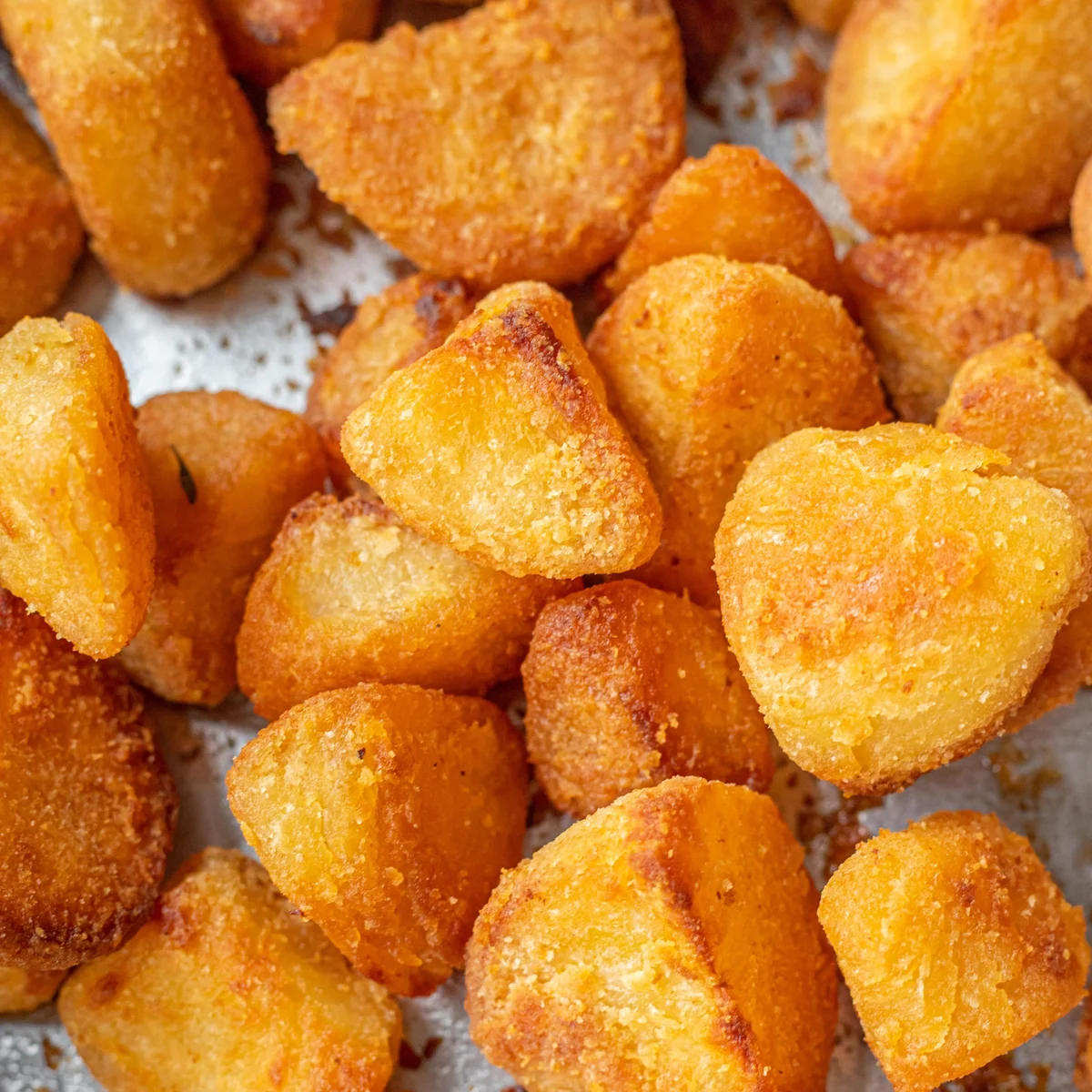
These British roast potatoes have crisp, golden edges and fluffy centres, thanks to flour-roughened potatoes roasted in hot goose fat. They make a classic side for a Sunday roast or a festive meal.
Ingredients
- 1500 gMaris Piper potatoes
- 3 tbspplain flour
- 150 ggoose fat
- to tasteflaky sea salt, to serve
Instructions
- 1
Preheat the oven
Heat the oven to 200°C.
- 2
Boil the potatoes
Peel and quarter the potatoes, put them in a pan and cover with cold water. Season with salt and bring to the boil, then lower the heat and simmer for 2 minutes.
- 3
Roughen the edges
Drain the potatoes and shake them firmly in the colander to rough up their surfaces. Sprinkle over 3 tbsp of flour.
- 4
Heat the goose fat
Put the goose fat in a large roasting tin and heat it in the oven for 5 minutes.
- 5
Coat the potatoes
Take the tin out of the oven, add the potatoes to the hot fat and season well with Maldon salt. Roll the potatoes around in the tin to coat them.
- 6
Roast until golden
Return the tin to the oven and roast for about 40 minutes, until the potatoes are golden brown all over. Turn them over halfway through cooking.
- 7
Season and serve
Remove the potatoes from the oven and season with Maldon salt.
What are roast potatoes?
Roast potatoes are a British staple, often served with a Sunday roast and popular at Christmas. The aim is a crunchy outside with a soft, floury centre.
This version uses Maris Piper potatoes, a brief simmer and goose fat. Shaking the potatoes roughens their surfaces, helping them form crisp edges as they roast.
Nutrition and macros by portion
The nutrition label shows one serving as written: 648 calories, 8g protein, 69g carbs, 38g fat.
| Portion | Adjustment | kcal | Protein | Carbs | Fat |
|---|---|---|---|---|---|
| Lighter | Use less goose fat | 454 kcal | 6g | 48g | 27g |
| This serving | As written | 648 kcal | 8g | 69g | 38g |
| Hungry | Serve a larger portion | 972 kcal | 12g | 104g | 57g |
The potatoes and flour provide most of the carbohydrates, while goose fat contributes most of the fat and calories; the dish has comparatively little protein. Pair a portion with a protein-rich main and plenty of vegetables for a more balanced plate.
Choosing the potatoes
Maris Piper: this floury variety breaks down slightly at the edges when boiled and shaken, creating more surface area to crisp in the fat.
Even pieces: quarter the potatoes to roughly similar sizes so they cook at a similar rate. Very large pieces may need longer in the oven.
Why the brief simmer matters
Salted water: starting in cold water lets the potato pieces heat through gradually. Bring the pan to the boil, then simmer for just 2 minutes as directed.
Rough edges: drain thoroughly, then shake the potatoes firmly in the colander. The loosened, starchy surfaces take on the flour and become crisp as they roast.
Getting the fat hot
Hot tin: heating the goose fat for 5 minutes before adding the potatoes helps them start sizzling as soon as they hit the tin.
Careful coating: add the potatoes to the hot fat cautiously, then roll them around so their surfaces are coated. Keep them in a single layer where possible.
Roasting to the right texture
Colour: roast at 200°C for about 40 minutes, turning the potatoes halfway through. Look for an even golden-brown finish rather than relying only on the clock.
Centre: a browned exterior is the main cue; the inside should be soft when pierced with a knife. If the pieces are not tender yet, give them a little more time.
Serving them well
Seasoning: flaky sea salt added at the end gives the crisp surfaces a fresh, savoury finish. Taste before adding more, especially if the potatoes were salted in the boiling water.
Pairings: serve with roast meat, gravy and vegetables for a traditional plate. They also work alongside a nut roast or another savoury main.
Recipe notes & tips
- Cut the potatoes into similarly sized quarters so they cook evenly.
- Drain the potatoes well before shaking them, so excess water does not dilute the hot fat.
- Shake firmly enough to roughen the surfaces without breaking the pieces apart.
- Take care when adding potatoes to the hot goose fat, as it can splutter.
- Turn the potatoes halfway through roasting to brown them on more than one side.
- Add the final flaky salt just before serving to keep its texture distinct.
Variations
- Use duck fat: swap it for the goose fat while keeping the same method.
- Try vegetable oil: use a suitable roasting oil instead of goose fat for a different flavour.
- Add rosemary: scatter a few sprigs into the tin during roasting for an aromatic note.
- Add garlic: include lightly crushed cloves partway through roasting so they do not burn.
- Season with pepper: add freshly ground black pepper alongside the salt before roasting.
Common mistakes to avoid
- Uneven pieces: potatoes of very different sizes finish at different times; cut them into similar quarters.
- Skipping the roughening: smooth surfaces crisp less effectively; shake the drained potatoes firmly in the colander.
- Adding potatoes to cool fat: they may not start crisping promptly; heat the goose fat in the oven first.
- Crowding the tin: piled-up potatoes can brown unevenly; arrange them in a single layer where possible.
- Forgetting to turn: one side may colour more than the other; flip the potatoes halfway through cooking.
- Salting too heavily: salt is used both in the water and at the end; season in stages and taste before serving.
How to store
Cool leftovers, then refrigerate them in an airtight container for up to 3 days. Reheat in a hot oven until warmed through and crisp again; microwaving softens the outside.
Frequently asked questions
Can I use a different potato variety?
Yes. Choose a floury potato if possible, as it tends to give a fluffy centre and rough, crispable edges.
Can I prepare the potatoes ahead?
You can peel and cut them ahead and keep them covered in cold water in the fridge. Drain them before boiling, and continue with the recipe when ready to cook.
How do I know when the potatoes are done?
They should be golden brown all over, with a soft centre when pierced with a knife. The recipe allows about 40 minutes of roasting, with a turn halfway through.
Can I make these without goose fat?
Yes, you can use another roasting fat or oil, though the flavour will differ. Heat the replacement in the tin before adding the potatoes.
Why add flour to the potatoes?
The flour coats the roughened surfaces and helps form a crisp exterior during roasting. Sprinkle it over after draining and shaking the potatoes.
Can I reheat leftover roast potatoes?
Yes. Spread them out in a hot oven until heated through and crisp. They may be softer if reheated in a microwave.
Cook it from the original
This recipe comes from mob.co.uk. Their page has the author’s own photos, notes and tips — the best place to cook it from.
Open the recipe on mob.co.uk