
Puran Poli
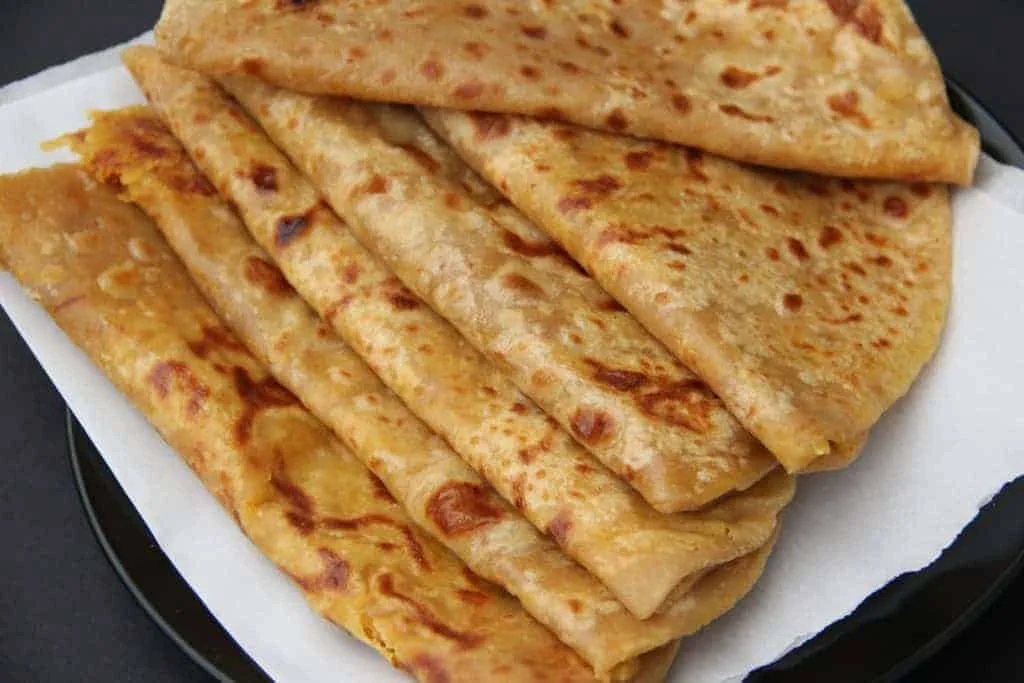
Puran poli is a soft, thin flatbread filled with a sweet, spiced chana dal mixture and cooked on a hot griddle. It is a special Indian treat that rewards a little patience, with golden edges and a fragrant filling.
Ingredients
- 240 g (2 cups)wholemeal flour, for the dough
- 60 g (½ cup)wholemeal flour, for rolling
- 2.5 g (½ teaspoon)kosher salt
- 15 ml (1 tablespoon)oil
- 240 ml (1 cup), plus more as neededwater
- 30 g (2 tablespoons)ghee
- 200 g (1 cup)chana dal
- 1.2 litres (5 cups)water
- 100 g (½ cup)jaggery
- 100 g (½ cup)sugar
- 0.5 g (¼ teaspoon)ground nutmeg
- 0.5 g (¼ teaspoon)ground cardamom
- 0.25 g (¼ teaspoon), optionalsaffron
- 0.5 g (¼ teaspoon), optionalground dried ginger
Instructions
- 1
Wash the dal
Rinse the chana dal two or three times, then drain it. Put it in a heavy-based pot with 1.2 litres (5 cups) of water.
- 2
Cook the dal
Cook over medium-low heat for 1–2 hours, stirring a few times. Skim off any white foam that rises to the surface.
- 3
Make the filling
Drain the dal through a strainer, reserving the cooking water for Katachi Aamti if desired. Return the dal to the pot and add the jaggery, sugar, nutmeg, cardamom, saffron and dried ginger. Mix, then cook over medium heat for 10–15 minutes, stirring frequently. To check the consistency, move the filling to the centre of the pan and stand a wooden spatula in it; it should stay upright on its own.
- 4
Blend the filling
Let the cooked mixture cool for 5 minutes, then blend it until smooth in a food processor or blender. Blend while it is still warm, working in batches if needed.
- 5
Knead the dough
Knead the wholemeal flour, salt, saffron, water and oil into a soft, pliable dough. It should be softer than typical roti or paratha dough; add more water as needed, since flour absorbs it differently. Cover and rest the dough for 30 minutes.
- 6
Shape portions
Divide the dough and filling into small balls of equal size, about the size of a lemon. The mixture usually makes 8–10 balls of each.
- 7
Fill and roll
Heat a heavy griddle or pan over medium-high heat. Using the reserved dry flour, roll a dough ball into a 10–13 cm (4–5 inch) circle. Put a ball of filling in the centre, fold the dough edges over it and seal. Coat the stuffed ball on all sides with dry flour and gently flatten it in your hands. Roll it out gently with more flour as needed, to your preferred thickness; the recipe's usual size is 20–25 cm (8–10 inches) across.
- 8
Cook the poli
Place the rolled poli gently on the heated pan. Cook both sides evenly until golden brown, adding a little ghee to each side as it cooks. Serve with extra ghee on top.
What is puran poli?
Puran poli is a traditional Indian flatbread made by wrapping a sweet filling in a wheat-based dough, then rolling and griddle-cooking it. Its name refers to the stuffed flatbread and its rich lentil filling, known as puran.
This version pairs chana dal with jaggery, sugar and warm spices. The soft dough and smooth filling make it easier to roll and give the finished poli a tender centre beneath its golden surface.
Nutrition and macros by portion
The nutrition label shows one serving as written: 414 calories, 12g protein, 74g carbs, 8g fat.
| Portion | Adjustment | kcal | Protein | Carbs | Fat |
|---|---|---|---|---|---|
| Lighter | Less ghee on top | 290 kcal | 8g | 52g | 6g |
| This serving | As written | 414 kcal | 12g | 74g | 8g |
| Hungry | Larger portion | 621 kcal | 18g | 111g | 12g |
The flour, chana dal and added sugars supply most of the carbohydrates, while the dal also contributes protein. Ghee and oil provide most of the fat. Pair a poli with a savoury vegetable dish or salad to make the meal more varied.
Cooking the chana dal
Gentle heat: The dal cooks in plenty of water until soft, so keep it at a steady medium-low simmer and stir from time to time. Skim away any foam that gathers on top.
Drain well: Straining the dal before adding the sweeteners helps prevent a watery filling. Save the cooking water for Katachi Aamti if you plan to make it.
Getting the filling right
Sweet balance: Jaggery lends a deep, caramel-like note while sugar adds straightforward sweetness. Nutmeg and cardamom perfume the filling, with saffron and dried ginger available as optional additions.
Firm consistency: Stir the mixture frequently as it cooks so it thickens evenly and does not stick. The wooden-spatula test gives a practical cue: once a spatula can stand upright in the filling, it is ready to cool and blend.
A soft, workable dough
Water gradually: Add the water while kneading rather than pouring it all in at once. The amount absorbed can vary with the flour, and the dough should be softer than dough for roti or paratha.
Rest time: Leave the dough to rest for 30 minutes before shaping. This gives you a more pliable covering to wrap around the filling and roll out.
Filling and rolling without tears
Even portions: Make the dough and filling balls roughly the same size so each poli has a balanced covering and centre. The recipe typically yields 8–10 of each.
Gentle rolling: Seal the dough around the filling, flatten it carefully, then roll with a light touch and enough dry flour to prevent sticking. If a spot becomes very thin, stop rolling rather than pressing harder.
Look for golden-brown colour
Hot griddle: Heat the pan over medium-high before adding the poli. It should cook on both sides and develop an even golden-brown colour.
Ghee as it cooks: Add a small amount to each side while the poli is on the pan, then finish with extra ghee at the table if you like. Serve warm; the recipe traditionally pairs it with warm milk flavoured with cardamom and saffron.
Recipe notes & tips
- Keep the cooking water from the dal if you want to use it for Katachi Aamti.
- Stir the filling often once the jaggery and sugar have been added.
- Blend the filling while it is warm, in batches if your blender is small.
- Add the dough water gradually and stop when the dough is soft and pliable.
- Use the reserved dry flour sparingly but generously enough to keep the dough from sticking.
- Cook the poli until both sides are golden brown before serving.
Variations
- Saffron filling: Add the optional saffron for a more fragrant, coloured filling.
- Ginger warmth: Include the optional dried ginger for a gentle spicy note.
- Spice adjustment: Vary the cardamom and nutmeg slightly to suit your preferred aroma.
- Traditional serving: Serve with warm milk flavoured with cardamom and saffron.
- Ghee finish: Add extra ghee over the cooked poli just before serving.
Common mistakes to avoid
- Watery filling: Drain the dal thoroughly before adding the jaggery and spices.
- Scorching the filling: Stir frequently as it thickens over medium heat.
- Stiff dough: Add water as needed until the dough is softer than roti or paratha dough.
- Uneven portions: Make the dough and filling balls about the same size.
- Torn covering: Seal the dough around the filling and roll gently rather than pressing hard.
- Pale or uneven cooking: Let the pan heat before adding the poli and cook both sides until golden brown.
How to store
Cool any leftover puran poli, then store it in an airtight container in the fridge for up to 3 days. Reheat in a pan over a gentle heat until warmed through, adding a little ghee if desired.
Frequently asked questions
How do I know when the filling is cooked?
Move it to the centre of the pan and insert a wooden spatula. If the spatula stands upright on its own, the filling has reached the consistency described in the recipe.
Can I make the filling ahead?
Yes. Cook and blend the filling, let it cool, then refrigerate it in a covered container. Bring it back to a workable temperature before shaping the polis.
Why is my dough difficult to roll?
It may be too firm or not rested enough. Knead in a little more water if needed, aiming for a soft, pliable dough, and allow it to rest for 30 minutes.
How thin should I roll puran poli?
Roll it gently to your preferred thickness. The recipe's usual size is about 20–25 cm (8–10 inches) across.
What can I serve with puran poli?
It is traditionally served with warm milk flavoured with cardamom and saffron. Extra ghee on top is also suggested.
Can I leave out the optional spices?
Yes. Saffron and dried ginger are marked optional in the ingredient list, so you can omit either or both.
Cook it from the original
This recipe comes from ministryofcurry.com. Their page has the author’s own photos, notes and tips — the best place to cook it from.
Open the recipe on ministryofcurry.com