
Jerk Lentils and Roti
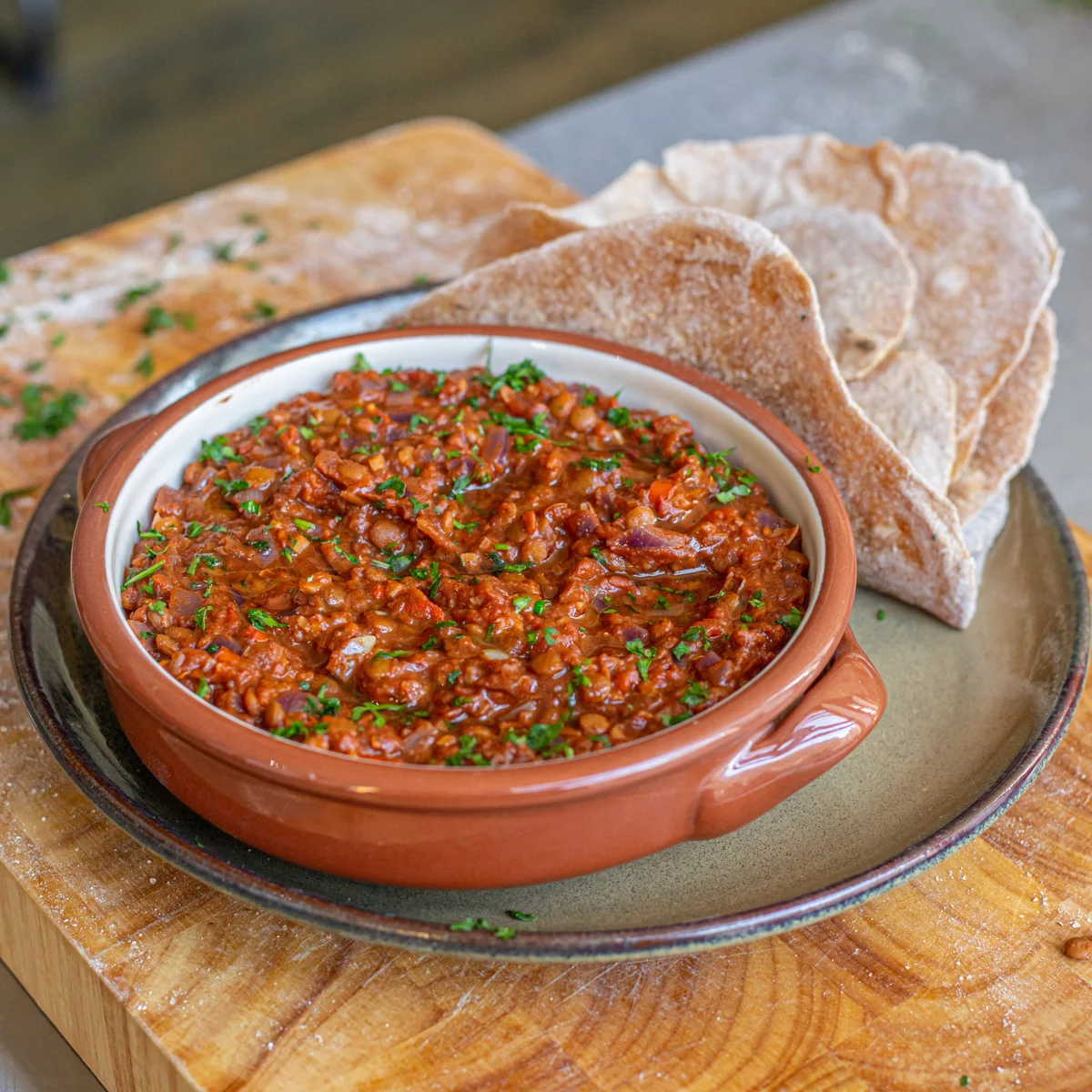
Jerk-spiced lentils simmered in a tomato sauce are served with freshly cooked roti for a hearty Caribbean-inspired meal. The dough rests while the lentils cook, making it easier to bring both parts together in about 40 minutes.
Ingredients
- 4 clovesgarlic
- 0.25 inginger
- 1red onion
- 1Scotch bonnet chilli
- 0.5 tbspallspice
- 1 tspsmoked paprika
- 1 tspground cumin
- 1 tspground coriander
- 1.5 tbspvegetable stock powder
- 2 sprigsthyme
- 400 gchopped tomatoes
- 1 tbspbrown sugar
- 235 gcooked lentils
- 200 gchapati flour
- 130 mlwater
- 1 tbspvegetable oil
- 240 ml (1 cup)water
Instructions
- 1
Chop the vegetables
Finely dice the garlic, ginger, red onion and Scotch bonnet chilli.
- 2
Soften the vegetables
Heat 1 tbsp vegetable oil in a large pan. Fry the diced vegetables until soft and lightly browned.
- 3
Toast the spices
Stir in the dried spices and vegetable stock powder, then fry for a few minutes. Add a splash of water to loosen the browned bits from the pan and simmer for another minute.
- 4
Rinse the lentils
Wash the green lentils and set them aside.
- 5
Simmer the lentils
Add the fresh thyme, chopped tomatoes, 240 ml water, brown sugar and washed lentils to the pan. Simmer over a medium heat for 15 minutes, until the lentils have taken up some liquid and the mixture is saucy.
- 6
Make the dough
Gradually mix the 130 ml water into the flour to form a firm dough. Cover it and leave it to rest for 30 minutes.
- 7
Cook the roti
Divide the dough into 6 equal pieces. On a floured surface, roll each piece thinly, then dry-fry for 1–2 minutes on each side.
- 8
Serve the dish
Serve the lentils with freshly cooked roti.
What are jerk lentils?
Jerk is a Jamaican style of seasoning, associated with aromatic spices and chilli, while lentils are a convenient way to make a filling plant-based stew. This version pairs a tomato-based, jerk-spiced lentil dish with roti for scooping up the sauce.
The recipe is a home-style combination rather than a traditional jerk preparation: its spice blend and Scotch bonnet bring the warmth, and the chapati-flour roti makes a quick flatbread alongside.
Nutrition and macros by portion
The nutrition label shows one serving as written: 310 calories, 13g protein, 57g carbs, 4g fat.
| Portion | Adjustment | kcal | Protein | Carbs | Fat |
|---|---|---|---|---|---|
| Lighter | More salad, less roti | 217 kcal | 9g | 40g | 3g |
| This serving | As written | 310 kcal | 13g | 57g | 4g |
| Hungry | Extra roti and lentils | 465 kcal | 20g | 86g | 6g |
Most of the carbohydrates come from the chapati flour, lentils and tomatoes; the lentils also provide much of the protein. Vegetable oil contributes most of the fat, while the stock powder is likely to contribute much of the sodium. Serve with a fresh salad or extra vegetables to balance the plate.
Build the flavour in the pan
Aromatic base: soften the garlic, ginger, onion and chilli in oil before adding the spices. This gives them a brief chance to release their fragrance before the tomatoes and water go in.
Spice balance: allspice, cumin, coriander and smoked paprika each bring a different note. The Scotch bonnet can be very hot, so handle it carefully and keep the seeds in or out according to your heat preference.
Make the lentils saucy
Tomato simmer: the tomatoes, stock powder and water form the base of the sauce, while brown sugar rounds out its savoury and spicy flavours. Keep the pan at a steady medium simmer rather than a fierce boil.
Lentil check: the instructions refer to green lentils, while the ingredient list specifies cooked lentils. If using cooked lentils, simmer just until heated through and saucy; if using dry lentils, they need to be cooked before this short simmer.
Get the roti dough right
Gradual mixing: add the 130 ml water bit by bit so the flour comes together into a firm dough without becoming sticky. Flour can absorb water differently, so stop once the dough is workable.
Resting time: cover the dough for the stated 30 minutes to let it relax, which makes the pieces easier to roll thinly. Keep the surface lightly floured as you shape them.
Look for these cooking cues
Lentil texture: after the 15-minute simmer, the sauce should cling to the lentils and remain easy to scoop. If it thickens too much, loosen it with a little water.
Roti finish: cook each rolled piece in a dry pan for 1–2 minutes per side. Look for light brown spots and a cooked-through surface, rather than waiting for a crisp, cracker-like texture.
Serve it while warm
Freshly cooked roti is at its most pliable straight from the pan, so cook the flatbreads as the lentils finish or keep them covered briefly as you work through the batch.
The lentils and roti make a complete-feeling meal on their own. A simple crunchy salad or sliced cucumber can add a fresh contrast to the warm, spiced sauce.
Recipe notes & tips
- Wear gloves or wash your hands thoroughly after handling the Scotch bonnet.
- Add the dough water gradually to avoid making it too soft to roll.
- Keep rolled dough pieces lightly covered while you cook the roti in batches.
- Use a splash of water to loosen the pan before the tomato mixture goes in.
- Taste the lentils near the end and adjust the chilli level at the table rather than adding extra chilli early.
Variations
- Milder chilli: use less Scotch bonnet or remove its seeds before dicing.
- Extra greens: stir in a handful of spinach near the end of the lentil simmer.
- Coconut finish: replace some of the simmering water with coconut milk for a creamier sauce.
- Herb change: add a little chopped fresh coriander when serving.
- Flour swap: use another roti-suitable flour, adjusting the water gradually to reach a firm dough.
Common mistakes to avoid
- Burning the spices: fry them briefly and add a splash of water if the pan looks dry.
- Sticky dough: add the water gradually and stop once the dough is firm and workable.
- Thick lentils: loosen the sauce with a little water rather than letting it catch on the pan.
- Overcooking cooked lentils: simmer them only until hot and saucy, as they are already cooked.
- Roti that tears: roll on a lightly floured surface and handle each thin piece gently.
How to store
Refrigerate leftover lentils in a covered container for up to 3 days, and store the roti separately. Reheat the lentils in a pan or microwave until hot, adding a little water if needed; warm the roti briefly in a dry pan.
Frequently asked questions
Can I use tinned lentils?
Yes. Drain and rinse them, then add them for the stated simmer just long enough to heat through and take on the sauce.
Can I make this less spicy?
Use less Scotch bonnet, or leave it out for a milder dish. Avoid touching your face after handling the chilli.
Why does the recipe say to wash the lentils?
The method refers to green lentils, but the ingredient list specifies cooked lentils. Rinse cooked lentils before adding them; dry lentils need cooking first and will require more time and liquid.
Can I prepare the roti dough ahead?
You can make the dough ahead and keep it covered in the fridge. Let it lose some of its chill before rolling so it is easier to shape.
How do I know when the roti is cooked?
After 1–2 minutes on each side, it should have light brown spots and no raw, floury-looking patches. Keep cooked pieces covered so they stay soft.
What can I serve with jerk lentils and roti?
Serve the roti alongside the lentils for dipping and scooping. A crisp salad or fresh sliced vegetables make a good contrast to the warm, spiced sauce.
Cook it from the original
This recipe comes from mob.co.uk. Their page has the author’s own photos, notes and tips — the best place to cook it from.
Open the recipe on mob.co.uk