
Sprouted Lentils Khichdi - Instant Pot
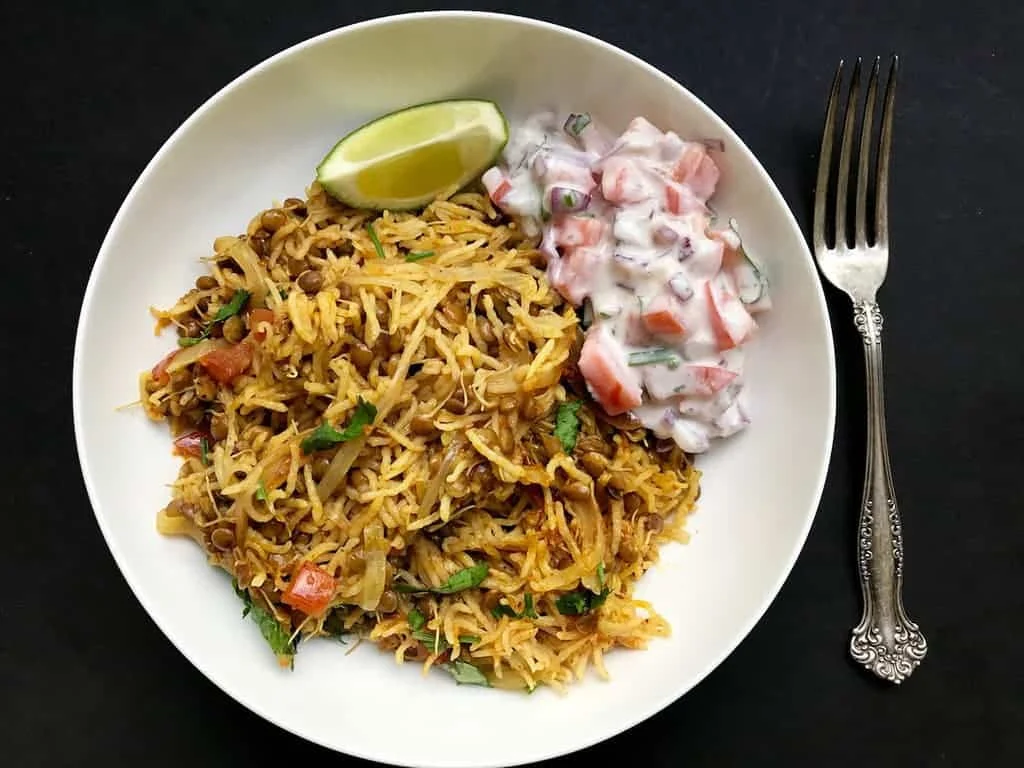
This Instant Pot khichdi combines sprouted brown lentils and basmati rice with ginger, garlic, tomatoes and warming spices. It is a comforting one-pot meal that comes together quickly and is served hot, traditionally with raita.
Ingredients
- 15 ml (1 tablespoon)ghee
- 2.5 ml (1/2 teaspoon)cumin seeds
- 1.25 ml (1/4 teaspoon)turmeric
- 10curry leaves (optional)
- 5 ml (1 teaspoon)grated ginger
- 5 ml (1 teaspoon)minced garlic
- 1 mediumonion, thinly sliced
- 2plum tomatoes, diced
- 5 ml (1 teaspoon)Kashmiri red chilli powder or another mild red chilli powder
- 5 ml (1 teaspoon)kosher salt
- 2.5 ml (1/2 teaspoon)garam masala
- 190 g (1 cup)brown lentils, sprouted if desired
- 185 g (1 cup)basmati rice
- 710 ml (3 cups)water
- To tastechopped coriander, for garnish
Instructions
- 1
Sauté the aromatics
Set the Instant Pot to Sauté (More). When the display reads ‘hot’, add the ghee, cumin seeds and turmeric. Add the curry leaves, ginger, garlic and onion, mix well, then cover with the glass lid and cook for 2 minutes.
- 2
Add the tomatoes
Stir briefly, then add the tomatoes and mix. Stir in the chilli powder, salt and garam masala.
- 3
Add rice and lentils
Add the lentils, rice and 710 ml (3 cups) of water, then give everything a quick stir.
- 4
Pressure cook
Close the Instant Pot with the pressure valve set to Sealing. Choose Manual (High) and cook for 6 minutes, then allow the pressure to release naturally.
- 5
Garnish the khichdi
Open the Instant Pot and garnish the khichdi with chopped coriander.
- 6
Serve while hot
Enjoy hot with raita.
What is khichdi?
Khichdi is an Indian rice-and-lentil dish, often cooked until the grains are tender and the mixture is soft and comforting. This version uses brown lentils, basmati rice and a spiced base of ginger, garlic, onion and tomato.
The Instant Pot makes it a convenient one-pot meal, while sprouted lentils bring a little more texture than lentils that have not been sprouted.
Nutrition and macros by portion
The nutrition label shows one serving as written: 394 calories, 16g protein, 70g carbs, 4g fat.
| Portion | Adjustment | kcal | Protein | Carbs | Fat |
|---|---|---|---|---|---|
| Lighter | Use less ghee | 276 kcal | 11g | 49g | 3g |
| This serving | As written | 394 kcal | 16g | 70g | 4g |
| Hungry | Serve a larger portion | 591 kcal | 24g | 105g | 6g |
The rice provides most of the carbohydrates, while lentils contribute carbohydrates and protein. Ghee supplies most of the fat, and the lentils add further protein; serve a portion with raita or a side of vegetables to round out the plate.
Build the spiced base
Whole spices: the cumin seeds and turmeric go into the hot ghee first, giving them a brief chance to flavour the cooking fat.
Aromatics: curry leaves, ginger, garlic and sliced onion cook together for 2 minutes under the glass lid. The tomatoes and powdered spices follow, creating the savoury base that seasons the rice and lentils.
Choose the lentils and rice
Lentils: the recipe calls for brown lentils and notes that sprouted ones were used. Keep the lentil type and quantity as specified so the cooking method remains consistent.
Rice: basmati gives the dish its characteristic long grains. Rinse it before cooking if you usually rinse your rice, and drain it well so you do not add extra water.
What to expect from pressure cooking
The 6-minute setting is the pressure-cooking time, not the full time from starting the pot to serving. The pot also needs time to come to pressure and then release naturally.
Natural release is part of the method: leave the valve alone after cooking rather than venting the pressure straight away. Open the pot once the pressure has released.
Texture and seasoning
Khichdi is meant to be soft and cohesive, rather than a dry, separate-grain pilaf. Sprouted brown lentils may retain more shape, while the rice helps give the mixture a comforting, unified texture.
The recipe seasons the mixture before pressure cooking. Taste once it is cooked and adjust the seasoning at the table if needed.
How to serve it
Serve the khichdi hot with raita, as suggested in the recipe. The cool, creamy yoghurt accompaniment contrasts nicely with the warm spices.
Add the chopped coriander just before serving for a fresh finish. Keep any extra accompaniments simple so the rice-and-lentil dish remains the focus.
Recipe notes & tips
- Have the ingredients measured and ready before starting the sauté stage.
- Wait for the display to read ‘hot’ before adding the ghee and spices.
- Use the glass lid for the 2-minute covered sauté as directed.
- Set the pressure valve to Sealing before starting the 6-minute pressure cook.
- Allow the pressure to release naturally before opening the pot.
- Garnish with coriander just before serving.
Variations
- Adjust the heat: use a different mild red chilli powder if Kashmiri chilli is unavailable.
- Skip the curry leaves: leave them out if you do not have them, as they are optional.
- Use regular brown lentils: the recipe allows brown lentils without specifying that they must be sprouted.
- Serve with raita: add the suggested yoghurt accompaniment at the table.
Common mistakes to avoid
- Opening too soon: wait for the natural pressure release to finish before opening the pot.
- Wrong valve setting: check that the valve is set to Sealing before pressure cooking.
- Skipping the hot indicator: wait for ‘hot’ before adding the ghee and spices.
- Overcooking the aromatics: keep the covered sauté to the specified 2 minutes.
- Adding extra water: measure the specified 710 ml (3 cups) rather than pouring by eye.
How to store
Refrigerate leftovers in a covered container and use within 3–4 days. Reheat until steaming hot, adding a splash of water if the khichdi has thickened; stir well before serving.
Frequently asked questions
Can I use lentils that have not been sprouted?
The ingredient description allows brown lentils and says the author used sprouted ones. The recipe does not give a separate timing adjustment for unsprouted lentils.
How long does the Instant Pot cook the khichdi?
Set it to Manual (High) for 6 minutes. The full time will be longer because the pot must come to pressure and then release naturally.
Should I vent the pressure after cooking?
No. This method specifies a natural pressure release, so leave the valve in place until the pressure has released.
What can I serve with khichdi?
Serve it hot with raita, as the recipe suggests. Coriander is added as a garnish.
Can I leave out the curry leaves?
Yes. They are listed as optional, so the dish can be made without them.
Cook it from the original
This recipe comes from ministryofcurry.com. Their page has the author’s own photos, notes and tips — the best place to cook it from.
Open the recipe on ministryofcurry.com