
Instant Pot Carrot Halwa Recipe
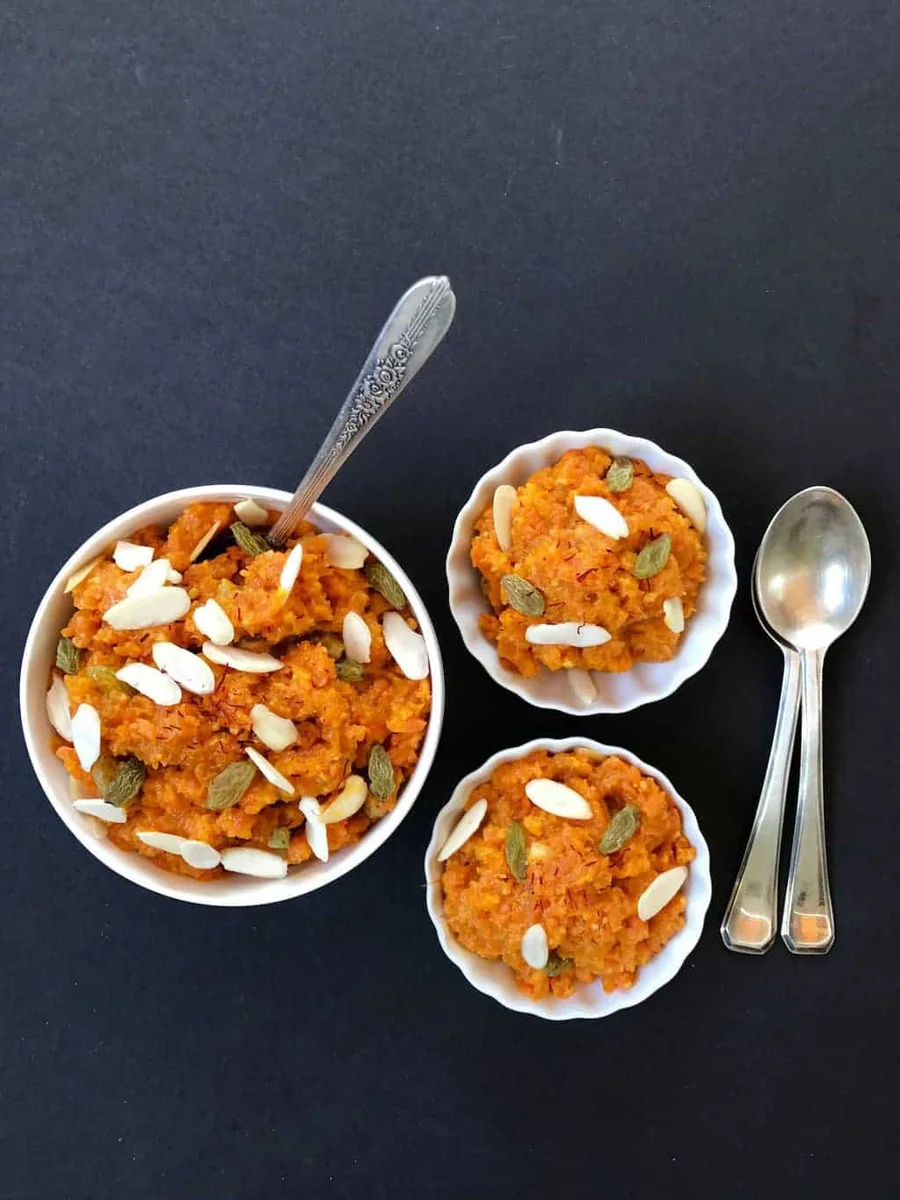
Instant Pot carrot halwa is a traditional Indian dessert of grated carrots cooked with milk, sugar, ghee and fragrant spices. The pressure cooker softens the carrots quickly, while almond meal helps give the finished halwa a rich, thick texture.
Ingredients
- 30 ml (2 tablespoons)ghee (or coconut oil or vegan butter)
- 10 carrots, peeled and grated (about 1.4 litres packed; 6 cups)carrots
- 240 ml (1 cup)unsweetened almond milk
- 150 g (3/4 cup)sugar
- about 100 g (1 cup)almond meal
- 10 ml (2 teaspoons)ground cardamom
- 2 tablespoonsraisins
- 1/2 teaspoonsaffron
- 2 tablespoonssliced almonds or pistachios (for garnish)
Instructions
- 1
Sauté the carrots
Set the Instant Pot to Sauté (High). Add the ghee, or the chosen alternative, and the grated carrots. Cover with a glass lid and cook for 2–3 minutes.
- 2
Pressure cook
Add the almond milk and close the Instant Pot lid, with the pressure valve set to Sealing. Select Pressure Cook/Manual (High) for 5 minutes, then quick-release the pressure.
- 3
Add the flavourings
Stir in the sugar, almond meal, cardamom, raisins and saffron until well combined.
- 4
Thicken the halwa
Select Sauté (High) and cook for 5–7 minutes, stirring frequently so the halwa does not stick to the bottom. Cook until most of the liquid has evaporated; the halwa will thicken further as it cools.
- 5
Garnish and serve
Scatter the sliced almonds or pistachios over the halwa. Serve warm or chilled.
What is carrot halwa?
Carrot halwa, also known as gajar ka halwa, is a traditional Indian sweet made by cooking grated carrots with a rich dairy or dairy-free base, sugar and warming aromatics. It is often served as a dessert or festive treat.
This version uses an Instant Pot to soften the carrots under pressure, then finishes them on Sauté so excess liquid can evaporate. Almond meal adds body, while cardamom and saffron bring the characteristic fragrance.
Nutrition and macros by portion
The nutrition label shows one serving as written: 329 calories, 6g protein, 43g carbs, 16g fat.
| Portion | Adjustment | kcal | Protein | Carbs | Fat |
|---|---|---|---|---|---|
| Lighter | Use less sugar | 230 kcal | 4g | 30g | 11g |
| This serving | As written | 329 kcal | 6g | 43g | 16g |
| Hungry | Serve a larger portion | 494 kcal | 9g | 65g | 24g |
The carrots and sugar provide most of the carbohydrates, while ghee contributes much of the fat; almond meal adds both fat and some protein. Serve a measured portion and balance the plate with fresh fruit or a less-sweet accompaniment.
Choose and prepare the carrots
Grated carrots: Peel and grate the carrots before cooking so they soften evenly and mingle with the other ingredients. The recipe measures them as 10 carrots, or about 6 packed cups.
Grating texture: A medium grate gives the halwa a soft, distinct carrot texture. A finer grate will blend into the mixture more as it cooks.
Build the aromatic base
Ghee: It gives the carrots a rounded, buttery flavour; coconut oil or vegan butter are the listed alternatives. Sautéing the carrots briefly before pressure cooking starts the cooking process and coats them in the fat.
Spices: Cardamom and saffron supply the dessert’s warm, floral notes. Stir them in with the sugar and raisins after pressure cooking, as directed, so they are distributed through the halwa.
Get the finishing texture right
Pressure stage: Cook the carrots with almond milk for 5 minutes at high pressure, then release the pressure quickly. This softens the carrots before the mixture is thickened.
Sauté stage: Stir often for 5–7 minutes, until most of the visible liquid has evaporated. The mixture will continue to firm up as it cools, so it need not be completely stiff in the pot.
How to serve it
Warm or chilled: The recipe works either way, so serve it soon after cooking or let it cool before chilling. Add the sliced almonds or pistachios as a final garnish.
For a fuller dessert plate, serve a modest portion after a meal and pair it with fresh fruit or a plain, unsweetened accompaniment to offset the sweetness.
Timing and pressure release
Hands-on timing: The recipe calls for 2–3 minutes of initial sautéing, 5 minutes under pressure and a further 5–7 minutes on Sauté. Allow extra time for the cooker to reach pressure and release it.
Quick-release: Set the valve to release pressure once the 5-minute cooking cycle ends, then proceed with the sugar, almond meal and flavourings.
Recipe notes & tips
- Grate the carrots before starting so they are ready to go into the pot.
- Use the glass lid only for the initial sauté, as specified in the method.
- Check that the pressure valve is set to Sealing before starting the pressure-cook cycle.
- Stir frequently during the final sauté to prevent the thickening mixture from sticking.
- Let the halwa cool a little before judging its final thickness.
- Add the sliced nuts just before serving to keep their texture distinct.
Variations
- Use coconut oil: Swap it for the ghee for the listed alternative.
- Make it vegan: Choose coconut oil or vegan butter instead of ghee.
- Choose pistachios: Use sliced pistachios in place of the almond garnish.
- Adjust the sweetness: Use less sugar to make the halwa less sweet.
- Serve it chilled: Cool the finished halwa and refrigerate it before serving.
Common mistakes to avoid
- Skipping the initial sauté: Cook the carrots with the fat for 2–3 minutes as directed before adding the almond milk.
- Using the wrong pressure setting: Set the valve to Sealing for the 5-minute high-pressure cycle.
- Letting the halwa catch: Stir frequently during the final 5–7 minutes on Sauté.
- Cooking until completely dry: Stop when most of the liquid has evaporated, as the halwa thickens while cooling.
- Adding the garnish too early: Scatter the sliced nuts on top when serving so they remain a clear finishing touch.
How to store
Cool the halwa, transfer it to an airtight container and refrigerate for up to 3–4 days. Reheat gently in the microwave or in a saucepan, stirring until warmed through; add a small splash of almond milk if it has become too thick.
Frequently asked questions
Can I make carrot halwa without an Instant Pot?
This method is written for an Instant Pot, so the cooking times and pressure stage are specific to that appliance. For another method, follow a recipe designed for the equipment you are using.
Can I use another milk instead of almond milk?
The recipe specifies unsweetened almond milk. A different milk may change the flavour and texture, so the result may not be identical.
How do I know when the halwa is thick enough?
After 5–7 minutes on Sauté, most of the liquid should have evaporated. It will thicken more as it cools.
Can I serve carrot halwa cold?
Yes. The recipe can be served warm or chilled.
What can I use instead of ghee?
Coconut oil or vegan butter are the alternatives given in the ingredient list.
When should I add the nuts?
Use the sliced almonds or pistachios as a garnish after the halwa has finished cooking.
Cook it from the original
This recipe comes from ministryofcurry.com. Their page has the author’s own photos, notes and tips — the best place to cook it from.
Open the recipe on ministryofcurry.com