
Slow Roast Pork Belly Gyros
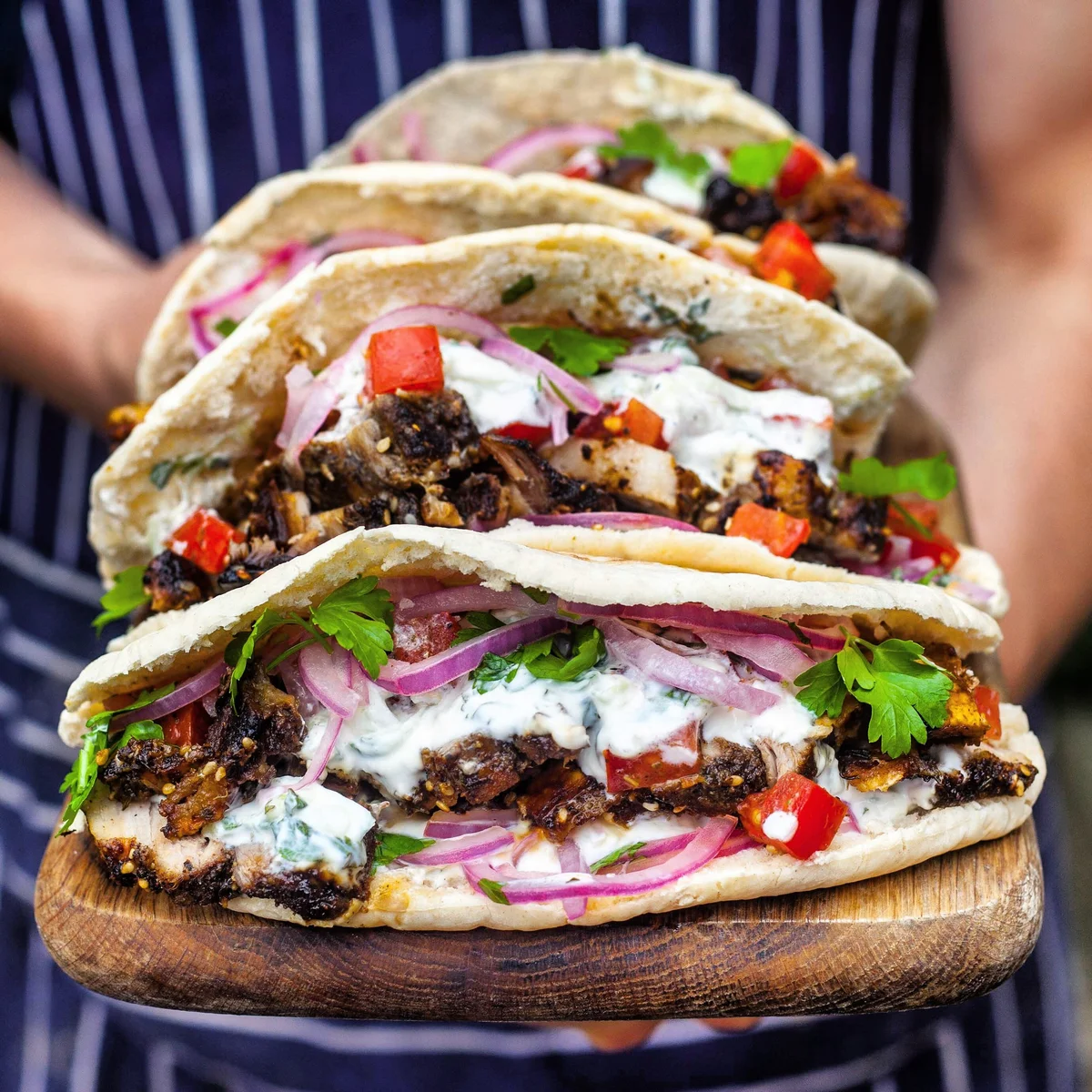
These pork belly gyros pair slow-roasted meat and crisp crackling with za’atar, cool cucumber yoghurt, lemony onions and fresh tomatoes. They take time, but the different toppings can be prepared while the pork roasts.
Ingredients
- 800 gpork belly
- 500 gyoghurt
- 1cucumber
- 25 gmint
- 2red onions
- 25 gparsley
- 2lemons
- 4vine tomatoes
- 4 tspza’atar
- 4pitta breads
- 1 clovegarlic
- to tastesalt
- to tasteblack pepper
- to tasteolive oil
Instructions
- 1
Preheat the oven
Heat the oven to 170°C (338°F).
- 2
Score the pork
Put the pork belly on a baking tray. Score the skin diagonally in both directions to make a diamond pattern.
- 3
Season the meat
Add 3 heaped teaspoons of za’atar, the crushed garlic clove, a large pinch of salt, pepper and a glug of olive oil. Rub and mix the seasoning into the meat with your hands.
- 4
Roast the pork
Set the pork skin-side up, sprinkle more salt over the skin and roast for 1½–2 hours. If it is colouring too quickly, reduce the oven to 150°C.
- 5
Pickle the onions
Finely slice the red onions into a bowl. Squeeze over the juice of one lemon, add a good pinch of salt and scrunch the juice and salt into the onions. Refrigerate for a couple of hours.
- 6
Mix the tzatziki
Grate the cucumber and squeeze out the excess water. Mix it with the yoghurt, lemon zest, juice of one lemon, salt, pepper, olive oil and a large handful of chopped mint. Set aside.
- 7
Prepare the tomatoes
Finely chop the tomatoes and put them in a bowl with a heaped teaspoon of za’atar, salt, pepper and olive oil. Mix together.
- 8
Finish the onions
Just before removing the pork, chop a handful of parsley, add it to the onions and mix it through.
- 9
Crisp the crackling
After 2½ hours in the oven, check that the pork is done. To crisp the skin, put the pork under the grill for 5 minutes, checking it regularly to prevent burning.
- 10
Carve the pork
Take the pork out of the oven and carve it into slices.
- 11
Fill the pittas
Warm a pitta and spoon in some tzatziki. Add a good spoonful of pickled onions, a generous helping of pork, tomatoes and another dollop of tzatziki, then serve.
What are pork belly gyros?
Gyros are a Greek street-food dish, usually made with seasoned meat cooked on a vertical spit and served in flatbread with sauces and toppings. This version uses slow-roasted pork belly instead, with crisp skin and za’atar for a fragrant, savoury finish.
The rich pork is balanced by cool cucumber yoghurt, sharp lemony onions and juicy tomatoes. Stuffing everything into warm pitta makes the contrasting flavours and textures easy to enjoy together.
Nutrition and macros by portion
The nutrition label shows one serving as written: 1450 calories, 44g protein, 59g carbs, 112g fat.
| Portion | Adjustment | kcal | Protein | Carbs | Fat |
|---|---|---|---|---|---|
| Lighter | More salad, less pork | 1015 kcal | 31g | 41g | 78g |
| This serving | As written | 1450 kcal | 44g | 59g | 112g |
| Hungry | Add another pitta | 2175 kcal | 66g | 89g | 168g |
The pork belly and olive oil provide most of the fat, while the pitta breads contribute much of the carbohydrate. Pork and yoghurt supply protein, with smaller amounts from the bread and vegetables. Pair a pitta with extra salad or vegetables for a fresher, more balanced plate.
Seasoning the pork
Za’atar: The recipe uses most of the seasoning on the meat, with a little reserved for the tomatoes. Rub it into the pork flesh along with garlic, salt, pepper and olive oil.
Scoring: Cut through the skin in diagonal lines in both directions to create diamonds. Keep the cuts in the skin rather than slicing deeply into the meat.
Getting crisp crackling
Dry, salted skin is key to a crackly finish. Keep the pork skin-side up as it roasts, and watch the colour; lower the oven to 150°C if the outside is browning too quickly.
Grilling: Finish the skin under the grill for 5 minutes, checking frequently because it can go from crisp to burnt quickly. Let the crackling guide you rather than leaving it unattended.
Making the toppings
Tzatziki: Squeeze the grated cucumber well before stirring it into the yoghurt. Removing excess water helps the dip stay thick enough to spoon into the pittas.
Onions and tomatoes: Lemon and salt soften and season the sliced onions as they chill. Add the parsley just before serving so it stays fresh, and mix the tomatoes with their za’atar shortly before assembling.
Timing the meal
The onions need a couple of hours in the fridge, so start them early enough to pickle while the pork cooks. The recipe gives 1½–2 hours for roasting, then also says to check the pork after 2½ hours; use the stated doneness cues and keep an eye on the skin.
Prepare the tzatziki and tomatoes during the roasting time. Warm the pittas and carve the pork near serving time so the bread is soft and the crackling stays crisp.
Serving the gyros
Warm each pitta and layer in tzatziki, onions, pork and tomatoes, finishing with another spoonful of yoghurt. Serve straight away so the bread does not sit too long with the moist fillings.
A simple green salad or extra chopped vegetables can accompany the pittas. Keep any additional sauce on the side to let everyone adjust their filling.
Recipe notes & tips
- Dry the pork skin before scoring if it feels damp.
- Use a sharp knife to score the skin without cutting far into the meat.
- Squeeze the grated cucumber firmly to keep the tzatziki thick.
- Check the pork regularly if the skin begins to darken before the meat is ready.
- Add the parsley to the onions just before serving, as directed.
- Keep an eye on the pork under the grill throughout the 5-minute crisping time.
Variations
- Add chilli: Stir sliced fresh chilli into the tomatoes for a sharper kick.
- Use flatbreads: Serve the pork and toppings in another warm flatbread if pitta is unavailable.
- Make it herby: Add extra chopped mint to the yoghurt for a fresher flavour.
- Add leafy greens: Tuck a handful of lettuce into each pitta for extra crunch.
- Serve as a platter: Arrange the pork, pittas and toppings separately for everyone to assemble.
Common mistakes to avoid
- Cutting too deeply: Keep the scoring in the skin so the meat is not sliced into.
- Watery tzatziki: Squeeze the grated cucumber well before mixing it with the yoghurt.
- Burning the skin: Reduce the oven to 150°C if the pork is colouring too quickly, and check often under the grill.
- Soggy parsley: Mix it into the onions just before taking the pork out, rather than leaving it to sit for hours.
- Soft crackling: Keep the pork skin-side up and finish it under the grill for 5 minutes, watching closely.
- Assembling too early: Fill the pittas just before serving so the bread does not become soggy.
How to store
Refrigerate leftover pork and toppings separately in covered containers and use within 3 days. Reheat the pork until piping hot; warm it in the oven to help the skin crisp again, and assemble with the cold toppings just before serving.
Frequently asked questions
Can I prepare the toppings ahead?
Yes. The onions need a couple of hours to chill, and the tzatziki can also be made ahead and kept covered in the fridge. Add the parsley to the onions shortly before serving.
How do I know when the pork is ready?
Follow the recipe’s roasting time and check that the pork is cooked through before carving. The method says to check after 2½ hours, while its earlier roasting instruction gives 1½–2 hours; allow for the pork and your oven, and use a food thermometer if you have one.
Why is my tzatziki runny?
Grated cucumber releases a lot of water. Squeeze it thoroughly before mixing it with the yoghurt.
Can I make the gyros without a grill?
The grill is used to crisp the crackling at the end. If you cannot use one, roast the pork until the skin is crisp, checking it closely so it does not burn.
Can I use dried mint?
Fresh mint is specified for the tzatziki and gives it a bright flavour. Dried mint can be used if needed, but add it sparingly and taste as you mix.
How should I serve the leftovers?
Reheat the pork separately and assemble fresh pittas with the chilled toppings. Keeping the components apart helps the bread stay soft rather than wet.
Cook it from the original
This recipe comes from mob.co.uk. Their page has the author’s own photos, notes and tips — the best place to cook it from.
Open the recipe on mob.co.uk