
Red Pork Pozole Recipe
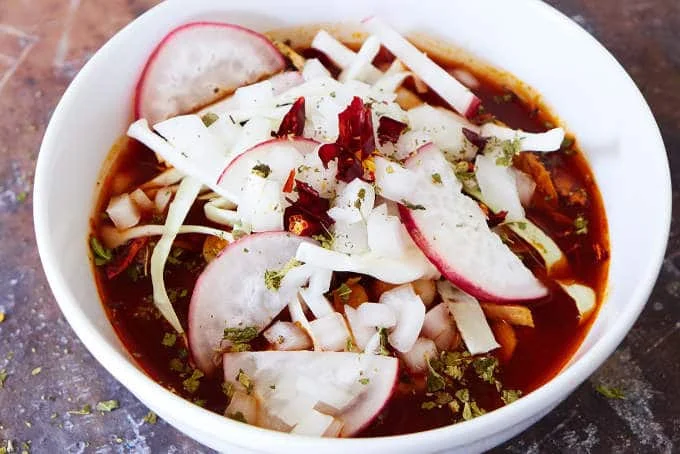
Red pork pozole is a Mexican soup of tender shredded pork and hominy in a rich, mildly spicy chile broth. It is a satisfying dish for a gathering, with fresh cabbage, onion, radish and lime added at the table.
Ingredients
- 1.36 kg (3 lb)boneless pork leg or pork shoulder
- 2 cans, 1.42 kg total (2 × 25 oz), drained and rinsedhominy
- 5ancho chillies
- 5guajillo chillies
- ½white onion
- 3, optionalárbol chillies
- 3 clovesgarlic
- 1 headgarlic
- 1 tbspMexican oregano
- 3bay leaves
- 3 tsp, plus to tastesea salt
- ½ headcabbage, shredded
- 1 largewhite onion, diced
- 6radishes, sliced into half-moons
- 6, quarteredlimes
- 4 tbspMexican oregano
- 6, finely choppedárbol chillies
- 45 ml (3 tbsp)oil
- as neededsalt
Instructions
- 1
Cook the pork
Put the pork, head of garlic, a few bay leaves and half an onion in a large pot. Add enough water to just cover, about 1.4 litres (6 cups). Bring to the boil, then lower the heat and simmer for 45 minutes. The pork should pull apart easily; if it does not, cook for another 15 minutes.
- 2
Shred the pork
Lift the cooked pork out of the pot and set it aside. Strain the broth into a bowl and reserve it. When the pork is cool enough to handle, pull it into pieces about 2.5 cm (1 inch) long.
- 3
Prepare the chillies
Remove and discard the stems, seeds and veins from the chillies. Put them in a pot with the cloves of garlic and half an onion, then add enough water to just cover, about 710 ml (3 cups). Bring to the boil, turn off the heat and leave the chillies to soak for 15 minutes, until softened and pliable.
- 4
Blend the base
Transfer the soaked chillies, onion and garlic to a blender with the oregano and soaking liquid. Blend for 1 minute until smooth, then strain the mixture and discard the remaining pulp.
- 5
Cook the base
Heat 45 ml (3 tablespoons) of oil in a pot over medium-high heat and pour in the strained chile base. Lower the heat to a simmer and cook for 30 minutes, until the base has thickened and darkened.
- 6
Simmer the hominy
Drain and rinse the canned hominy. Put it in a large pot, cover with water to a depth of about 5 cm (2 inches), and simmer while you prepare the pork and chile base.
- 7
Combine and simmer
Pour the cooked chile base into the pot of hominy. Add the reserved pork broth, shredded pork and 2 teaspoons of sea salt. Bring to the boil, lower the heat and simmer for 30 minutes. Taste and adjust the salt as needed.
- 8
Prepare the garnishes
Shred the cabbage, dice the onion, slice the radishes into half-moons, quarter the limes and finely chop the árbol chillies. Put each garnish in its own serving bowl.
- 9
Serve the pozole
Ladle the pozole into individual bowls and let everyone add garnishes to taste.
What is red pork pozole?
Pozole is a traditional Mexican soup built around hominy, a corn product, and a flavourful broth. Red pozole gets its colour and earthy chile flavour from dried red chillies blended into the soup.
This version combines tender pork with hominy and a simmered chile base. Cabbage, onion, radish and lime are served separately, so each bowl can be finished to suit the diner.
Nutrition and macros by portion
The nutrition label shows one serving as written: 280 calories, 25g protein, 29g carbs, 8g fat.
| Portion | Adjustment | kcal | Protein | Carbs | Fat |
|---|---|---|---|---|---|
| Lighter | More cabbage, less pork | 196 kcal | 18g | 20g | 6g |
| This serving | As written | 280 kcal | 25g | 29g | 8g |
| Hungry | Larger bowl of pozole | 420 kcal | 38g | 44g | 12g |
Hominy supplies most of the carbohydrates, while pork contributes most of the protein and some of the fat; the chile base and oil also add fat. Balance a bowl with a generous handful of cabbage and radish, and serve it with a side of vegetables if you want a fuller plate.
Building the chile base
Dried chillies: removing the stems, seeds and veins before soaking makes them easier to blend into a smooth base. Ancho and guajillo chillies bring the earthy, gently warm flavour described for the broth.
Soaking liquid: blend it with the softened chillies, onion, garlic and oregano, then strain the mixture. Cooking the strained base until it darkens and thickens helps develop its flavour before it meets the hominy.
Getting tender pork
Pork cut: leg or shoulder both work here, and the simmering broth keeps the meat surrounded by moisture as it cooks. The stated cooking time is a guide; tenderness is the useful cue.
Shredding: the pork is ready when it pulls apart easily. If it is still firm after 45 minutes, give it another 15 minutes before removing and shredding it.
Balancing the broth
Reserved broth: strain and keep the pork cooking liquid, then add it to the hominy and chile base. It brings the separate parts of the soup together.
Salt: add the specified 2 teaspoons when assembling, then taste after the final simmer and adjust as needed. The garnishes add freshness and contrast to the rich, earthy soup.
Timing the components
Parallel cooking: the pork, chile base and hominy are prepared in separate pots, with the hominy simmering while the other parts cook. This makes good use of the recipe’s 110-minute total time.
Final simmer: once everything is combined, allow 30 minutes for the flavours to come together. Prepare the garnishes during this stage so they are ready when the soup is served.
Serving and garnishing
At the table: offer the shredded cabbage, diced onion, sliced radish, lime wedges, oregano and chopped árbol chillies in separate bowls. Each person can choose how much to add.
To serve it as a meal, pair the pozole with warm tortillas or another simple side. A squeeze of lime adds a bright finish to the chile broth.
Recipe notes & tips
- Wear gloves when handling the chillies, particularly when removing their seeds and veins.
- Soak the chillies until they are pliable so they blend more readily.
- Strain the blended chile base for a smoother broth.
- Keep the pork cooking liquid and strain it before adding it to the soup.
- Set out garnishes separately so diners can adjust the freshness and heat of their bowls.
- Taste the broth after the final simmer before adding more salt.
Variations
- More heat: include the optional árbol chillies in the chile base for a spicier broth.
- Milder bowls: leave out the chopped árbol chillies at the table.
- Pork shoulder: use it in place of pork leg for the same shreddable style of soup.
- Extra lime: offer additional wedges for a brighter finish.
- More crunch: add extra shredded cabbage and sliced radish as garnishes.
Common mistakes to avoid
- Pork still firm: simmer it for another 15 minutes if it does not pull apart easily after 45 minutes.
- Chillies not softened: leave them in the hot water for the full 15 minutes before blending.
- Lumpy chile base: blend for the full minute, then strain out the remaining pulp.
- Discarding the pork broth: reserve and strain it to use when assembling the soup.
- Over-salting early: add the stated amount, then taste and adjust after the final simmer.
- Garnishes stirred in too soon: serve them separately so they stay fresh and crisp.
How to store
Refrigerate leftover pozole in a covered container and use within 3 days. Store the garnishes separately where possible, and reheat the soup gently in a saucepan until piping hot, adding a splash of water if it has thickened.
Frequently asked questions
Can I use pork shoulder instead of pork leg?
Yes. The recipe lists pork shoulder as an alternative, and it is cooked until it pulls apart easily.
How do I know when the pork is ready?
It should pull apart easily with your fingers. If it is still firm after 45 minutes, simmer it for another 15 minutes.
Can I make the broth less spicy?
Leave out the optional árbol chillies in the chile base and omit or reduce the chopped árbol chillies served at the table.
Why strain the chile mixture?
Straining removes the remaining chile pulp and gives the broth a smoother texture.
Can I prepare the garnishes ahead?
Yes. Shred and slice them ahead and keep them covered and chilled until serving. Keep the lime wedges separate.
What should I serve with pozole?
The recipe's cabbage, onion, radish and lime garnishes provide freshness and crunch. Warm tortillas make a simple accompaniment.
Cook it from the original
This recipe comes from mexicanfoodjournal.com. Their page has the author’s own photos, notes and tips — the best place to cook it from.
Open the recipe on mexicanfoodjournal.com