
Eggplant stew
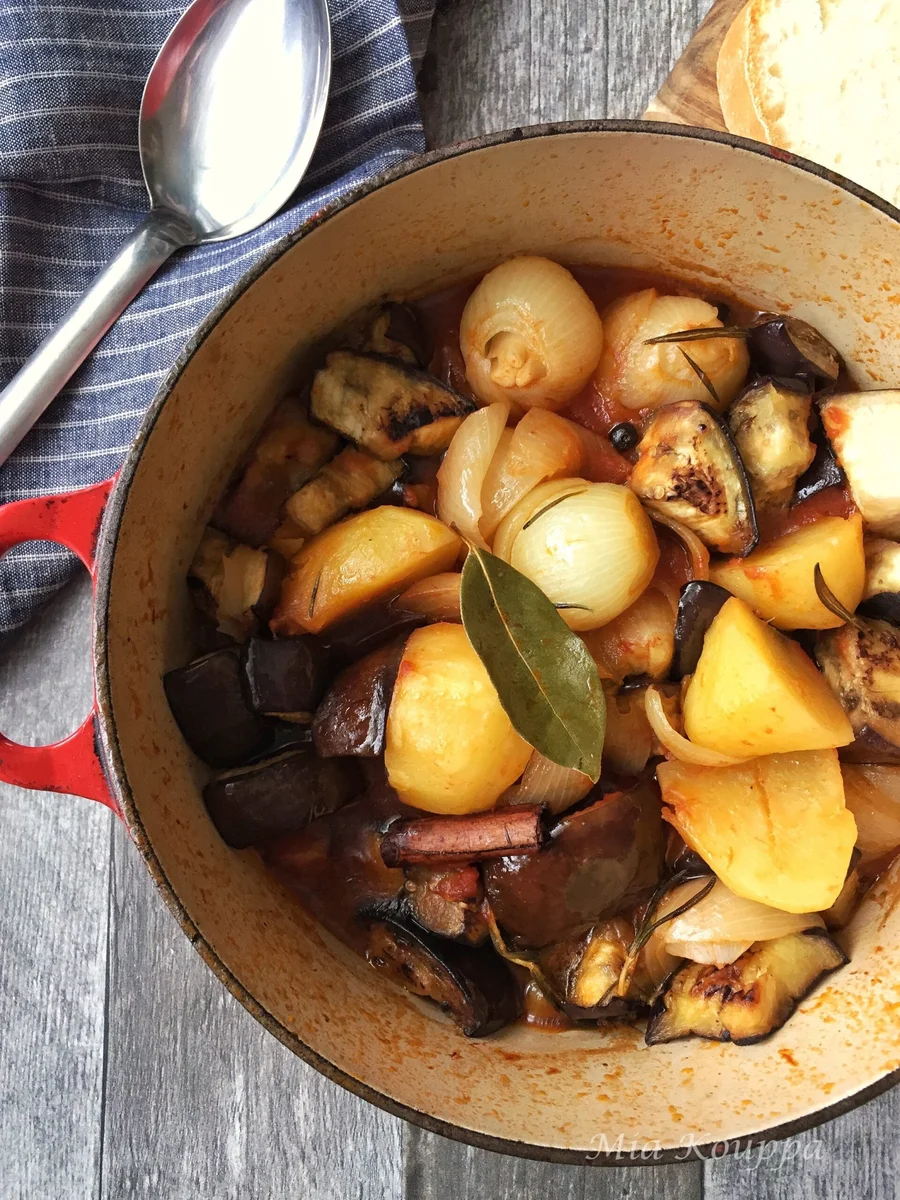
This Greek-inspired vegan stifado is a slow-cooked aubergine stew with small onions, potatoes, tomato, vinegar and warming spices. It takes time to simmer, but the result is a rich, tender one-pot meal with plenty of cooking liquid for serving.
Ingredients
- 1 largeaubergine, cut into large chunks, unpeeled
- 1 teaspoonsalt
- 4 teaspoonsvegetable oil
- 24small to medium-small yellow onions
- 3 mediumpotatoes
- 3 clovesgarlic, peeled
- 240 ml (1 cup)tomato sauce
- 60 ml (1/4 cup)red wine vinegar
- 3/4 tablespoonsalt
- 100 mlolive oil
- 200 mlwater
- 1 stick, cut in halfcinnamon
- 3bay leaves
- 2 sprigsrosemary
- 1 teaspoonwhole allspice
Instructions
- 1
Salt the aubergine
Put the aubergine chunks in a colander, sprinkle with about 1 teaspoon of salt and leave to drain for about 30 minutes.
- 2
Prepare onions
Peel the onions, leaving the very small ones whole. Score the slightly larger onions halfway through so they stay intact, then set them aside.
- 3
Press the aubergine
Once the aubergine has drained, press it with paper towels to remove as much remaining moisture as possible.
- 4
Brown the aubergine
Heat 2 teaspoons of oil in a large pot over medium heat. Brown half the aubergine, turning the chunks carefully, for about 5–8 minutes. Lift them out, add the remaining 2 teaspoons of oil and brown the rest, then remove it from the pot.
- 5
Add stew ingredients
Put the onions, potatoes and garlic in the pot. Add all the remaining ingredients except the aubergine, then shake the pot to distribute the liquid. Cover and bring it to the boil.
- 6
Simmer until tender
When the liquid boils, reduce the heat to medium and cook, covered, for about 30 minutes. Add the aubergine and stir it into the pot. Leave the lid slightly ajar so some steam can escape while keeping most of the pot covered. Carefully shake the pot about every 15 minutes to prevent sticking. If it looks too dry, add 60 ml (1/4 cup) water. Cook for a further 30–45 minutes, until the vegetables are cooked and the aubergine is as tender as you like.
- 7
Cool briefly
Take the pot off the heat and let the stew cool slightly.
- 8
Serve the stew
Serve the aubergine with the onions, potatoes and cooking liquid.
What is Greek stifado?
Stifado is a Greek stew traditionally associated with slowly cooked onions and a deeply flavoured sauce. This version is vegan, using aubergine and potatoes to make it substantial while keeping the onions whole.
Tomato, red wine vinegar, cinnamon, allspice and herbs give the pot its distinctive sweet-savoury, gently spiced character. Browning the aubergine first helps it hold its shape and adds flavour before it simmers.
Nutrition and macros by portion
The nutrition label shows one serving as written: 420 calories, 7g protein, 54g carbs, 22g fat.
| Portion | Adjustment | kcal | Protein | Carbs | Fat |
|---|---|---|---|---|---|
| Lighter | Use less olive oil | 294 kcal | 5g | 38g | 15g |
| This serving | As written | 420 kcal | 7g | 54g | 22g |
| Hungry | Serve with crusty bread | 630 kcal | 11g | 81g | 33g |
Potatoes and onions provide most of the carbohydrates, while the olive oil carries most of the fat. Aubergine and tomato sauce contribute smaller amounts of protein, with the vegetables also adding fibre. Pair a serving with a green salad or another non-starchy vegetable for a more balanced plate.
Why salt the aubergine?
Salting and draining the chunks gives them time to release moisture before they go into the pot. Press them thoroughly with paper towels afterwards so they brown rather than steam.
Keep the peel on, as the recipe specifies; it helps the chunks stay together during the long simmer.
Brown in batches
Aubergine: brown half at a time in the small amount of vegetable oil, turning the pieces carefully. A little colour on the sides builds flavour without needing to cook them through.
Pot: use a large, heavy pot that can hold the onions, potatoes and liquid without being crowded. After browning, the same pot carries all the stew’s flavours into the simmer.
Keep the onions intact
Very small onions stay whole, while the slightly larger ones are scored only partway through. This helps them cook evenly but remain in one piece.
Shake the pot gently rather than stirring vigorously during the longer cook. That helps prevent sticking while reducing the chance of breaking up the onions and aubergine.
Check the simmer and texture
After the first 30 minutes, add the browned aubergine and leave the lid slightly ajar. The stew should cook gently, with some steam escaping but most of the moisture retained.
Start checking after the additional 30 minutes of cooking. The potatoes should be tender and the aubergine soft to your preference; cook for up to 45 minutes more if needed.
Serve with the cooking liquid
Spoon the vegetables into bowls with plenty of the tomato-and-spice cooking liquid. It brings the potatoes, onions and aubergine together and keeps the serving from feeling dry.
Crusty bread is a useful accompaniment for soaking up the sauce. A simple green salad can add a fresh contrast to the slow-cooked stew.
Recipe notes & tips
- Cut the aubergine into similarly sized chunks so they cook at a similar pace.
- Dry the salted aubergine well before browning it.
- Turn the aubergine gently to avoid crushing the chunks.
- Keep the pot covered for the first 30-minute simmer.
- Shake the pot carefully about every 15 minutes once the aubergine has been added.
- Add the optional water only if the stew looks too dry.
Variations
- Add red wine: replace some of the water with a splash of red wine.
- Use fresh tomatoes: swap in chopped ripe tomatoes for some of the tomato sauce and allow extra time for them to break down.
- Change the herbs: use a little dried oregano instead of rosemary.
- Add chilli: include a pinch of chilli flakes for gentle heat.
- Serve with bread: offer crusty bread alongside to mop up the cooking liquid.
Common mistakes to avoid
- Crowding the pot while browning: cook the aubergine in two batches so it can colour on the sides.
- Skipping the drying step: press the drained aubergine with paper towels before it goes into the hot oil.
- Scoring onions all the way through: cut only partway so they stay whole as they cook.
- Stirring roughly: shake the pot gently to help prevent sticking without breaking up the vegetables.
- Letting the stew dry out: check the liquid as it simmers and add 60 ml (1/4 cup) water if needed.
How to store
Cool the stew, then refrigerate it in a covered container for up to 3 days. Reheat gently in a covered saucepan, stirring or shaking carefully, until piping hot; add a splash of water if the sauce has thickened.
Frequently asked questions
Can I make this stew ahead?
Yes. Make it in advance and refrigerate it once cooled. Reheat it gently, taking care not to break up the aubergine and onions.
Do I need to peel the aubergine?
No. The recipe uses unpeeled aubergine, and the skin helps the chunks keep their shape during the long cooking time.
How do I know when the stew is ready?
The potatoes should be tender when pierced, and the aubergine should have softened to your liking. The recipe allows an additional 30–45 minutes after the aubergine is added.
What if the stew looks too dry?
Add 60 ml (1/4 cup) of water and continue cooking. Check the liquid again as the stew simmers.
What can I serve with eggplant stifado?
Serve it with crusty bread to soak up the cooking liquid, or with a simple green salad for a fresh side.
Cook it from the original
This recipe comes from miakouppa.com. Their page has the author’s own photos, notes and tips — the best place to cook it from.
Open the recipe on miakouppa.com