
Homemade pasta with meat sauce
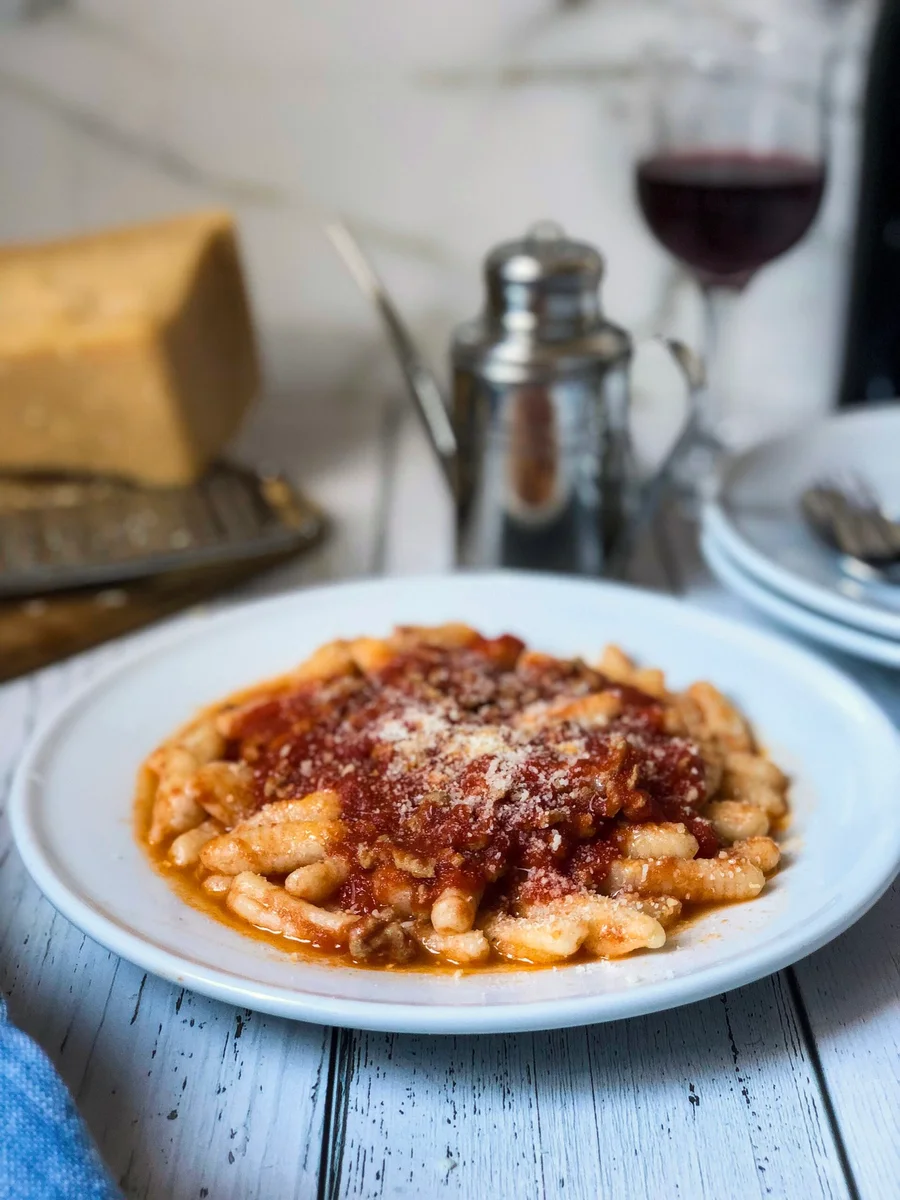
This Italian-inspired recipe pairs fresh homemade spaghetti or cavatelli with a gently simmered pork and tomato sauce. It takes time, but the dough can be shaped by hand or with a pasta machine, and the two pasta styles offer different textures.
Ingredients
- 810 g (6 3/4 cups)plain flour
- 1 teaspoonsalt
- 1egg
- 473 ml (16 US fl oz)warm water
- 1 smallonion, grated
- 1 clovegarlic, grated
- 45 ml (3 tablespoons)vegetable oil
- 227 g (1/2 lb)minced pork
- 1.66 litres (7 cups)tomato sauce
- 60 ml (1/4 cup)water
- 1/2 teaspoonsalt
- 7 large leavesfresh basil
- 1/2 tablespoon for each batch of pasta watersalt
- To taste (optional)freshly grated Parmesan
Instructions
- 1
Mix the flour
On a large, clean work surface, mix the flour and 1 teaspoon of salt with your hands. Form the flour into a mound and make a well in the centre.
- 2
Add egg and water
Put the egg and about 180 ml (6 US fl oz) of the warm water into the well. Break the yolk with your fingers and gradually draw in the flour. Once that water is incorporated, add another 180 ml (6 US fl oz) and continue mixing, adding more water as needed. The amount required can vary with the flour; the recipe's total is 473 ml (16 US fl oz).
- 3
Knead the dough
Gather the dough into a ball. Bring the far edge towards the middle with your fingers, turn the dough and repeat for about 5 minutes. Dust the work surface with more flour if the dough is too sticky.
- 4
Finish kneading
Rub flour into your hands to remove any dough stuck to them, then continue kneading. The dough is nearly ready when it no longer sticks to your hands; it should feel fairly firm.
- 5
Divide the dough
Cut the dough in half. Use one half for spaghetti and the other for cavatelli.
- 6
Roll the spaghetti
Take about 120 ml (1/2 cup) of dough and roll it into a long strip about 5 mm thick. Pass it twice through the flat rollers of a pasta machine, dusting with flour to prevent sticking. Narrow the roller gap and pass the dough through again until the strip is about 2.5 mm thick.
- 7
Cut spaghetti strands
Dust both sides of the pasta sheet with flour and pass it through the spaghetti cutters. Lay the strands on a flour-dusted surface, moving them around with your fingers so they are coated and do not stick together.
- 8
Choose when to cook
Cook the spaghetti straight away or freeze it for later.
- 9
Cook the spaghetti
Bring a large pot of water to the boil and add 1/2 tablespoon of salt. Add the spaghetti, stir with a wooden spoon and reduce the heat to medium. Cook for about 3–5 minutes, until it reaches your preferred doneness; frozen pasta will take longer. Drain and serve straight away with sauce.
- 10
Shape cavatelli
By hand, roll the dough into logs about 1.3 cm (1/2 inch) thick and cut them into pieces about 2.5 cm (1 inch) long. Press the middle of each piece with your index and middle fingers, then pull it towards you to make a groove; the dough will roll over itself, so the groove may not remain visible.
- 11
Use a cavatelli maker
If using a cavatelli machine, cut the dough into strips about 2.5 cm (1 inch) wide and 1 cm thick, using a pizza cutter. Feed the strips into the machine and toss the formed pasta in flour to keep it from sticking. Cook immediately or freeze for later.
- 12
Cook the cavatelli
Bring a large pot of water to the boil and add 1/2 tablespoon of salt. Add the cavatelli, stir with a wooden spoon and reduce the heat to medium. Cook for about 8–10 minutes, until it reaches your preferred doneness; frozen pasta will take longer. Drain and serve straight away with sauce.
- 13
Soften the aromatics
Heat the vegetable oil in a large pot. Add the grated onion and garlic and cook over medium heat, stirring regularly, for about 3–5 minutes, until softened.
- 14
Simmer the sauce
Add the pork and stir regularly with a wooden spoon, breaking it into small pieces rather than leaving large clumps. Add the tomato sauce, 60 ml (1/4 cup) water, 1/2 teaspoon salt and basil leaves. Stir well, cover and cook over medium heat for about 45 minutes, stirring occasionally.
- 15
Serve with Parmesan
Spoon the meat sauce over the pasta and add freshly grated Parmesan if desired.
What is homemade pasta with meat sauce?
Pasta with meat and tomato sauce is a familiar Italian-style meal, while fresh pasta-making traditions vary from one region and household to another. This recipe makes a firm, egg-enriched dough and offers two shapes: long spaghetti or rolled cavatelli.
The dough is worked by hand, then paired with a simple pork sauce flavoured with onion, garlic and basil. Making both shapes from one batch gives you a choice of texture without changing the sauce.
Nutrition and macros by portion
The nutrition label shows one serving as written: 477 calories, 19g protein, 86g carbs, 11g fat.
| Portion | Adjustment | kcal | Protein | Carbs | Fat |
|---|---|---|---|---|---|
| Lighter | Less pasta, more vegetables | 334 kcal | 13g | 60g | 8g |
| This serving | As written | 477 kcal | 19g | 86g | 11g |
| Hungry | Larger pasta portion | 716 kcal | 29g | 129g | 17g |
The pasta supplies most of the carbohydrates, while the pork contributes protein and some of the fat; oil and optional Parmesan add further fat. Serve it with a generous side of vegetables or salad to round out the plate.
Getting the dough right
Flour and water: Add the water gradually rather than pouring it all into the well at once. Flour absorbs liquid differently, so the dough may need a little more or less than the listed amount.
Kneading: Work the dough for about 5 minutes, turning and folding it repeatedly. It should feel firm and stop clinging to your hands, rather than becoming soft and tacky.
Rolling and shaping
Spaghetti: Roll small portions into strips before using the flat rollers. Dust the sheets and finished strands with flour as needed to prevent sticking.
Cavatelli: Hand-shaped pieces get their characteristic curled groove from pressing and pulling the dough. A cavatelli maker speeds up shaping, but cut strips evenly so they feed through smoothly.
Cooking fresh pasta
Spaghetti: Fresh strands cook quickly, usually in about 3–5 minutes. Start checking near the lower end of that range and drain when the pasta is as tender as you like.
Cavatelli: The thicker pieces need about 8–10 minutes. Frozen pasta takes longer, so use the texture of a test piece rather than relying only on the clock.
Building the meat sauce
Aromatics: Cook the grated onion and garlic in oil for 3–5 minutes, stirring until they soften. Keep the heat moderate so they soften without catching.
Pork and tomato: Break up the pork as it cooks, then let it simmer with the tomato sauce, water, salt and basil for about 45 minutes. Occasional stirring helps the sauce cook evenly.
Serving the pasta
Toss or top the freshly drained pasta with the warm sauce and serve straight away. A little freshly grated Parmesan is optional.
The sauce works with either shape: spaghetti carries it along its strands, while the folds in cavatelli catch it in their grooves.
Recipe notes & tips
- Add the warm water in stages because the flour may not need the full amount.
- Dust the work surface and pasta sheets lightly whenever the dough begins to stick.
- Keep shaped strands spread out on a floured surface until you cook or freeze them.
- Break the pork into small pieces before adding the tomato sauce.
- Check fresh pasta early, since thickness and shape affect how quickly it cooks.
- Cook frozen pasta for longer and taste a piece to check its doneness.
Variations
- Use either shape: Make the spaghetti or cavatelli with the same dough and sauce.
- Add Parmesan: Finish each serving with freshly grated cheese if desired.
- Make it ahead: Freeze shaped pasta for a later meal and allow extra cooking time.
- Adjust the dough: Add water gradually until the flour forms a workable dough.
- Change the serving balance: Pair the pasta and sauce with a side of vegetables.
Common mistakes to avoid
- Adding all the water at once: Incorporate it in stages so you can adjust for the flour.
- Leaving the dough sticky: Knead for about 5 minutes and dust the surface with flour as needed.
- Skipping the flour coating: Dust the cut pasta so strands and pieces do not clump together.
- Leaving pork in large clumps: Break it apart with a wooden spoon as it cooks.
- Overcooking fresh spaghetti: Begin checking after 3 minutes and drain when it suits your preference.
- Using the spaghetti timing for cavatelli: Allow about 8–10 minutes for the thicker shape and check a piece.
How to store
Refrigerate leftover cooked pasta and sauce in a covered container and use within 3 days. Reheat until piping hot, adding a splash of water if the sauce has thickened. Freeze shaped uncooked pasta on a floured tray, then store it in a freezer-safe container; cook from frozen and allow extra time.
Frequently asked questions
Can I make this without a pasta machine?
Yes. You can shape the cavatelli by hand using the press-and-pull method. The spaghetti method relies on a pasta machine's flat rollers and cutter.
How do I know when the dough has enough water?
Work the water into the flour gradually until it comes together into a firm dough. The recipe notes that the amount needed can vary with the flour.
Can I freeze the fresh pasta?
Yes. Freeze the shaped spaghetti or cavatelli for later use. Cook it from frozen and allow more time than for fresh pasta.
How long does fresh spaghetti take to cook?
Allow about 3–5 minutes, then taste a strand and drain it when it reaches your preferred doneness.
How long does cavatelli take to cook?
The recipe gives about 8–10 minutes for fresh cavatelli. Frozen pieces take longer, so check their texture as they cook.
Can I serve the sauce with either pasta shape?
Yes. The recipe pairs the same pork and tomato sauce with both spaghetti and cavatelli.
Cook it from the original
This recipe comes from miakouppa.com. Their page has the author’s own photos, notes and tips — the best place to cook it from.
Open the recipe on miakouppa.com