
Maple glazed smoked ham
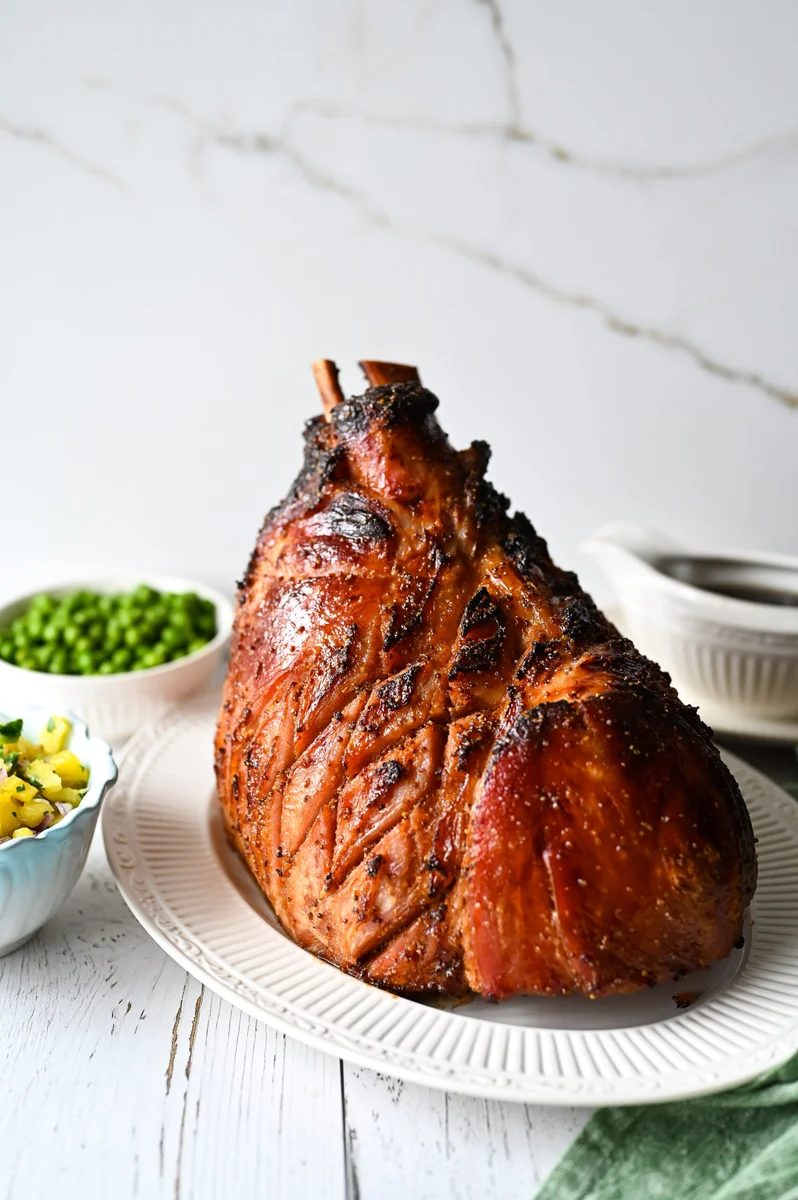
This fully cooked, hickory-smoked ham is finished with a sticky maple, brown sugar and mustard glaze, then served with a bright pineapple salsa. It makes a generous centrepiece for a gathering, with the salsa bringing a fresh, tangy contrast to the sweet glaze.
Ingredients
- 1 ham (we used a 5.38 kg ham)bone-in, hickory-smoked, fully cooked ham
- a littlevegetable oil, for greasing the roasting pan
- 240 ml (1 cup)maple syrup
- 100 g (1/2 cup)brown sugar
- 60 ml (4 tbsp)old-fashioned Dijon mustard
- 10 ml (2 tsp)Worcestershire sauce
- 330 g (2 cups)pineapple, finely diced
- 1/2jalapeño, finely diced (add more to taste if desired)
- 1/4 mediumred onion, cut into small dice
- 15 ml (1 tbsp)parsley, finely chopped
- 1/2lime
Instructions
- 1
Heat the oven
Preheat the oven to 180°C (350°F).
- 2
Score the ham
Pat the ham dry. With a sharp knife, score a criss-cross pattern all over, especially through any layer of fat, cutting about 6 mm (1/4 inch) deep.
- 3
Set up the pan
Lightly grease the base of a large roasting pan with vegetable oil. Put the ham in the middle, cut side down and bone pointing upwards.
- 4
Roast until warm
Roast uncovered until heated through. For a fully cooked, smoked, bone-in ham, allow about 15–20 minutes per pound to reach an internal temperature of 63°C (145°F).
- 5
Make glaze and salsa
While the ham roasts, prepare the glaze and pineapple salsa using the steps below.
- 6
Baste the ham
Thirty minutes before the ham is ready, take it out of the oven. Use a baster to coat it with the juices collected in the bottom of the roasting pan.
- 7
Brush on glaze
Use a large basting brush to cover all the visible sides of the ham with glaze, leaving the underside uncoated.
- 8
Pour over glaze
Pour the remaining glaze evenly over the ham.
- 9
Finish roasting
Return the pan to the oven and roast for the final 30 minutes. Use a meat thermometer to check that the ham's internal temperature is 163°C (325°F).
- 10
Rest before carving
Take the roasting pan out of the oven and leave the ham to rest for about 10 minutes before slicing.
- 11
Mix the glaze
In a medium bowl, combine the maple syrup, brown sugar, Dijon mustard and Worcestershire sauce.
- 12
Whisk until smooth
Whisk the glaze ingredients together until combined, then set aside.
- 13
Combine salsa ingredients
In a medium bowl, mix the pineapple, jalapeño, red onion, parsley and juice from half a lime.
- 14
Taste the salsa
Mix well and taste. Add more jalapeño and/or lime juice if you like, then set aside.
- 15
Drain the drippings
Move the ham to a carving board or serving platter. If desired, pour the pan drippings through a fine sieve and serve them as gravy.
- 16
Serve with salsa
Serve the ham with the gravy and pineapple salsa.
What is maple glazed smoked ham?
Glazed ham is a familiar American celebration centrepiece: a cooked ham is warmed in the oven and finished with a sweet, glossy coating. This version pairs hickory-smoked ham with maple syrup, brown sugar, mustard and Worcestershire sauce.
The pineapple salsa gives each serving a juicy, sharp counterpoint to the rich, smoky meat and sweet glaze.
Nutrition and macros by portion
The nutrition label shows one serving as written: 266 calories, 6g protein, 50g carbs, 5g fat.
| Portion | Adjustment | kcal | Protein | Carbs | Fat |
|---|---|---|---|---|---|
| Lighter | More salsa, less glaze | 186 kcal | 4g | 35g | 4g |
| This serving | As written | 266 kcal | 6g | 50g | 5g |
| Hungry | Larger ham serving | 399 kcal | 9g | 75g | 8g |
The ham supplies most of the protein, while the maple syrup, brown sugar and pineapple contribute most of the carbohydrates. The ham and glaze also provide much of the fat; serve with a generous portion of vegetables or salad for a more balanced plate.
The ham and its preparation
Bone-in ham: The bone is part of the chosen cut, and the recipe uses a fully cooked, hickory-smoked ham. Patting it dry first helps the scored surface take the glaze.
Scoring: Cut a shallow criss-cross pattern through the fat, about 6 mm deep. This creates more surface for the glaze to cling to without cutting deeply into the meat.
Building the glaze
Sweetness: Maple syrup and brown sugar form the sweet base and help create a glossy finish during the final roast.
Balance: Dijon mustard and Worcestershire sauce bring a savoury, tangy edge. Whisk them thoroughly with the sweet ingredients so the glaze is evenly mixed before brushing.
Getting the timing right
Warm-through: The method estimates 15–20 minutes per pound for a fully cooked, smoked, bone-in ham. The actual time depends on the ham and oven, so use a meat thermometer rather than relying on the clock alone.
Final glaze: Baste with the pan juices and apply the glaze 30 minutes before the ham is ready, then return it to the oven for that final 30 minutes.
Making the pineapple salsa
Dice: Cut the pineapple and red onion into small pieces so they are easy to spoon alongside slices of ham. Finely chop the parsley and jalapeño for an even mix.
Season: Lime juice adds freshness, while jalapeño brings heat. Taste the salsa and adjust with more of either to suit your preference.
Carving and serving
Rest: Leave the ham for about 10 minutes after roasting before slicing. This gives you time to prepare the serving platter and sieve the drippings if you want to serve them as gravy.
Pairing: Serve slices with the pineapple salsa and pan gravy. A simple green vegetable or salad can round out the plate.
Recipe notes & tips
- Use a sharp knife to score the ham cleanly without cutting deeply into the meat.
- Keep the ham uncovered while it roasts, as directed, so you can baste and glaze it easily.
- Prepare the glaze and salsa while the ham is in the oven to make use of the cooking time.
- Taste the salsa before serving and add jalapeño or lime juice gradually.
- Sieve the pan drippings if you want a smoother gravy to serve with the ham.
- Rest the ham for about 10 minutes before carving.
Variations
- More heat: Add extra finely diced jalapeño to the salsa a little at a time.
- Sharper salsa: Add more lime juice after tasting the pineapple mixture.
- Smoother gravy: Strain the roasting-pan drippings through a fine sieve before serving.
- Sweeter finish: Brush on the maple glaze as directed and serve any remaining glaze from the pan with the slices.
- Fresh herbs: Use another finely chopped soft herb in place of the parsley.
Common mistakes to avoid
- Cutting too deeply: Score the fat about 6 mm deep so the surface is patterned without making deep cuts into the ham.
- Glazing too early: Apply the glaze 30 minutes before the ham is ready, as the method directs.
- Glazing underneath: Coat the visible sides but leave the underside uncoated.
- Skipping the thermometer: Check the internal temperature rather than judging readiness by colour or time alone.
- Slicing straight away: Rest the ham for about 10 minutes before carving.
- Over-seasoning the salsa: Taste before adding extra jalapeño or lime juice, then adjust gradually.
How to store
Refrigerate leftover ham and salsa separately in covered containers, following safe food-storage guidance. Reheat ham slices gently until hot throughout; serve the salsa chilled or at room temperature.
Frequently asked questions
Can I use a different fully cooked ham?
Yes, the method is written for a fully cooked, smoked, bone-in ham. Cooking time will vary with the ham's weight and shape, so check it with a meat thermometer.
How long should I roast the ham?
The recipe estimates 15–20 minutes per pound for the initial warming stage, with the glaze added for the final 30 minutes. Use the thermometer and the recipe's stated temperature checks rather than relying only on the estimate.
Can I make the salsa ahead?
You can mix it ahead and keep it covered in the fridge. Taste it again before serving, as you may want to adjust the lime juice or jalapeño.
How do I make the salsa less spicy?
Use less jalapeño, or leave it out and let people add heat at the table. The recipe also suggests adjusting the amount to taste.
Do I have to strain the pan drippings?
No. Straining is optional, but it removes solids and makes the drippings smoother to serve as gravy.
Why does the method give two different temperatures?
It specifies 63°C (145°F) for the initial warming stage and 163°C (325°F) as the final internal temperature. Those instructions conflict; check the product guidance and use a reliable meat thermometer rather than treating both readings as interchangeable.
Cook it from the original
This recipe comes from miakouppa.com. Their page has the author’s own photos, notes and tips — the best place to cook it from.
Open the recipe on miakouppa.com