
Pan de Muerto Recipe
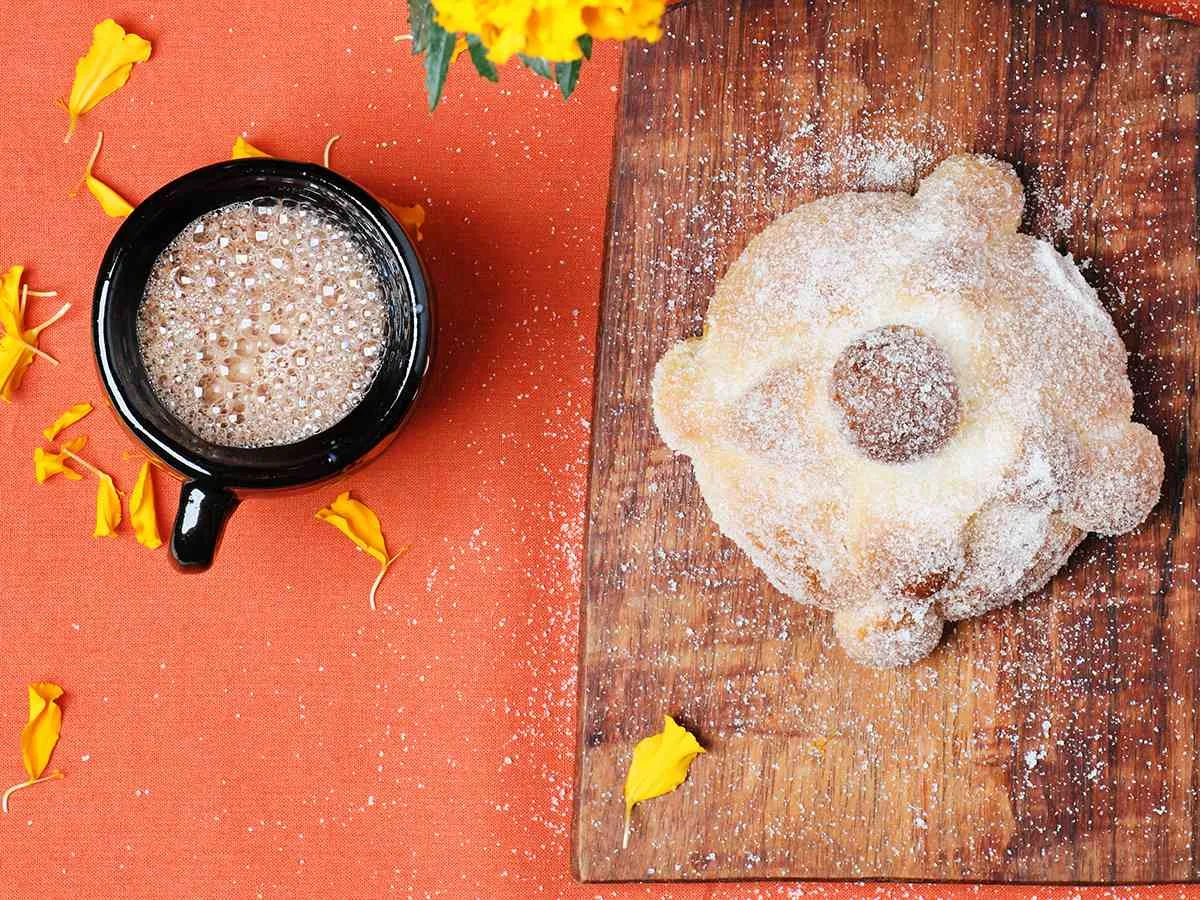
Pan de muerto is a soft, orange-scented Mexican sweet bread traditionally enjoyed around the Day of the Dead. This version is shaped with dough “bones” and finished with melted butter and sugar for a fragrant, lightly crisp coating.
Ingredients
- 510 g (18 oz)plain flour
- 156 g (5½ oz), plus extra to sprinkle over the loavessugar
- 92 g (3¼ oz)butter, for the dough
- 57 g (2 oz)butter, for coating the loaves
- 2eggs
- 113 ml (4 oz)milk
- Grated peel from 2 orangesorange peel
- 9 g (⅓ oz)orange blossom water (agua de azahar)
- 14 g (½ oz)dried yeast
- 30 ml (2 tbsp)oil, for coating the mixing bowl
- ½ tspsalt
Instructions
- 1
Warm the milk
Gently warm the milk, taking care not to let it become hot enough to kill the yeast.
- 2
Mix the starter
In a small bowl, combine 30 g (4 tbsp) flour, 25 g (2 tbsp) sugar and the dried yeast. Add 28–57 g (1–2 oz) warm milk, just enough to make a thin, even paste.
- 3
Leave to ferment
Stir until the milk is fully mixed in, then leave the starter to ferment for 10–15 minutes. It will ferment faster in a warmer room.
- 4
Grate the oranges
Grate the peel from the oranges.
- 5
Combine the dough
Tip the flour onto your work surface and make a hollow in the centre. Put in the butter, half the sugar and the grated orange peel, and scatter the salt around the outer edge of the flour.
- 6
Add the flavourings
Mix the eggs firmly into the flour, then add the orange blossom water. Add a splash of milk if needed and bring the mixture together into a rough ball.
- 7
Incorporate the starter
Press down the dough and make a hollow in its centre. Add the fermented yeast mixture and work it in by hand.
- 8
Add remaining sugar
Press down the dough again, add the remaining sugar and mix firmly by hand until it is incorporated. Add a splash of milk if the dough seems too dry.
- 9
Knead the dough
Once mixed by hand, transfer the dough to a stand mixer fitted with a dough hook. Knead on medium-high speed for 5 minutes, rest for 10 minutes, then knead for another 5 minutes at medium-high speed. Add a little milk if the dough becomes too dry.
- 10
Shape a ball
Put the kneaded dough on your work surface and use your hands to shape it into a ball, continuing to work it until smooth and evenly formed.
- 11
Oil the bowl
Add 15 ml (1 tbsp) oil to a large mixing bowl and coat its base and sides. Add the dough, press it down and coat it with a little more oil. Cover the bowl with a kitchen towel.
- 12
Let dough rise
Set the covered bowl in the warmest part of your kitchen and leave the dough to rise until it has doubled in size.
- 13
Divide the dough
Gently press down the dough on your work surface and stretch it into a thin piece about 38 cm (15 in) long. Weigh out nine 85 g (3 oz) balls.
- 14
Prepare decorations
Sprinkle flour over the remaining dough and knead it gently to work in the flour. With a pastry cutter, cut 18 pieces of 14 g (½ oz) and seven pieces of 7 g (¼ oz) for the bones and skulls.
- 15
Shape bones and skulls
Roll the 14 g pieces into strips about 13 cm (5 in) long, leaving the indentations made by your fingers to suggest bones. Shape the smaller pieces into little balls.
- 16
Decorate the loaves
Place two strips across each loaf to form a cross. Set one small dough ball in the centre of each loaf.
- 17
Bake until golden
Preheat the oven to 204°C (400°F). Lower the temperature to 177°C (350°F) when you put the loaves in, and bake for 15–20 minutes, until golden brown.
- 18
Brush and sugar
As soon as the loaves are cool enough to touch, brush each one with melted butter and sprinkle with sugar.
What is pan de muerto?
Pan de muerto is a Mexican sweet bread made for Day of the Dead, a time when families remember and honour loved ones. Its name means “bread of the dead”, and the decorated dough on top is commonly shaped to evoke bones.
This recipe comes from Chef Elizabeth Pérez Camarena of Casa Marietta bakery in Guanajuato. Orange peel and orange blossom water scent the dough, while butter and sugar give the baked loaves a rich, sweet finish.
Nutrition and macros by portion
The nutrition label shows one serving as written: 224 calories, 4g protein, 31g carbs, 9g fat.
| Portion | Adjustment | kcal | Protein | Carbs | Fat |
|---|---|---|---|---|---|
| Lighter | Smaller loaf, less butter | 157 kcal | 3g | 22g | 6g |
| This serving | As written | 224 kcal | 4g | 31g | 9g |
| Hungry | Serve two loaves | 336 kcal | 6g | 47g | 14g |
The flour and sugar provide most of the carbohydrates, while the butter contributes much of the fat and the eggs and milk add protein. Pair a loaf with fruit or another fresh side for a more varied plate.
The orange and blossom water
Freshly grated orange peel brings aromatic oils into the dough. Grate only the coloured outer peel; the white pith beneath it can taste bitter.
Orange blossom water adds a floral note alongside the citrus. Measure it carefully so it complements rather than overwhelms the bread.
Getting the yeast started
The milk should be gently warm, not hot, before it meets the yeast. The small flour-and-sugar starter gives the yeast time to activate before it is mixed into the larger dough.
Look for a fermenting paste after 10–15 minutes; the timing depends on the warmth of the room. If it is slow, give it a little more time rather than using hotter milk.
Kneading the dough
The two kneading periods are separated by a 10-minute rest. This gives the dough a pause before the second round of mixing and helps it become cohesive.
The recipe advises adding a splash of milk if the dough becomes too dry. Add it sparingly so the dough remains workable rather than sticky.
Shaping the bones
The finger indentations are an important detail: they give each strip its bone-like shape. Roll the strips evenly and leave those ridges visible rather than smoothing them away.
Set two strips across each dough ball, then place a small ball in the centre. The recipe specifies nine large loaves but seven of the smaller dough pieces, so there may not be a small centre ball for every loaf.
Proofing and baking
Let the dough rise in the warmest part of the kitchen until it doubles in size; the recipe does not give a fixed proofing time. Use the change in volume as your cue.
The oven starts hot at 204°C, then is lowered to 177°C once the loaves go in. Begin checking at 15 minutes and take them out when they are golden brown, within the stated 15–20-minute bake.
Serving the bread
Brush the loaves with melted butter when they are cool enough to handle, then sprinkle on sugar while the surface is buttery. This creates a sweet finish that contrasts with the soft crumb.
Serve the bread as a breakfast treat or alongside coffee or hot chocolate. The citrus and floral notes also make it a natural choice for a festive Day of the Dead table.
Recipe notes & tips
- Warm the milk gently so it does not become too hot for the yeast.
- Keep the salt around the outside of the flour as directed when beginning the dough.
- Use a scale to portion the nine main dough balls evenly.
- Leave the ridges made by your fingers visible on the bone-shaped strips.
- Use the doubled size of the dough, rather than a set number of minutes, to judge the rise.
- Brush on the melted butter once the loaves are cool enough to touch.
Variations
- Extra citrus: Add a little more grated orange peel for a stronger citrus aroma.
- Floral accent: Adjust the orange blossom water slightly to suit your preference, keeping its flavour balanced with the orange.
- Smaller loaves: Divide the main dough into smaller portions and keep an eye on them as they bake.
- Different citrus: Use finely grated lemon peel in place of some of the orange peel.
- Plain finish: Leave off the final sugar sprinkle for a less sweet coating.
Common mistakes to avoid
- Overheating the milk: Very hot milk can harm the yeast, so warm it gently.
- Adding too much milk: A large splash can make the dough difficult to handle; add only a little at a time.
- Skipping the dough rest: Keep the 10-minute pause between the two kneading sessions.
- Smoothing the bones: Preserve the finger indentations so the strips keep their ridged shape.
- Relying on a fixed rise time: Wait for the dough to double, since the kitchen temperature affects how quickly it rises.
- Overbaking: Check the loaves from 15 minutes and remove them when golden brown.
How to store
Once completely cool, keep the loaves in an airtight container at room temperature for up to 2 days. Warm briefly in a low oven to refresh them; avoid reheating for too long, as this can dry the bread.
Frequently asked questions
What does pan de muerto taste like?
It is a sweet, buttery bread scented with orange peel and orange blossom water. The sugar-coated top adds a sweet finish.
Can I make the dough without a stand mixer?
The method uses a stand mixer and dough hook for the two 5-minute kneading periods. You can knead by hand, but the recipe does not specify a hand-kneading time.
How do I know when the dough has finished rising?
It should have doubled in size. The time will vary with the warmth of your kitchen.
Why are there seven small dough balls for nine loaves?
The recipe specifies seven pieces for the centres, although it also directs you to decorate nine loaves. You can follow those quantities as written or divide the small pieces among all the loaves.
When should I add the butter and sugar topping?
Brush on the melted butter as soon as the loaves are cool enough to touch, then sprinkle them with sugar.
Can I prepare pan de muerto ahead?
The finished loaves can be baked in advance and stored in an airtight container. For the freshest texture, add the butter-and-sugar finish after baking as directed.
Cook it from the original
This recipe comes from mexicanfoodjournal.com. Their page has the author’s own photos, notes and tips — the best place to cook it from.
Open the recipe on mexicanfoodjournal.com