
Cornflour alfajores
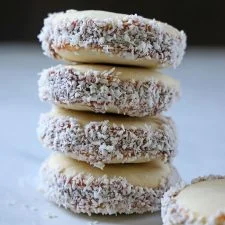
These Chilean cornflour alfajores are tender, crumbly biscuits sandwiched with manjar and rolled in grated coconut. They make a pleasing small sweet for sharing, with lemon zest and vanilla adding fragrance to the dough.
Ingredients
- 125 gunsalted butter (or margarine, though butter is preferred)
- 150 gicing sugar
- 3egg yolks
- 1 teaspoonbrandy
- 280 g (about 2 cups)plain flour, without baking powder
- 100 g (about 1 cup)cornflour
- ½ teaspoonbicarbonate of soda
- 2 teaspoonsbaking powder
- 1 teaspoonvanilla
- Zest of 1lemon
- 120 ml (½ cup), if neededmilk
- To tastemanjar
- To tastedesiccated coconut
Instructions
- 1
Heat the oven
Preheat the oven to 180°C (350°F).
- 2
Mix the dough
Combine the butter or margarine with the icing sugar and egg yolks. Add the flour, baking powder, bicarbonate of soda and cornflour, then mix in the brandy, vanilla and, if needed, enough milk to bring the dough together.
- 3
Cut the rounds
Once the dough is smooth and uniform, roll it out with a rolling pin and cut it into rounds of your preferred size.
- 4
Arrange on tray
Place the rounds on a buttered baking tray.
- 5
Bake the biscuits
Bake for 8–10 minutes.
- 6
Fill and coat
Once the biscuits are cool, sandwich them together with manjar and coat the sides with grated coconut.
What are cornflour alfajores?
Alfajores are filled biscuits found across Latin America, with local versions shaped by their ingredients and traditions. This Chilean-style version uses a cornflour-rich dough and manjar, a thick caramel-like milk spread.
Cornflour gives the biscuits their delicate, tender texture, while the filling and coconut add sweetness and contrast. Lemon zest, vanilla and a little brandy flavour the dough.
Nutrition and macros by portion
The nutrition label shows one serving as written: 240 calories, 3g protein, 37g carbs, 9g fat.
| Portion | Adjustment | kcal | Protein | Carbs | Fat |
|---|---|---|---|---|---|
| Lighter | Use less manjar | 168 kcal | 2g | 26g | 6g |
| This serving | As written | 240 kcal | 3g | 37g | 9g |
| Hungry | Serve two alfajores | 360 kcal | 5g | 56g | 14g |
The flour, cornflour and sugar supply most of the carbohydrates, while butter and egg yolks contribute much of the fat; the yolks also provide some protein. Manjar adds further sugar and energy, so serve an alfajor alongside fruit or an unsweetened drink for a more balanced snack.
The flour and fat
Cornflour: it makes up a substantial part of the dry mixture, so measure it accurately for the intended crumbly texture.
Butter: the ingredient list prefers unsalted butter, though margarine is offered as a substitute. The method mentions margarine, so either can be used according to your preference.
Bringing the dough together
Dry ingredients: add the flour, cornflour, baking powder and bicarbonate of soda after combining the fat, sugar and yolks.
Milk: add it only if needed, a little at a time, until the dough becomes homogeneous and can be rolled. The full stated amount may not be necessary.
Rolling and cutting
Even rounds: roll the dough and cut circles to the size you want; similarly sized biscuits are easier to pair when filling.
Careful handling: the dough is intended to make tender biscuits, so move the cut rounds gently onto the buttered tray.
How to judge doneness
Short bake: the recipe gives a range of 8–10 minutes at 180°C. Check from 8 minutes, as the biscuits are meant to bake briefly.
Cool before filling: wait until the biscuits are cold before adding manjar, so the filling stays between the layers and the biscuits are easier to handle.
Filling and serving
Manjar: spread it between pairs of cooled biscuits, using enough to hold them together without squeezing it out excessively.
Coconut: roll the filled biscuit sides in grated coconut. Serve with coffee or tea, or arrange the alfajores on a plate for sharing.
Recipe notes & tips
- Add the milk gradually, since the dough may come together before you use the full amount.
- Choose a cutter size that lets you make matching pairs for the sandwiches.
- Butter the baking tray before arranging the rounds.
- Start checking the biscuits at 8 minutes rather than automatically baking them for the full 10.
- Let the biscuits cool completely before filling them with manjar.
- Keep a little grated coconut in a shallow dish to make coating the sides easier.
Variations
- Citrus note: add extra lemon zest for a more pronounced citrus aroma.
- Margarine option: use margarine in place of the butter if preferred, as noted in the ingredient list.
- Smaller rounds: cut smaller circles for more bite-sized alfajores.
- Less coconut: leave the sides uncoated if you prefer the manjar filling to stand out.
- Vanilla emphasis: keep the stated vanilla and omit the brandy for a simpler flavour.
Common mistakes to avoid
- Adding all the milk at once: the dough may become too wet, so add it only as needed.
- Overbaking: the biscuits bake for just 8–10 minutes, so check them early.
- Filling while warm: the manjar can slip out, so wait until the biscuits are cool.
- Handling roughly: the rounds can break, so transfer them carefully to the buttered tray.
- Uneven sizing: mismatched rounds are awkward to sandwich, so use the same cutter for the batch.
How to store
Store the filled alfajores in an airtight container in a cool place for up to 3 days. They are best served without reheating; warming can soften the manjar and make the biscuits fragile.
Frequently asked questions
What is manjar?
Manjar is a thick, sweet milk-based caramel spread used as the filling here. Use enough to sandwich the biscuits together.
Can I use margarine instead of butter?
Yes. The ingredient list allows margarine as a substitute, although it says butter is preferred.
Do I have to use all the milk?
No. The recipe says to add milk only if necessary; use just enough to make a smooth, workable dough.
How thick should I roll the dough?
The recipe does not specify a thickness. Roll it evenly so the cut rounds bake at a similar rate.
Can I fill the biscuits while they are warm?
No. Let them cool first, as directed, before adding the manjar and coconut.
Cook it from the original
This recipe comes from midiariodecocina.com. Their page has the author’s own photos, notes and tips — the best place to cook it from.
Open the recipe on midiariodecocina.com