
Spanish Omelette
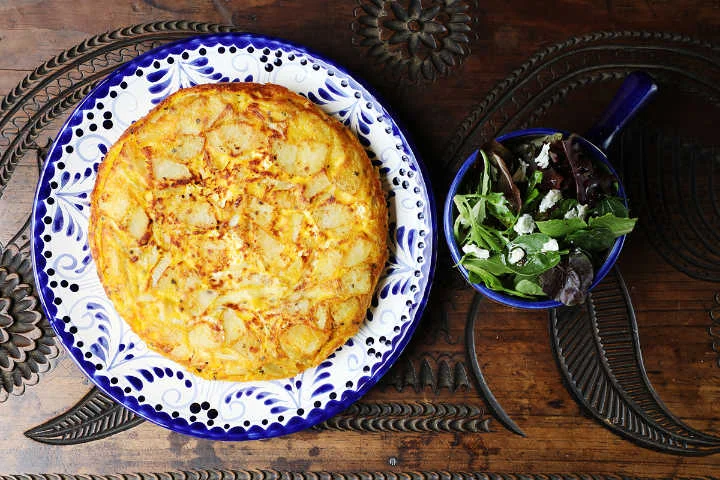
This Spanish omelette layers tender potatoes and onion with sautéed tomato and goat’s cheese, seasoned with Mexican oregano. It makes a filling centrepiece for a brunch or a simple meal shared at the table.
Ingredients
- 4 mediumwhite waxy potatoes
- 8eggs
- ½ mediumwhite onion
- 1 mediumtomato
- 57 g (2 oz)goat’s cheese
- 1 tspMexican oregano
- 1½ tspsalt
- 60 ml (¼ cup)extra-virgin olive oil
Instructions
- 1
Slice the vegetables
Rinse and peel the potatoes, then cut them into slices about 3 mm (⅛ inch) thick; discard the peel. Slice the onion into strips about 3 mm (⅛ inch) thick, and cut the tomato into slices about 6 mm (¼ inch) thick.
- 2
Cook the potatoes
Warm a 25 cm (10 inch) frying pan over medium-low heat with 60 ml (¼ cup) olive oil. Add the potatoes and stir to coat them in the oil. Cook for 10 minutes, stirring regularly so they cook evenly.
- 3
Add onion
Stir the sliced onion into the potatoes and cook for 5 minutes, stirring continually to help the mixture cook evenly without burning.
- 4
Season the mixture
Add the Mexican oregano and cook for a further 5 minutes, stirring continually. Keep the mixture from browning.
- 5
Drain and cool
Take the potato and onion mixture off the heat and strain it, reserving the olive oil for cooking the omelette. Leave the mixture to cool for 10 minutes.
- 6
Cook the tomato
While the potato mixture cools, cook the tomato slices in the same pan over medium heat. Turn them once and cook until they are just beginning to brown, then set aside.
- 7
Warm the pan
Return the frying pan to medium-low heat and add the reserved olive oil.
- 8
Layer the filling
Spoon half of the potato-and-egg mixture into the pan. Arrange the cooked tomato slices evenly over it, then add the crumbled goat’s cheese. Spoon the remaining half of the potato-and-egg mixture over the top.
- 9
Set the first side
Using a spatula, gently push the edge of the omelette inwards all the way around so uncooked egg can flow towards the edge. Cook for about 5 minutes, until the egg has just set.
- 10
Flip the omelette
Place a plate over the pan and hold it firmly in place. Quickly turn the pan over so the omelette releases onto the plate. Put the pan back on the heat, then gently slide the omelette back into it.
- 11
Finish and rest
Cook for a further 5 minutes. Release the omelette onto a plate using the same plate-turning method, and leave it to rest for 10 minutes before slicing.
What is a Spanish omelette?
Also known as tortilla española or tortilla de patatas, a Spanish omelette is a thick, filling dish built around eggs and potatoes. This version adds sautéed tomato and goat’s cheese, with Mexican oregano giving the familiar potato-and-egg combination a different aromatic note.
The recipe brings together Spanish tortilla traditions and ingredients associated here with Mexican cooking. Gentle cooking keeps the potatoes tender, while the tomato and cheese provide a soft, savoury centre.
Nutrition and macros by portion
The nutrition label shows one serving as written: 197 calories, 9g protein, 12g carbs, 13g fat.
| Portion | Adjustment | kcal | Protein | Carbs | Fat |
|---|---|---|---|---|---|
| Lighter | Smaller wedge, more salad | 138 kcal | 6g | 8g | 9g |
| This serving | As written | 197 kcal | 9g | 12g | 13g |
| Hungry | Larger omelette wedge | 296 kcal | 14g | 18g | 20g |
The potatoes provide most of the carbohydrate, while the eggs and goat’s cheese contribute protein. Olive oil, eggs and cheese account for much of the fat; serve a wedge with a generous side of salad or vegetables to round out the plate.
Start with the potatoes
Even slices: cut the potatoes to a similar thickness so they soften at roughly the same pace. The recipe calls for slices about 3 mm (⅛ inch) thick.
Gentle heat: medium-low helps the potatoes cook in the oil without taking on too much colour. Stir regularly, especially as the onion and oregano are added.
Keep the filling from browning
Onion and oregano: add them only after the potatoes have had their first 10 minutes of cooking. Stir continually for the next two 5-minute stages and avoid letting the mixture brown.
Drain and cool: strain the potato mixture but keep the oil, which is used again for the omelette. The 10-minute cooling period also gives you time to cook the tomato.
Build the layers carefully
Tomato: cook the slices in the same pan until they are just starting to brown, turning them once. Letting them colour lightly helps keep them distinct in the filling.
Goat’s cheese: crumble it over the tomato so it is spread through the centre rather than gathered in one spot. Cover with the remaining potato-and-egg mixture as directed.
Watch the set and the flip
First side: after about 5 minutes, the egg should be just set. Gently nudging the edge inwards helps uncooked egg flow towards the sides.
Turning: use a plate that covers the pan and hold it securely as you invert the omelette. Slide it back into the pan gently, then cook the second side for another 5 minutes.
Serve it warm or at room temperature
Rest the omelette for 10 minutes before slicing so it is easier to portion. It works as a main dish with a green salad or cooked vegetables, or as part of a spread with bread.
The recipe serves eight, so cut it into even wedges for sharing. It can also be served at room temperature, making it handy for a relaxed meal.
Recipe notes & tips
- Cut the potatoes to an even thickness so they soften at a similar rate.
- Stir regularly during the potato, onion and oregano cooking stages to prevent sticking or uneven browning.
- Reserve the strained olive oil, as the method uses it again to cook the omelette.
- Cook the tomato just until it begins to brown, then take it out of the pan.
- Use a plate wider than the pan when turning the omelette, and hold it firmly in place.
- The method refers to a potato-and-egg mixture but does not specify when to combine the eggs with the potatoes.
Variations
- Fresh herbs: add chopped parsley or coriander when serving for a fresh finish.
- More vegetables: add thinly sliced cooked peppers between the omelette layers.
- Sharper cheese: swap the goat’s cheese for a crumbly cheese with a stronger flavour.
- Milder seasoning: reduce the Mexican oregano to suit your taste.
- Simple side: serve with a crisp green salad dressed with olive oil and vinegar.
Common mistakes to avoid
- Uneven potato slices: cut them to a consistent thickness so some do not stay firm while others soften.
- High heat: the potato mixture can brown before it cooks through; keep the pan at medium-low.
- Skipping the stirring: the potatoes and onion may cook unevenly or catch on the pan; stir as directed.
- Discarding the oil: strain the mixture into a bowl and reserve the oil for cooking the omelette.
- Rushing the flip: use a plate that fully covers the pan and turn it decisively while holding it securely.
- Cutting straight away: let the omelette rest for 10 minutes before slicing.
How to store
Refrigerate leftovers in a covered container and eat within 3 days. Reheat gently in a frying pan over low heat or in the microwave until warmed through; it can also be served cold or at room temperature.
Frequently asked questions
What does tortilla de patatas mean?
It means potato omelette and is another name for Spanish omelette, also called tortilla española.
When should I combine the eggs with the potatoes?
The method refers to a potato-and-egg mixture but does not state when to combine them. Check the original recipe for clarification before cooking.
How do I know when the omelette is ready to flip?
The recipe gives about 5 minutes for the first side and says the egg should have just set. The centre should not look like loose, uncooked egg when you prepare to turn it.
Can I serve the omelette cold?
Yes. Let it rest after cooking, then serve it warm, at room temperature or chilled.
Can I make it ahead?
You can cook it ahead and refrigerate it in a covered container. Serve it chilled or bring it to room temperature before eating.
Cook it from the original
This recipe comes from mexicanfoodjournal.com. Their page has the author’s own photos, notes and tips — the best place to cook it from.
Open the recipe on mexicanfoodjournal.com