
Easy Salsa Roja Recipe
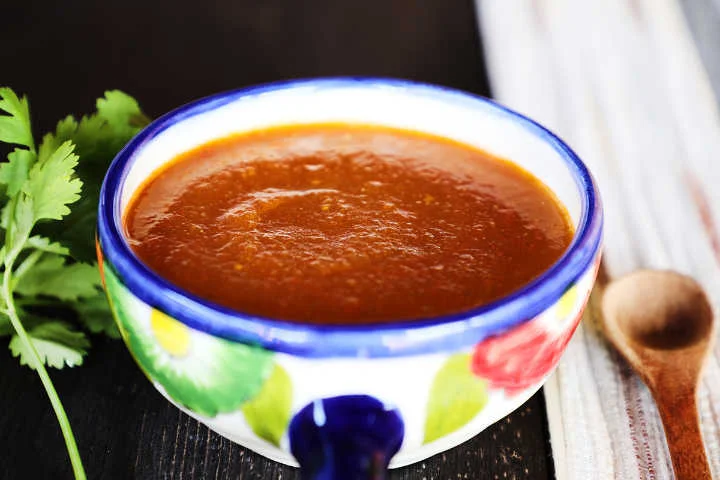
This easy cooked salsa roja blends plum tomatoes, onion, serrano chiles, garlic and cilantro into a versatile Mexican red sauce. Serve it with chilaquiles, eggs, beef or chicken, or use it wherever you want a bright, savoury salsa.
Ingredients
- 5plum (Roma) tomatoes
- 1white onion
- 12 stalkscilantro
- 2serrano chiles
- 2 clovesgarlic
- 5 ml (1 tsp) + to tastesalt
- 30 ml (2 tbsp)cooking oil
- 480 ml (2 cups)water
Instructions
- 1
Quarter the onion
Cut the onion into quarters.
- 2
Halve the tomatoes
Cut each tomato in half.
- 3
Prepare the chiles
Remove the stems from the serrano chiles, slice them in half and take out the seeds.
- 4
Peel the garlic
Peel both garlic cloves.
- 5
Load the pot
Put all the ingredients except the cilantro and salt into a large pot.
- 6
Add the water
Pour in just enough water to almost cover the ingredients, about 950 ml (4 cups).
- 7
Simmer the vegetables
Bring the water to a boil, then turn the heat to low and simmer for 20 minutes.
- 8
Blend the salsa
Blend everything, including the cilantro and cooking water, in two batches.
- 9
Heat the oil
Heat 30 ml (2 tablespoons) of cooking oil in the same pot over medium heat.
- 10
Add the salsa
Pour the blended salsa into the hot oil.
- 11
Simmer again
Turn the heat down and simmer the salsa for 20 minutes.
- 12
Season to taste
Taste the salsa and add salt as needed.
What is salsa roja?
Salsa roja means red salsa in Spanish and refers to a family of Mexican sauces made with red ingredients such as tomatoes or chiles. Recipes and preparation styles vary from kitchen to kitchen.
This version cooks tomatoes, onion, serrano chiles and garlic before blending them with cilantro. Simmering the blended mixture in oil gives it a cohesive, spoonable texture suited to both dipping and serving over food.
Nutrition and macros by portion
The nutrition label shows one serving as written: 24 calories, 1g protein, 5g carbs, 2g fat.
| Portion | Adjustment | kcal | Protein | Carbs | Fat |
|---|---|---|---|---|---|
| Lighter | Use less cooking oil | 17 kcal | 1g | 4g | 1g |
| This serving | As written | 24 kcal | 1g | 5g | 2g |
| Hungry | Serve a larger portion | 36 kcal | 2g | 8g | 3g |
The tomatoes and onion provide most of the carbohydrate, while the cooking oil contributes fat; the vegetables supply only a modest amount of protein. For a more balanced plate, serve the salsa with a protein-rich main such as eggs, chicken or beans.
The vegetables and aromatics
Tomatoes: Plum tomatoes give the sauce its body and mild sweetness. Halving them helps them cook through before blending.
Chiles and garlic: Serranos bring heat, while garlic adds savoury depth. Removing the seeds makes the chiles milder, though the salsa can still have a noticeable kick.
Mind the water quantity
Water: The ingredient list gives 480 ml (2 cups), while the method calls for about 950 ml (4 cups), or enough to almost cover the ingredients. Follow the method's visual cue and add only what is needed to nearly cover them.
Cooking liquid: Blend the vegetables with their cooking water, adding it gradually if you want more control over the finished consistency.
Blending and texture
Two batches: The recipe calls for blending in two batches, which helps avoid overfilling the blender. Take care when blending hot ingredients and follow your blender's instructions for hot liquids.
Consistency: Blend until the sauce is as smooth as you like, keeping some texture if preferred. The second simmer helps the blended salsa settle into a more unified sauce.
The second simmer
Hot oil: Pour the blended salsa into the heated oil carefully, as it may splutter. Lower the heat after adding it.
Timing: Simmer for the full 20 minutes specified, then taste and adjust the salt. Keep the heat low enough that the salsa simmers rather than boils vigorously.
Ways to serve it
Breakfast: Spoon the salsa over eggs or use it in chilaquiles, where it can coat the tortillas.
Main dishes: Serve it with beef or chicken, or offer it at the table as a general-purpose sauce. It also works as a dip alongside tortilla chips.
Recipe notes & tips
- Wear gloves when handling serrano chiles if you prefer not to get their oils on your hands.
- Remove the chile seeds before cooking for a gentler heat level.
- Add the cooking water to the blender gradually to control how loose the salsa becomes.
- Blend in two batches as directed rather than filling the blender to the top.
- Lower the heat after adding the salsa to the hot oil to limit splattering.
- Taste for salt after the final simmer, since the flavour can change as the sauce cooks.
Variations
- Milder salsa: Use one serrano chile and remove its seeds before cooking.
- More heat: Leave some chile seeds in when preparing the serranos.
- Chunkier texture: Blend briefly and stop while the sauce still has some texture.
- Smoother sauce: Blend each batch until evenly puréed.
- Serving sauce: Add cooking liquid gradually during blending for a thinner consistency.
Common mistakes to avoid
- Adding all the water at once: The ingredient list and method differ; use the method's cue and add enough to almost cover the vegetables.
- Overfilling the blender: Hot ingredients need room to move; blend in the two batches specified.
- Blending without the cilantro: Add it with the cooked vegetables and cooking water, as directed.
- Cooking over high heat: A vigorous boil can make the salsa splatter; reduce the heat for the second simmer.
- Skipping the final taste: Check the seasoning after simmering and add salt to taste.
How to store
Refrigerate leftover salsa in a covered container and use within 3–4 days. Reheat gently in a saucepan, stirring occasionally, or serve it chilled.
Frequently asked questions
How can I make the salsa less spicy?
Remove all the seeds and use just one serrano chile. For a milder sauce still, reduce the amount of chile further.
Why do the ingredient list and method give different amounts of water?
The list specifies 480 ml (2 cups), but the method says to add about 950 ml (4 cups), just enough to almost cover the ingredients. Use the visual cue and add the water gradually.
Can I blend the salsa while it is hot?
The method blends the cooked ingredients with their cooking water. Blend in two batches, take care with the hot mixture and follow your blender's instructions for hot liquids.
What should I serve salsa roja with?
It is suggested with chilaquiles, eggs, beef and chicken. It can also be served as a dip or table sauce.
Can I make the salsa smoother or chunkier?
Yes. Blend for less time to retain some texture, or blend until smooth for a more even sauce.
Cook it from the original
This recipe comes from mexicanfoodjournal.com. Their page has the author’s own photos, notes and tips — the best place to cook it from.
Open the recipe on mexicanfoodjournal.com