
Pasta with prawns
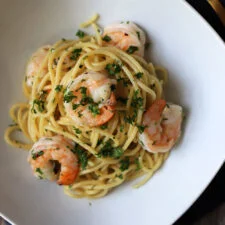
A quick pasta dish with prawns, garlic, parsley and a little chilli, finished with Parmesan. It is a handy choice when you want a hot, savoury meal on the table in about 15 minutes.
Ingredients
- 1 packetpasta of your choice (the original recipe uses spaghetti)
- 15 g (1 tablespoon)butter
- 15 ml (1 tablespoon)olive oil
- 2–3 clovesgarlic, chopped
- 200 gprawns
- to tastehot chilli powder or flakes
- to tastesalt and pepper
- 2 tablespoonschopped parsley
- to tasteParmesan
Instructions
- 1
Cook the pasta
Cook the pasta according to the packet instructions, then set it aside.
- 2
Warm the fats
Put the butter and olive oil in a frying pan. Once the butter begins to melt, add the chopped garlic; do not let it brown.
- 3
Add the prawns
Add the prawns. Once they change colour, season with salt, pepper and chilli to taste.
- 4
Add parsley and pasta
Cook for 2 minutes, then add the chopped parsley and the cooked pasta.
- 5
Toss together
Mix well and cook for 1–2 minutes.
- 6
Serve at once
Serve immediately with Parmesan on top.
What is pasta with prawns?
It is a simple pasta dish in which prawns are quickly cooked with garlic, butter and oil, then tossed with pasta, parsley and chilli. Pasta with seafood is familiar in Italian cooking, though this recipe is best understood as a quick, Italian-inspired combination rather than a specific regional classic.
The short cooking time suits the prawns, while the mix of butter and olive oil gives the garlic a rich base. Parmesan adds a salty finish at the table.
Nutrition and macros by portion
The nutrition label shows one serving as written: 630 calories, 31g protein, 90g carbs, 16g fat.
| Portion | Adjustment | kcal | Protein | Carbs | Fat |
|---|---|---|---|---|---|
| Lighter | Less Parmesan and butter | 441 kcal | 22g | 63g | 11g |
| This serving | As written | 630 kcal | 31g | 90g | 16g |
| Hungry | Larger pasta portion | 945 kcal | 47g | 135g | 24g |
Most of the carbohydrates come from the pasta, while the butter, olive oil and Parmesan provide much of the fat. Prawns contribute protein, with Parmesan adding a little more. Pair a portion with salad or green vegetables for a more balanced plate.
Choosing the pasta and prawns
Pasta shape: spaghetti is suggested, but other shapes work too. Choose one that is easy to toss through the prawns and garlic.
Prawns: use peeled prawns for convenience, and thaw frozen ones before cooking. Pat them dry so excess water does not dilute the pan juices.
Keep the garlic pale
Garlic: add it once the butter starts to melt, rather than waiting for the pan to become very hot. The method specifically says not to brown it; browned garlic can taste bitter.
Chilli: add it with the salt and pepper after the prawns begin changing colour. This lets you adjust the heat without overpowering the garlic.
Watch the prawns closely
Colour: the recipe uses a change in colour as the cue to season the prawns. Cook them only until they are opaque and just cooked through; prolonged cooking can make them firm.
Timing: the method then gives the prawns 2 minutes before adding parsley and pasta. The final toss takes a further 1–2 minutes, so have the cooked pasta ready nearby.
Toss for an even coating
Pasta: drain it before adding it to the pan, and toss thoroughly so the butter, oil, garlic and seasoning coat the strands. If it has cooled while you cook the prawns, the brief final heating warms it through.
Finish: add parsley with the pasta, then serve straight away with Parmesan. The fresh herb and salty cheese balance the richness of the pan.
What to serve alongside
A crisp green salad or simply dressed leaves make a fresh side for the buttery pasta. Steamed green vegetables also work well if you want something warm alongside.
Serve the pasta as soon as it is tossed, while the prawns are tender and the Parmesan can be added at the table.
Recipe notes & tips
- Get the pasta water boiling while you prepare the garlic and prawns to help the quick cooking fit the stated 15 minutes.
- Keep the garlic moving in the pan and take care not to let it brown.
- Thaw frozen prawns fully and pat them dry before adding them to the pan.
- Taste before serving, as Parmesan can add extra saltiness.
- Keep the parsley ready so you can add it as soon as the prawns have had their 2 minutes of cooking.
Variations
- Extra chilli: add more chilli flakes to the pan for a hotter version.
- Lemon finish: squeeze over a little lemon juice at the table for a bright contrast.
- More herbs: add chopped basil alongside the parsley for a different herbal note.
- Vegetable addition: toss in cooked peas or spinach with the pasta.
- Pasta shape: use linguine or another pasta shape in place of spaghetti.
Common mistakes to avoid
- Browning the garlic: it can turn bitter; add it when the butter starts melting and keep it pale.
- Wet prawns: excess water can thin the pan juices; thaw and pat them dry first.
- Overcooking the prawns: they can become firm; cook until opaque and just done.
- Leaving the pasta to cool: it may not heat through in the brief final toss; have it ready as the prawns cook.
- Adding too much salt: Parmesan is salty too; season carefully and taste before serving.
How to store
Refrigerate leftovers in a sealed container and use within 2 days. Reheat gently in a frying pan until hot throughout; a small splash of water can help loosen the pasta. The prawns may become firmer on reheating.
Frequently asked questions
Can I use frozen prawns?
Yes. Thaw them completely first and pat them dry before cooking.
Can I use a different pasta shape?
Yes, use the pasta you prefer and cook it according to its packet instructions. Choose a shape that is easy to mix with the prawns.
How do I know when the prawns are cooked?
They should change colour and become opaque. Stop cooking once they are just cooked through to help keep them tender.
Can I leave out the chilli?
Yes. Omit it for a milder dish, or serve chilli separately so each person can add it to taste.
Can I make this ahead?
It is best cooked just before serving, since prawns can become firm if reheated. You can prepare the garlic and parsley in advance to speed things up.
Cook it from the original
This recipe comes from midiariodecocina.com. Their page has the author’s own photos, notes and tips — the best place to cook it from.
Open the recipe on midiariodecocina.com