
Macarons Recipe
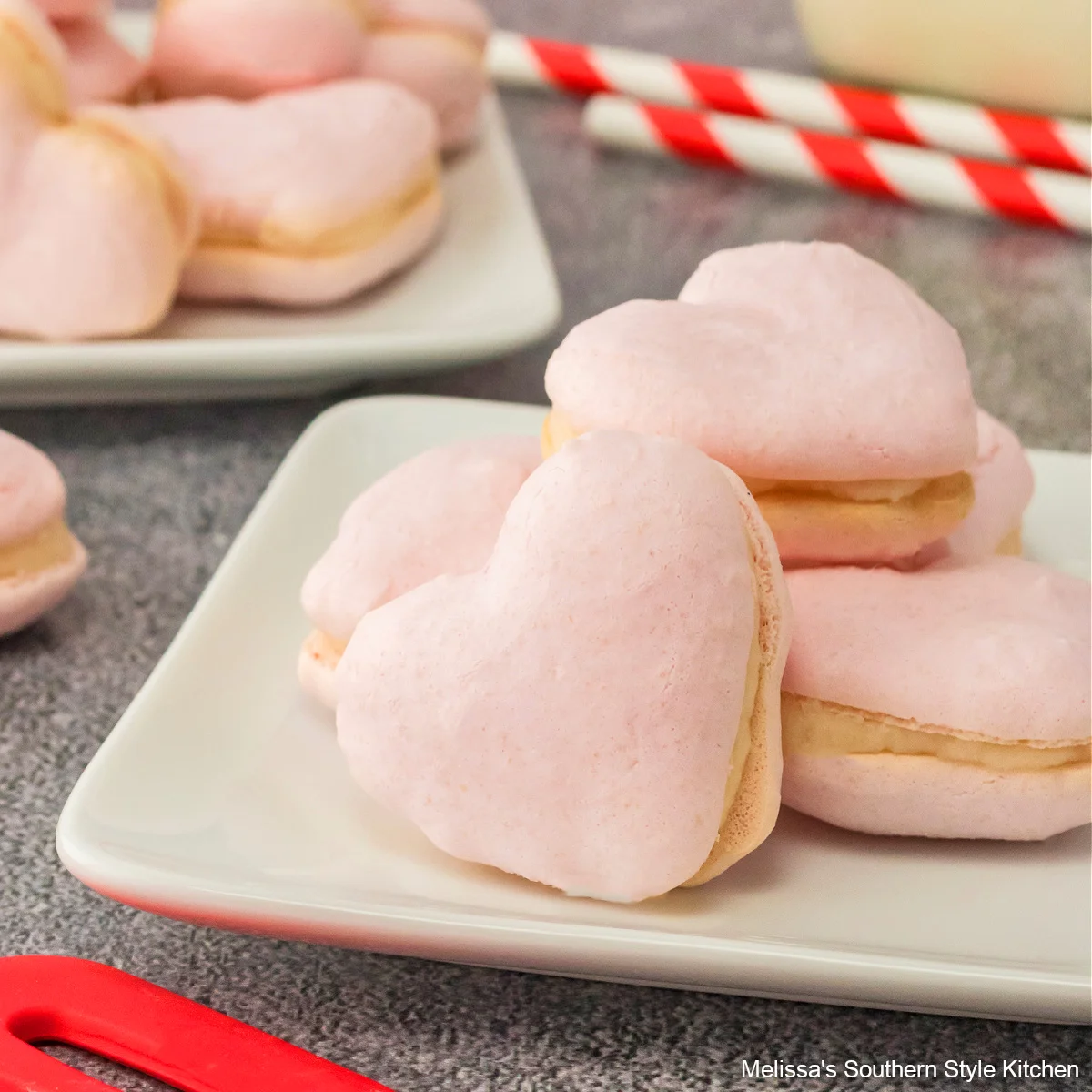
These heart-shaped macarons pair crisp, delicate almond shells with a vanilla buttercream filling. They reward careful mixing and drying, making them a lovely choice for a special occasion or an afternoon baking project.
Ingredients
- 144 g (1 1/2 cups)almond flour
- 120 g (1 cup)icing sugar
- 3 largefresh egg whites, at room temperature
- 1/2 tspcream of tartar
- a pinchsalt
- 200 g (1/2 cup)granulated sugar
- 1 tsppure vanilla extract
- 4–5 dropsfood colouring
- 120 g (1 cup)icing sugar
- 57 g (4 tbsp)salted butter, softened
- 1 tsppure vanilla extract
- 1/4 tspalmond extract
- 30–45 ml (2–3 tbsp)double cream
Instructions
- 1
Mark the shapes
Use a heart-shaped cutter or template to mark shapes on a baking sheet lined with baking parchment, leaving at least 2.5 cm between each one. If your template is oven-safe, place it beneath the parchment.
- 2
Grind the almonds
Process the almond flour until it has the texture of a fine powder.
- 3
Sift the mixture
Sift the almond flour and icing sugar into a medium bowl. Repeat twice more, for three rounds of sifting in total, discarding any larger pieces that do not pass through. Set aside.
- 4
Whip the whites
In a large bowl, beat the egg whites with an electric mixer until frothy, about 5 minutes. Add the cream of tartar and salt, then beat on high for 1 minute.
- 5
Make the meringue
Beat the vanilla and 4–5 drops of food colouring into the whites, adjusting the colour to your preference. Gradually add the granulated sugar while beating on high until the meringue is light, fluffy and stable, with stiff peaks.
- 6
Fold in dry ingredients
Add the sifted mixture to the meringue in three batches, folding each in by hand with a rubber spatula before adding the next. The recipe also allows using a mixer on medium speed; take care not to deflate the meringue.
- 7
Pipe the hearts
Spoon the batter into a piping bag and fill each marked heart evenly.
- 8
Rest the shells
Gently tap the baking sheet on the counter to release air bubbles. Leave the shells to dry for 30–40 minutes, or until a skin forms.
- 9
Bake the macarons
Heat the oven to 150°C (300°F). Bake on the middle shelf for 7 minutes, turn the tray, then bake for a further 5 minutes. The edges should be just slightly toasted.
- 10
Cool the shells
Leave the shells on the baking sheet for 5–10 minutes after baking. Carefully transfer them to a wire rack and let them cool completely.
- 11
Make the buttercream
Beat the softened butter and vanilla with an electric mixer in a medium bowl until fluffy. Gradually beat in the icing sugar, then add the cream 1 tablespoon at a time until the filling is thick but not runny.
- 12
Sandwich the shells
Transfer the buttercream to a piping bag, or use a small icing spatula. Pipe or spread filling onto one shell and place another shell on top.
- 13
Use a template
To make a heart template, press a heart-shaped cutter into baking parchment to leave indentations, then place the parchment on the baking sheet and pipe along the marks. Alternatively, trace around the cutter with a knife tip, leaving at least 2.5 cm between shapes.
What are macarons?
Macarons are delicate almond-based sandwich biscuits associated with French patisserie. They have smooth shells, a light interior and a filling tucked between two halves.
This version gives them heart shapes and pairs the almond shells with vanilla buttercream. The recipe relies on finely sifted dry ingredients and a stable meringue for a smooth, even batter.
Nutrition and macros by portion
The nutrition label shows one serving as written: 142 calories, 2g protein, 19g carbs, 7g fat.
| Portion | Adjustment | kcal | Protein | Carbs | Fat |
|---|---|---|---|---|---|
| Lighter | Use less buttercream | 99 kcal | 1g | 13g | 5g |
| This serving | As written | 142 kcal | 2g | 19g | 7g |
| Hungry | Serve extra macarons | 213 kcal | 3g | 29g | 11g |
The almond flour and sugars provide most of the carbohydrates, while the buttercream contributes much of the fat. Egg whites add some protein; serve a couple of macarons with fresh fruit or yoghurt if you want a more balanced snack.
Why the almond flour matters
Fine texture: Processing and sifting the almond flour with the icing sugar helps remove larger pieces that can interrupt the surface of the shells.
Repeat sifting: The recipe calls for three rounds in total. Set aside anything that remains too large to pass through the sieve.
Building a stable meringue
Room-temperature whites: These are specified in the ingredient list and are beaten first until frothy, then with cream of tartar and salt.
Stiff peaks: Add the granulated sugar gradually while beating on high. The meringue should hold firm peaks before you fold in the dry mixture.
Folding and piping
Gentle folding: Add the dry ingredients in three batches and fold each in with a spatula. Work carefully so the meringue does not lose too much of its volume.
Even shapes: Pipe into the marked hearts, filling each one evenly. Leave at least 2.5 cm between shapes as directed so they have space on the tray.
Let the shells dry
Air bubbles: A gentle tap on the counter helps release them from the piped batter.
Forming a skin: Leave the shells for 30–40 minutes, until their surfaces feel dry and a skin has formed. This drying stage is intended to help prevent cracks during baking.
Check the bake
Timing: Bake at 150°C on the middle shelf for 7 minutes, rotate the tray, and bake for another 5 minutes.
Doneness: Look for edges that are only just toasted, as the recipe describes. Cool the shells on the tray for 5–10 minutes before moving them carefully to a rack.
Fill and serve
Buttercream texture: Add the cream a tablespoon at a time until the filling is thick enough to pipe or spread without running.
Pairing: Serve the macarons with tea or coffee, or alongside fresh berries for a simple dessert plate. Let the shells cool completely before filling.
Recipe notes & tips
- Bring the egg whites to room temperature before starting.
- Sift the almond flour and icing sugar together three times, as directed.
- Add the granulated sugar gradually while whipping the whites.
- Pipe the hearts to a consistent size so they bake at a similar rate.
- Wait for a dry skin to form before putting the shells in the oven.
- Make sure the shells are completely cool before adding the buttercream.
Variations
- Change the colour: Adjust the food colouring drops to get the shade you prefer.
- Make plain shells: Leave out the food colouring for uncoloured macarons.
- Emphasise the almond: Add a little more almond extract to the buttercream, keeping it thick.
- Use a different shape: Pipe rounds instead of hearts, leaving the same space between them.
- Serve with berries: Add fresh berries to the plate for a bright, tart contrast.
Common mistakes to avoid
- Coarse flour: Process and sift the almond flour with the icing sugar, discarding pieces that do not pass through.
- Weak meringue: Keep beating until the mixture is stable and holds stiff peaks before folding.
- Overmixing: Fold the dry ingredients in gently and stop once they are incorporated to avoid deflating the meringue.
- Skipping the rest: Wait 30–40 minutes, or until a skin forms, before baking.
- Runny filling: Add the cream a tablespoon at a time and stop when the buttercream is thick.
- Moving warm shells: Cool them on the tray for 5–10 minutes, then finish cooling on a rack before filling.
How to store
Store filled macarons in an airtight container in the refrigerator and eat within 3 days. Bring them towards room temperature before serving; avoid reheating, as it can soften the shells and filling.
Frequently asked questions
Can I make the shells without food colouring?
Yes. The method gives colouring as an optional addition, so you can leave it out for plain shells.
How do I know the shells are ready to bake?
After resting for 30–40 minutes, their surface should have a dry skin. The recipe uses this cue rather than a fixed resting time alone.
Why do I need to sift the dry ingredients more than once?
Repeated sifting helps remove larger pieces and gives the almond flour and icing sugar a finer texture for the batter.
Can I use milk instead of double cream in the filling?
The method mentions milk as an alternative. Add it gradually, one tablespoon at a time, and stop when the buttercream is thick rather than runny.
Can I make the shells ahead?
Yes. Bake and cool the shells, then store them in an airtight container until you are ready to fill them. Keep filled macarons refrigerated.
What if I do not have a heart-shaped template?
Use a heart-shaped cutter to mark indentations on baking parchment, or trace around it with the tip of a knife. Pipe along those guides.
Cook it from the original
This recipe comes from melissassouthernstylekitchen.com. Their page has the author’s own photos, notes and tips — the best place to cook it from.
Open the recipe on melissassouthernstylekitchen.com