
Baked Milk Flan
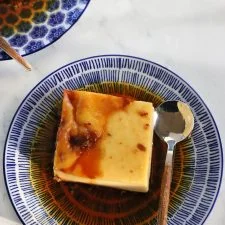
Baked milk flan is a smooth egg-and-milk custard set over a layer of golden caramel. It is made with a short list of pantry ingredients and is best served chilled, when the custard has had time to firm up.
Ingredients
- 1 litre (1 quart)milk
- 190 g (1 cup; 6.7 oz)granulated sugar, for the milk mixture
- 1 teaspoonvanilla extract
- 6eggs
- 140 g (¾ cup; 5 oz)granulated sugar, for the caramel
- 3 tablespoonswater
Instructions
- 1
Warm the custard
Beat the whole eggs, then gradually add the milk, 190 g of sugar and the vanilla extract. Warm the mixture over a low heat until the sugar dissolves, then set it aside.
- 2
Make the caramel
Moisten the remaining sugar with 3 tablespoons of water and heat gently until it melts completely and turns golden brown; do not stir. Pour the caramel over the bottom and sides of a baking mould.
- 3
Bake the flan
Pour the milk mixture into the mould and bake for about 40 minutes at 200°C (400°F). Leave it to cool in the oven for as long as possible.
What is baked milk flan?
Flan is a set custard served with a thin layer of caramel, with versions found in many food traditions. This baked milk version combines eggs, milk, sugar and vanilla in a simple custard.
The caramel coats the mould and becomes a glossy topping when the flan is turned out. Gentle heating before baking helps dissolve the sugar in the milk mixture.
Nutrition and macros by portion
The nutrition label shows one serving as written: 295 calories, 9g protein, 47g carbs, 8g fat.
| Portion | Adjustment | kcal | Protein | Carbs | Fat |
|---|---|---|---|---|---|
| Lighter | Smaller slice | 207 kcal | 6g | 33g | 6g |
| This serving | As written | 295 kcal | 9g | 47g | 8g |
| Hungry | Larger slice | 443 kcal | 14g | 71g | 12g |
The sugars provide most of the carbohydrates, while the eggs and milk contribute protein and fat. For a more balanced plate, serve a slice with fresh fruit rather than adding another sweet topping.
The milk mixture
Eggs: Beat them before adding the other ingredients so they can be combined evenly with the milk.
Milk and sugar: Add the milk and sugar gradually, then warm the mixture over low heat until the sugar dissolves. Avoid letting it boil.
Getting the caramel right
Sugar and water: Moisten the sugar, then heat it gently without stirring as directed. Watch its colour closely; remove it from the heat once it is golden brown.
Mould: Pour the hot caramel over the bottom and sides so it forms a coating. Take care when handling it, as melted sugar is very hot.
Baking and doneness
Oven: Bake at 200°C (400°F) for about 40 minutes, as specified in the method. The recipe does not give a separate visual or temperature test for doneness.
Cooling: Leave the flan in the oven to cool for as long as possible, then allow it to cool fully before serving. This gives the custard time to settle.
Serving the flan
Serve the flan turned out onto a plate so the caramel can run over the custard. A plain slice keeps the focus on its milky, vanilla flavour.
Fresh fruit makes a bright accompaniment, while unsweetened tea or coffee works well alongside the sweet caramel.
Recipe notes & tips
- Use low heat when warming the milk mixture so it does not come to a boil.
- Keep a close eye on the caramel as it changes colour quickly near the end.
- Pour the caramel carefully to coat the mould before it hardens.
- Set out the ingredients before starting, as the caramel needs attention while it cooks.
- Allow as much oven cooling time as possible before serving.
Variations
- Citrus note: Add a little finely grated lemon zest to the milk mixture for a fresh aroma.
- Cinnamon: Infuse the milk with a cinnamon stick while warming, then remove it before combining.
- Coffee: Stir a small amount of strong coffee into the milk mixture for a roasted flavour.
- Individual portions: Divide the caramel and custard between small oven-safe moulds and check them earlier, as cooking time may differ.
- Dairy choice: Use a different type of milk, bearing in mind that it may change the custard's richness and texture.
Common mistakes to avoid
- Boiling the milk: Keep the heat low and stop once the sugar has dissolved.
- Stirring the caramel: Leave it undisturbed while it melts to follow the method.
- Over-dark caramel: Remove it from the heat when it is golden brown, before it turns very dark.
- Rushing the cooling: Leave the flan in the oven for as long as possible, then let it cool fully.
- Handling hot sugar carelessly: Pour slowly and avoid touching the caramel, which can cause burns.
How to store
Once fully cool, cover and refrigerate the flan, and eat it within 3 days. Serve chilled; reheating is not recommended because it can soften the custard.
Frequently asked questions
How do I know when the flan is ready?
The recipe specifies about 40 minutes at 200°C (400°F), but gives no additional doneness cue. Check it near the end of the stated baking time and avoid extending the bake unnecessarily.
Can I make the flan ahead?
Yes. It can be made ahead and kept covered in the fridge once cool, which also gives it time to chill before serving.
Why should I avoid stirring the caramel?
The method directs you to heat the moistened sugar without stirring. Keep the heat low and watch for the golden-brown colour.
Can I use a different baking mould?
Use an oven-safe mould that can hold the milk mixture and be coated with caramel. The recipe does not specify a particular shape or size.
Can I turn the flan out before serving?
Yes. Run a thin knife around the edge and invert it onto a plate, taking care to catch the caramel. Make sure the flan is fully cool first.
Cook it from the original
This recipe comes from midiariodecocina.com. Their page has the author’s own photos, notes and tips — the best place to cook it from.
Open the recipe on midiariodecocina.com