
Lasagna with bolognese sauce
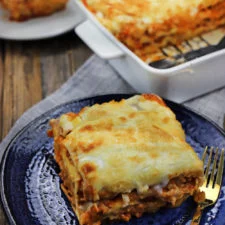
This Italian-style lasagna layers a slow-simmered beef and tomato sauce with béchamel, pasta sheets and two cheeses. It takes a little time to assemble, but the sauces can be made while the oven heats and the result is a hearty bake for sharing.
Ingredients
- 12 sheetspre-cooked lasagna sheets
- 200 g (2 cups)grated mozzarella cheese
- 100 g (1 cup)grated Parmesan cheese
- to tastesalt and pepper
- 500 g (18 oz)ground beef
- 1onion, finely chopped
- 2 clovesgarlic, minced
- 1carrot, grated
- 2 stalkscelery, chopped
- 800 g (28 oz)crushed tomatoes (canned tomatoes can be used)
- 250 ml (1 cup)red wine (optional)
- 30 ml (2 tablespoons)tomato paste
- 1bay leaf
- 1 teaspoondried oregano
- 1 teaspoondried basil
- to tastesalt and pepper
- 30 ml (2 tablespoons)olive oil
- 50 g (1.8 oz)butter
- 50 g (1.8 oz)flour
- 500 ml (16.9 fl oz)milk
- to tastesalt
- to tastepepper
- to tastenutmeg (optional)
Instructions
- 1
Preheat the oven
Heat the oven to 180°C (350°F).
- 2
Soften the vegetables
Warm the olive oil in a large frying pan over medium heat. Add the onion, garlic, carrot and celery, and cook until tender.
- 3
Brown the beef
Add the ground beef and cook until well browned.
- 4
Reduce the wine
If using the red wine, pour it into the pan and let it reduce by half.
- 5
Simmer the sauce
Add the crushed tomatoes, tomato paste, bay leaf, oregano, basil, salt and pepper. Cook over low heat for about 30–40 minutes, stirring occasionally.
- 6
Melt the butter
To make the béchamel, melt the butter in a pot over medium heat.
- 7
Cook the roux
When the butter has melted completely, whisk in the flour. Cook over medium heat for a few minutes to remove the raw flour taste, without letting the mixture colour.
- 8
Add the milk
Gradually pour the milk into the roux, stirring constantly to prevent lumps.
- 9
Thicken the sauce
Cook over medium-low heat, stirring until the béchamel thickens and is smooth. This may take about 10–15 minutes.
- 10
Season the béchamel
Add salt, pepper and nutmeg to taste. The nutmeg is optional but gives the béchamel its characteristic flavour.
- 11
Finish the béchamel
Simmer for a few more minutes so the flavours come together and the sauce reaches the desired consistency.
- 12
Start the layers
Spread a thin layer of Bolognese sauce over the bottom of a baking dish.
- 13
Add the pasta
Lay a layer of lasagna sheets over the sauce.
- 14
Layer the sauces
Add béchamel, then another layer of Bolognese sauce and a layer of grated mozzarella.
- 15
Repeat the layers
Continue layering until you finish with Bolognese sauce, then scatter the grated Parmesan over the top.
- 16
Bake the lasagna
Cover the dish with aluminium foil and bake in the preheated oven for 25–30 minutes. Remove the foil and bake for another 10–15 minutes, until the cheese is golden and bubbling.
- 17
Rest and serve
Leave the lasagna to rest for a few minutes before cutting it into portions and serving.
What is lasagna with Bolognese sauce?
Lasagna is an Italian baked pasta dish made by stacking sheets with sauce and other fillings. This version pairs a beef-and-tomato Bolognese with béchamel and a mozzarella and Parmesan topping.
The layers give each slice a mix of tender pasta, rich meat sauce and creamy white sauce. Simmering the Bolognese and making a smooth béchamel help the filling hold together without being dry.
Nutrition and macros by portion
The nutrition label shows one serving as written: 850 calories, 47g protein, 72g carbs, 39g fat.
| Portion | Adjustment | kcal | Protein | Carbs | Fat |
|---|---|---|---|---|---|
| Lighter | More vegetables, smaller slice | 595 kcal | 33g | 50g | 27g |
| This serving | As written | 850 kcal | 47g | 72g | 39g |
| Hungry | Larger lasagna portion | 1275 kcal | 71g | 108g | 59g |
The pasta sheets and flour provide most of the carbohydrates, while olive oil, butter and cheese contribute much of the fat. Beef and the cheeses supply the protein. Serve a slice with salad or vegetables to add freshness and balance the richness.
Building flavour in the Bolognese
Vegetable base: cooking the onion, garlic, carrot and celery in olive oil softens them before the beef goes in. Give them time to become tender so they blend into the sauce.
Wine and tomatoes: reducing the wine by half concentrates its flavour before the crushed tomatoes and tomato paste are added. The 30–40-minute simmer gives the sauce time to thicken; stir occasionally to stop it catching.
Getting a smooth béchamel
Roux: cook the butter and flour together for a few minutes, but keep the mixture pale. This cooks out the raw flour taste while keeping the béchamel light in colour.
Milk: add it gradually while whisking continuously, then keep stirring as the sauce thickens over medium-low heat. If you spot lumps, whisk firmly until smooth before continuing.
Layering for an even bake
First layer: start with a thin covering of Bolognese sauce so the pasta does not sit directly on the base of the dish. Follow with sheets, béchamel, more Bolognese and mozzarella.
Top layer: finish with Bolognese and Parmesan as directed. Covering the dish for the first part of baking helps the layers heat through; uncovering it at the end lets the cheese brown and bubble.
When it is ready to serve
Baking: keep the lasagna covered for 25–30 minutes at 180°C, then uncover it for another 10–15 minutes. Look for bubbling sauce and a golden cheese topping.
Resting: leave the dish for a few minutes before cutting. This short pause makes it easier to lift out portions with the layers intact.
What to serve alongside
A crisp green salad or simply dressed leaves bring a fresh contrast to the rich sauces and cheese. Steamed or roasted vegetables also make a straightforward side.
If serving bread, offer a modest amount for catching any sauce left on the plate. Let the lasagna remain the centre of the meal.
Recipe notes & tips
- Cook the vegetable base until tender before adding the beef.
- Let the wine reduce by half before adding the tomatoes.
- Pour the milk into the roux gradually while whisking to help prevent lumps.
- Keep the roux pale; browning it will change the colour and flavour of the béchamel.
- Use foil for the first part of baking, then uncover the dish to brown the cheese.
- Rest the lasagna briefly before slicing so the layers are easier to serve.
Variations
- Skip the wine: leave it out and continue with the tomatoes once the beef is browned.
- Add extra herbs: adjust the dried oregano or basil to suit your taste.
- Use canned tomatoes: choose crushed canned tomatoes as suggested in the recipe.
- Change the cheese: keep the mozzarella in the layers and use Parmesan for the topping as directed.
- Make it meat-free: replace the beef with chopped vegetables and cook them until tender before adding the tomatoes.
Common mistakes to avoid
- Lumpy béchamel: add the milk gradually and whisk constantly as you pour.
- Dark roux: cook the flour and butter only until the raw flour taste has gone, keeping the mixture pale.
- Thin Bolognese: simmer it for the full 30–40 minutes, stirring occasionally.
- Dry edges: spread sauce across the base and keep the dish covered for the first baking stage.
- Soggy slices: allow the baked lasagna to rest for a few minutes before cutting.
- Pale topping: remove the foil for the final 10–15 minutes of baking.
How to store
Refrigerate leftovers in a covered container and eat within 3 days. Reheat portions until steaming hot throughout, either in the oven covered with foil or in the microwave.
Frequently asked questions
Can I leave out the red wine?
Yes. The wine is optional, so you can omit it and move on to adding the tomatoes, tomato paste and seasonings.
Do pre-cooked lasagna sheets need boiling?
This recipe calls for pre-cooked sheets and does not include a boiling step. Layer them into the dish as directed.
How do I know the lasagna is baked?
After the covered and uncovered baking stages, the cheese should be golden and bubbling. Let it rest briefly before serving.
Why is my béchamel lumpy?
Lumps can form if the milk is added too quickly or the sauce is not stirred. Pour it in gradually while whisking continuously.
Can I make the sauces ahead?
You can prepare the Bolognese and béchamel in advance, then assemble and bake the lasagna when ready. Cool and refrigerate the sauces in covered containers until needed.
Can I freeze leftover lasagna?
Yes. Freeze portions in airtight, freezer-safe containers. Thaw in the fridge before reheating until steaming hot throughout.
Cook it from the original
This recipe comes from midiariodecocina.com. Their page has the author’s own photos, notes and tips — the best place to cook it from.
Open the recipe on midiariodecocina.com