
Salsa Roja
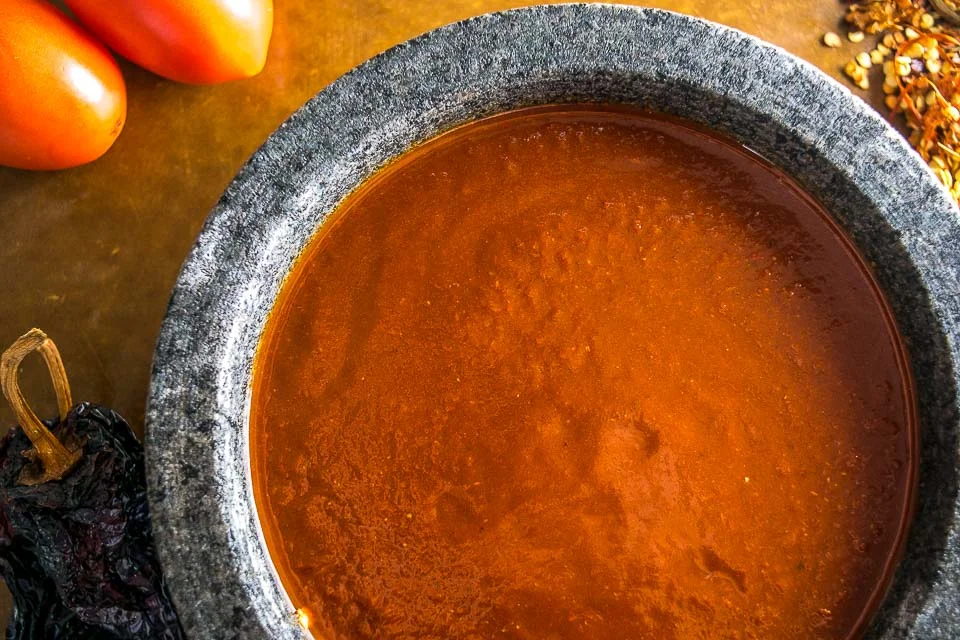
Salsa roja is a concentrated, fiery red sauce made with dried chiles, roasted tomatoes and aromatics. This batch is easy to blend and strain, and works as a table sauce or a flavourful addition to other dishes.
Ingredients
- 6dried guajillo chiles
- 2 (or 3 smaller)dried ancho chiles
- 3tomatoes
- 1/2onion
- 3garlic cloves
- 1chipotle in adobo (optional)
- 15 ml (1 tablespoon)adobo sauce (optional)
- 2.5 ml (1/2 teaspoon)Mexican oregano
- 5 ml (1 teaspoon)salt
- to tastefreshly cracked black pepper
- a splashcider vinegar
- 600 ml (2.5 cups)water
- a dollopolive oil
Instructions
- 1
Roast tomatoes
Roast the tomatoes in an oven preheated to 200°C (400°F).
- 2
Prepare chiles
Wipe dusty crevices from the dried chiles with a damp towel. To remove the seeds, cut off each stem, slit the chile lengthways, then pull out the ribs and seeds by hand.
- 3
Cook aromatics
Warm a dollop of oil in a pan over medium heat and sauté the 1/2 onion and 3 whole garlic cloves. Once the onion begins to soften, add the dried chiles, cut into smaller pieces first.
- 4
Add sauce ingredients
Cook the chiles for a few minutes, then add the roasted tomatoes, 1/2 teaspoon Mexican oregano, 1 teaspoon salt, freshly cracked black pepper and 600 ml water. Add 1 chipotle in adobo and 1 tablespoon adobo sauce too, if using.
- 5
Simmer and blend
Simmer for about 5 minutes, then transfer everything to a blender and blend until well combined.
- 6
Strain sauce
Strain the sauce into a mixing bowl, discarding the solids left in the sieve. Press the mixture through with a spoon or spatula if needed.
- 7
Adjust seasoning
Taste the sauce and adjust the salt. Add another pinch of salt and a splash of cider vinegar, as desired.
- 8
Serve or store
Serve straight away, or keep the sauce in an airtight container in the fridge; a squeeze bottle is handy for storage.
What is salsa roja?
Salsa roja means red sauce in Spanish and describes a broad family of red salsas, rather than just one fixed recipe. This version takes its character from dried Mexican chiles, roasted tomatoes and a short simmer.
The blend of guajillo and ancho chiles gives the sauce its concentrated chile flavour, while optional chipotle and adobo bring a smokier edge. Straining makes the finished sauce smoother.
Nutrition and macros by portion
The nutrition label shows one serving as written: 21 calories, 0g protein, 0g carbs, 0g fat.
| Portion | Adjustment | kcal | Protein | Carbs | Fat |
|---|---|---|---|---|---|
| Lighter | Use less olive oil | 15 kcal | 0g | 0g | 0g |
| This serving | As written | 21 kcal | 0g | 0g | 0g |
| Hungry | Serve a larger portion | 32 kcal | 0g | 0g | 0g |
The tomatoes and onion contribute most of the carbohydrates, while the olive oil carries most of the fat; the chiles add flavour, and the recipe contains little protein. Serve the sauce with a protein-rich main and vegetables or another substantial side to make a more balanced plate.
Choosing the chiles
Guajillo chiles: These form the main chile base here. Wipe away dust before preparing them, and remove the stems, ribs and seeds as directed.
Ancho chiles: Anchos join the guajillos for a rounded dried-chile flavour. Smaller anchos can be used in place of the two larger ones.
Chipotle: This is optional, as is the adobo sauce. Leave both out for a less smoky sauce, or include them for extra depth.
Roast the tomatoes first
Roasting the tomatoes before adding them to the pan gives them time to soften and develop flavour. The recipe gives the oven temperature as 200°C (400°F), but does not specify a roasting time, so use the tomatoes' softened, roasted appearance as your cue.
Have the remaining ingredients ready before you begin cooking the chiles, so the tomatoes can go into the pan after the chiles have cooked for a few minutes.
Soften, then simmer
Start with the onion and whole garlic cloves over medium heat. Add the chiles when the onion begins to soften, and cut them into smaller pieces first so they are easier to handle in the pan.
After adding the tomatoes, water and seasonings, simmer for about 5 minutes. This brief cooking stage brings the ingredients together before blending.
Blend and strain
Blend the cooked ingredients until they are well combined. Take care when transferring hot ingredients to a blender and follow its instructions for blending hot mixtures.
Strain the sauce into a bowl and press it through with a spoon or spatula if it does not pass easily. Discard the solids left behind for the smooth, concentrated texture intended here.
Season and serve
Taste the sauce after straining, then adjust the salt and add a splash of cider vinegar if you like. The recipe suggests starting with the listed salt and adding another pinch at this point.
Serve it as a table sauce or alongside tacos, eggs, grilled vegetables or other dishes that suit a punchy red sauce. A squeeze bottle makes it easy to portion at the table.
Recipe notes & tips
- Wipe the dried chiles with a damp towel before opening them.
- Cut the chiles into smaller pieces before adding them to the pan.
- Keep the optional chipotle and adobo sauce separate until you decide how smoky you want the sauce.
- Press the sauce through the sieve with a spoon or spatula if it needs help passing through.
- Taste after straining so you can adjust the salt and vinegar to suit.
Variations
- Smokier sauce: Add the optional chipotle and adobo sauce.
- Milder batch: Leave out the chipotle and adobo sauce.
- More tang: Add the cider vinegar a little at a time after tasting.
- Coarser texture: Skip straining for a less smooth sauce.
- Extra heat: Keep some of the chile seeds when preparing the dried chiles.
Common mistakes to avoid
- Leaving dusty chiles uncleaned: Wipe their crevices with a damp towel before cooking.
- Adding whole dried chiles: Cut them into smaller pieces before they go into the pan.
- Skipping the simmer: Give the mixture about 5 minutes of simmering before blending.
- Expecting every bit to pass through: Press the sauce through the sieve with a spoon or spatula.
- Seasoning without tasting: Check the salt after straining and add more only as needed.
How to store
Keep the sauce in an airtight container in the fridge; a clean squeeze bottle is convenient. The recipe does not specify a storage duration, so use it promptly and discard it if its appearance or smell changes.
Frequently asked questions
How spicy is this salsa roja?
The exact heat depends on the dried chiles. The chipotle and adobo sauce are optional, so leaving them out avoids their additional smoky chile flavour.
Do I have to remove the chile seeds?
The method calls for removing the ribs and seeds. Cut off each stem, slit the chile lengthways and pull them out by hand.
Can I leave out the chipotle?
Yes. Both the chipotle and the adobo sauce are listed as optional.
Why strain the sauce?
Straining removes the solids left after blending, giving the sauce a smoother finish. Press it through with a spoon or spatula if needed.
Can I make the sauce ahead?
Yes. Once made, store it in an airtight container in the fridge. A squeeze bottle is useful for serving.
What can I serve salsa roja with?
Serve it as a table sauce with tacos, eggs or grilled vegetables, or alongside another savoury main.
Cook it from the original
This recipe comes from mexicanplease.com. Their page has the author’s own photos, notes and tips — the best place to cook it from.
Open the recipe on mexicanplease.com