
Salmon tartare
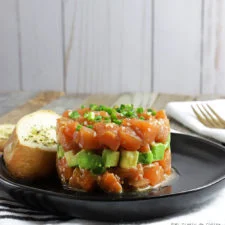
Salmon tartare pairs finely diced raw salmon with ripe avocado, red onion and a bright, savoury dressing. It is quick to assemble and makes a fresh starter or light meal with crisp toast.
Ingredients
- 250 gfresh salmon (high quality, preferably intended for sushi)
- 1ripe avocado
- 1 smallred onion
- 1 tablespoon (optional)capers
- 1 tablespoon (optional)fresh chives or dill
- 2 teaspoonssoy sauce
- 1 teaspoonsesame oil
- Juice of ½lemon or lime
- To tastesalt and black pepper
- To taste (optional)chives
- To tastecrisp bread toasts
Instructions
- 1
Dice the salmon
Cut the salmon into small, roughly 1 cm cubes, using a sharp knife to keep the pieces even.
- 2
Prepare the avocado
Peel and dice the avocado into small cubes about the same size as the salmon.
- 3
Chop the onion
Finely chop the red onion. If you prefer a milder flavour, rinse it briefly in cold water.
- 4
Combine the ingredients
Put the salmon, avocado, red onion and capers, if using, into a large bowl.
- 5
Add the herbs
Add the chives or dill, if you like.
- 6
Dress the tartare
Add the soy sauce, sesame oil and lemon or lime juice. Fold gently to combine.
- 7
Season to taste
Taste and adjust with salt and black pepper as needed.
- 8
Choose a mould
To shape the tartare for serving, use a cup or a ring mould if you have one.
- 9
Layer the mixture
Place a portion of salmon in the base, followed by a portion of avocado, then another portion of salmon.
- 10
Add the garnish
Scatter chopped chives over the top for a fresh finish and a little colour.
- 11
Serve with toast
Serve with crisp bread toasts.
What is salmon tartare?
Tartare is a dish of finely chopped or diced ingredients served uncooked; versions made with raw fish are popular in many modern cuisines. This one combines salmon with avocado and a simple soy, sesame and citrus dressing.
The combination works because the salmon's richness meets the avocado's soft texture, while onion and citrus bring contrast. Capers and herbs are optional ways to add extra savoury or fresh notes.
Nutrition and macros by portion
The nutrition label shows one serving as written: 540 calories, 29g protein, 31g carbs, 33g fat.
| Portion | Adjustment | kcal | Protein | Carbs | Fat |
|---|---|---|---|---|---|
| Lighter | More salad, less toast | 378 kcal | 20g | 22g | 23g |
| This serving | As written | 540 kcal | 29g | 31g | 33g |
| Hungry | Extra toast and salmon | 810 kcal | 44g | 47g | 50g |
Salmon provides most of the protein and also contributes fat; avocado and sesame oil add much of the remaining fat, while the avocado and toast provide carbohydrates. Serve with a generous salad or extra vegetables alongside, and keep the toast portion suited to your appetite.
Choose and handle the salmon carefully
Fish choice: use very fresh, high-quality salmon from a reputable fishmonger and tell them it will be eaten raw. Fish described as suitable for sushi is a useful guide, but keep it chilled and follow the seller's handling advice.
Preparation: remove the skin and check carefully for any remaining bones before dicing. Keep the fish cold while you prepare the other ingredients, and serve the finished tartare promptly.
Cut the ingredients evenly
Salmon cubes: pieces around 1 cm give the tartare a neat, substantial texture. A sharp knife helps make clean cuts without crushing the fish.
Avocado and onion: cut the avocado to a similar size so each bite has a balanced mix. A brief cold-water rinse can soften the onion's sharpness; drain it well before adding it.
Mix gently and season last
Gentle mixing: fold the dressing through rather than stirring vigorously, which can break up the avocado and salmon. Add the herbs and optional capers along with the other ingredients.
Final seasoning: soy sauce brings saltiness, so taste before adding extra salt. Citrus can brighten the mixture, while black pepper adds a little warmth.
Shape and serve
Layering: a cup or ring mould can help form a tidy presentation, but it is not essential. Follow the salmon, avocado and salmon layering described in the method, handling the mixture lightly.
Accompaniment: crisp toast gives the soft tartare a crunchy contrast and makes it easy to serve as a starter or light meal. Add chopped chives just before serving for a fresh finish.
Timing and doneness
This dish takes about 20 minutes to prepare and has no cooking stage. The salmon should remain raw, so freshness and cold handling matter more than a visual doneness cue.
Dice and dress it close to serving time. Citrus changes the fish's surface over time, so avoid leaving the dressed tartare standing.
Recipe notes & tips
- Chill the salmon until you are ready to cut and mix it.
- Use a sharp knife and wipe it clean if the salmon begins to smear.
- Rinse the chopped onion briefly in cold water for a gentler flavour, then drain it well.
- Fold the ingredients together carefully to keep the avocado cubes intact.
- Taste before adding salt because the soy sauce is already savoury.
- Serve soon after dressing, with the toast kept crisp and separate.
Variations
- Use lime: replace the lemon with lime juice for a sharper citrus note.
- Choose dill: use the optional dill instead of chives for a different herbal flavour.
- Add capers: include them for extra briny, savoury bites.
- Make it milder: rinse the finely chopped onion in cold water and drain it well.
- Add a little heat: mix in a small amount of finely chopped chilli to taste.
Common mistakes to avoid
- Using salmon of uncertain freshness: buy it from a reputable fishmonger and explain that it will be eaten raw.
- Leaving the fish out: keep it chilled during preparation and serve the tartare promptly.
- Cutting uneven pieces: aim for roughly 1 cm cubes so the mixture is easy to eat.
- Overmixing: fold gently to avoid crushing the avocado and salmon.
- Salting too early: taste after adding soy sauce, then adjust the salt if needed.
- Dressing too far ahead: mix close to serving so the texture stays fresh.
How to store
This tartare is best eaten as soon as it is made. Keep it refrigerated in a covered container if necessary, and do not leave it at room temperature; for raw fish, follow the fishmonger's storage advice and avoid keeping leftovers for another meal. Do not reheat.
Frequently asked questions
Can I make salmon tartare ahead?
It is best assembled shortly before serving. You can prepare the onion and herbs in advance, but keep them chilled and dice and dress the salmon close to mealtime.
What salmon should I use for tartare?
Choose very fresh, high-quality salmon from a reputable source and tell the fishmonger it will be eaten raw. Follow their advice on suitability and storage.
Can I leave out the avocado?
Yes, though the tartare will be less creamy and the portions will be smaller. You can serve it with extra toast or salad.
How can I make the onion taste milder?
Rinse the finely chopped onion briefly in cold water, then drain it thoroughly before mixing it in.
Do I have to shape the tartare in a ring?
No. The cup or ring is only for presentation; you can spoon the mixture directly onto plates.
What can I serve with salmon tartare?
Crisp bread toasts are the suggested accompaniment. A simple green salad also works well alongside.
Cook it from the original
This recipe comes from midiariodecocina.com. Their page has the author’s own photos, notes and tips — the best place to cook it from.
Open the recipe on midiariodecocina.com