
Gooey 5 minute Cheddar Cheese Omelet Recipe
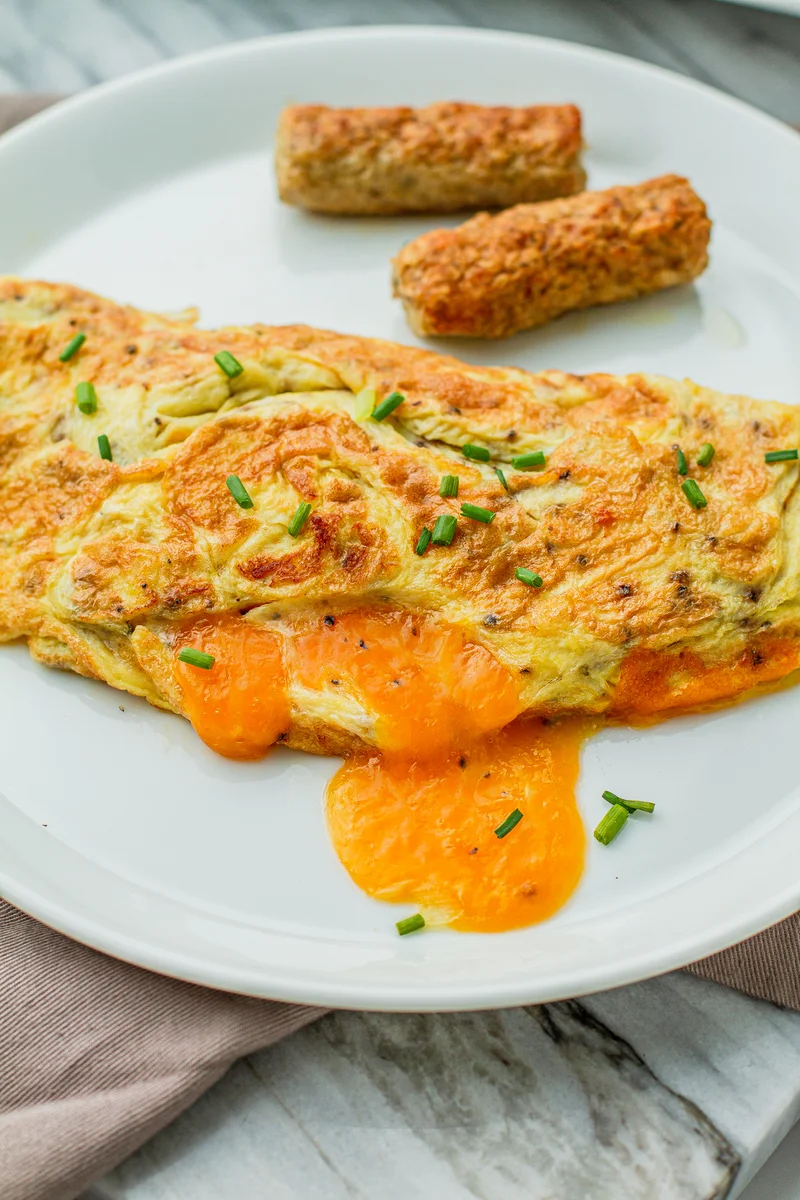
This French-style cheddar omelette is a quick, buttery breakfast with soft eggs and a gooey cheese centre. It takes just five minutes and is easy to adapt with favourite add-ins.
Ingredients
- 3large eggs
- 0.6 g (⅛ teaspoon)kosher salt
- 0.6 g (⅛ teaspoon)black pepper
- 5 ml (1 teaspoon)water
- 14 g (1 tablespoon)unsalted butter
- 28 g (¼ cup)shredded cheddar cheese
Instructions
- 1
Whisk the eggs
In a small bowl, whisk the eggs with the kosher salt, black pepper and water until the mixture is smooth and well combined.
- 2
Cook the eggs
Melt the butter in a small frying pan over medium heat. Pour in the egg mixture and stir gently. Once the eggs begin to turn opaque, push the cooked edges towards the centre once or twice every 10 seconds.
- 3
Add the cheddar
When the eggs begin to set and look less wet, turn the heat to low and scatter the shredded cheese over the top. Fold the omelette in half, then tilt the pan to slide it carefully onto a plate.
- 4
Serve hot
Serve the cheddar omelette straight away, with an extra sprinkle of cheese as a garnish.
What is a cheddar omelette?
An omelette is a dish of beaten eggs cooked in a pan and often folded around a filling. Its roots are commonly associated with French cooking, where a tender egg texture and careful folding are central to the style.
This quick version uses cheddar for a savoury, melting centre. Butter adds richness, while a little water helps keep the beaten eggs easy to stir.
Nutrition and macros by portion
The nutrition label shows one serving as written: 405 calories, 23g protein, 2g carbs, 34g fat.
| Portion | Adjustment | kcal | Protein | Carbs | Fat |
|---|---|---|---|---|---|
| Lighter | Use less butter and cheddar | 284 kcal | 16g | 1g | 24g |
| This serving | As written | 405 kcal | 23g | 2g | 34g |
| Hungry | Serve with toast | 608 kcal | 35g | 3g | 51g |
Most of the carbohydrates come from the small amount naturally present in the eggs, while the eggs and cheddar provide most of the protein. Butter, egg yolks and cheddar contribute much of the fat. For a more balanced plate, serve it with fresh vegetables or fruit.
The ingredients that matter
Eggs: Use three large eggs for a substantial single serving. Whisk them until no distinct streaks of white remain so they cook evenly.
Cheddar: Shredded cheese melts readily under the residual heat of the eggs. A mature cheddar gives a more pronounced flavour, while a milder one keeps the taste gentle.
Stir gently as it cooks
Steady heat: Medium heat starts the eggs cooking without rushing them. As soon as the edges turn opaque, push them towards the centre at intervals of about 10 seconds.
Light touch: Move the cooked egg just enough to let uncooked mixture reach the pan. Avoid stirring constantly, which can break the omelette into small curds.
Know when to fold
Doneness: The eggs should be mostly set but still slightly moist when you lower the heat. They will continue to cook briefly from the warmth of the pan.
Folding: Add the cheese while the surface is still warm, then fold the omelette in half. Tilt the pan towards the plate and guide it out gently to keep its shape.
A five-minute breakfast
The ingredients come together quickly, so have the plate ready before you start cooking. The method moves from whisking to serving without a resting period.
The key timing cue is the change in the eggs: start pushing the edges once they turn opaque, and add the cheese when the mixture has begun to set.
What to serve alongside
Serve the omelette with toast or crusty bread for a more filling breakfast. A few sliced tomatoes or a simple green salad can add freshness alongside the buttery eggs.
Keep any sides ready to serve as soon as the omelette leaves the pan, since its soft texture is best enjoyed hot.
Recipe notes & tips
- Use a small frying pan so the eggs form a manageable omelette.
- Whisk the eggs thoroughly before they go into the pan.
- Keep the heat at medium until the eggs start to turn opaque.
- Lower the heat before adding the cheddar to give it time to soften.
- Have a plate ready so you can serve the omelette immediately.
Variations
- Add chives: Scatter finely chopped chives over the cheese before folding.
- Add mushrooms: Cook sliced mushrooms separately and place them inside before folding.
- Add spinach: Wilt a small handful and use it as an extra filling.
- Change the cheese: Use another good-melting cheese in place of cheddar.
- Add chilli: Sprinkle a little chilli flakes over the eggs for gentle heat.
Common mistakes to avoid
- Pan too hot: The eggs can brown before the centre sets; cook over medium heat and lower it when adding the cheese.
- Over-whisking after pouring: Constant stirring breaks up the omelette; push the cooked edges in only once or twice every 10 seconds.
- Adding cheese too early: It may mix into unset egg; wait until the eggs begin to set and look less wet.
- Folding too soon: Very runny eggs may spill; wait until the mixture has mostly set while remaining a little moist.
- Leaving it in the pan: Residual heat keeps cooking the eggs; slide the omelette onto a plate as soon as it is folded.
How to store
This omelette is best eaten straight away. If needed, refrigerate leftovers in a covered container for up to 2 days and reheat gently in a pan or microwave until hot.
Frequently asked questions
How do I keep the omelette soft?
Cook it over medium heat and lower the heat once the eggs begin to set. Take it off the heat while it is still slightly moist, as it will continue cooking briefly.
Can I use a different type of cheese?
Yes. Choose a cheese that melts well and shred it if needed so it softens quickly.
Can I add fillings?
Yes. Cook wet or firm fillings, such as mushrooms or spinach, before adding them so they do not release excess moisture into the eggs.
Why add water to the eggs?
The small amount of water loosens the mixture and makes it easier to whisk smoothly. Measure it as given so the eggs do not become watery.
Can I make this omelette ahead?
It is best cooked just before serving, as the eggs are softest when freshly made. For a quicker start, measure the ingredients in advance.
How can I tell when it is ready to fold?
The edges should be opaque and the egg mixture should be mostly set, with only a little moisture remaining on top.
Cook it from the original
This recipe comes from meikoandthedish.com. Their page has the author’s own photos, notes and tips — the best place to cook it from.
Open the recipe on meikoandthedish.com