
Pan Fried Cod
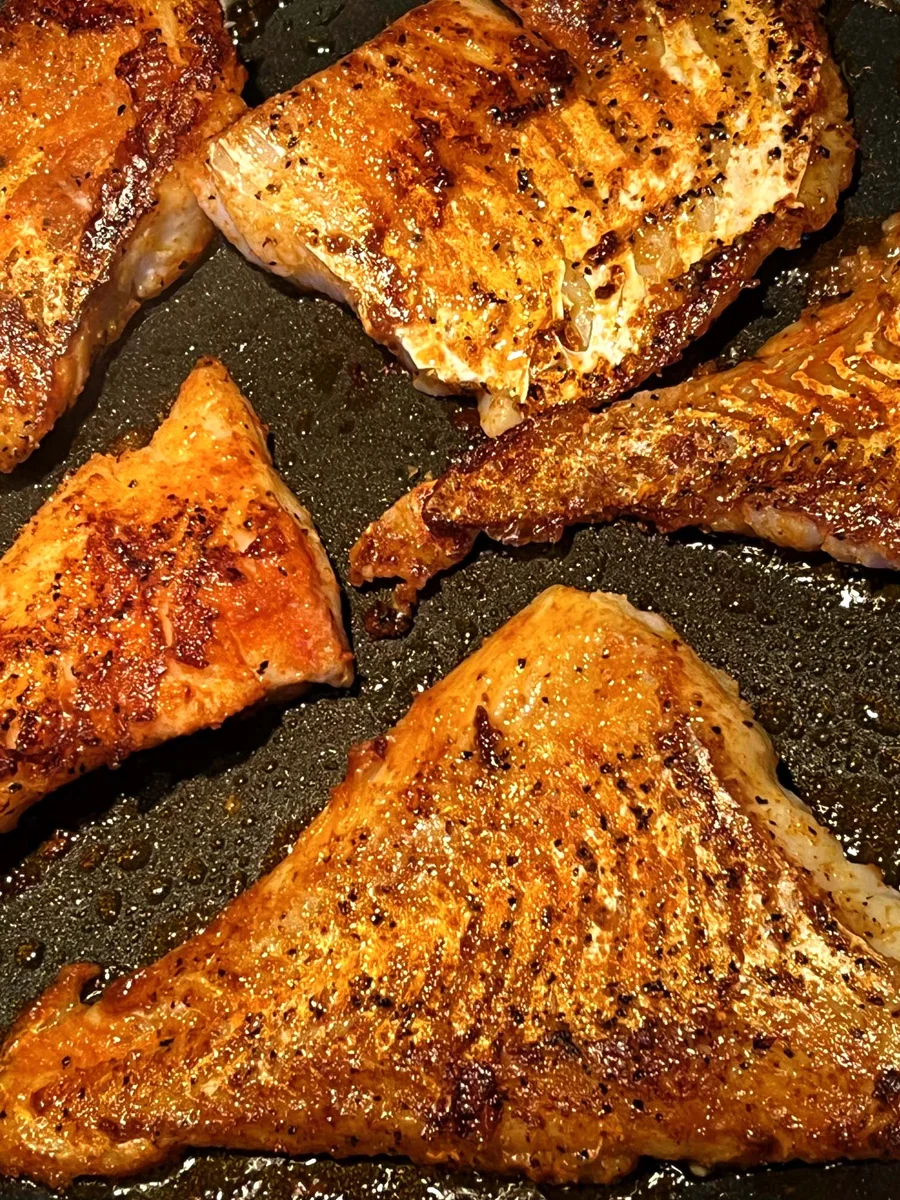
Pan-fried cod is a quick American-style fish dish with a lightly browned, paprika-seasoned exterior and tender centre. It takes only a few minutes to cook, making it a straightforward choice for lunch or dinner.
Ingredients
- 680 g (1.5 lb)fresh cod fillets
- 30 ml (2 tbsp)olive oil, or butter or another preferred cooking oil
- 3/4 tspsalt
- 1/4 tspblack pepper
- 1/4 tspgarlic powder
- 1/2 tsppaprika
Instructions
- 1
Heat the oil
Add the olive oil to a frying pan and heat it over medium-high heat.
- 2
Season one side
While the oil heats, sprinkle the salt, black pepper, garlic powder and paprika over one side of the cod fillets. Rub the seasonings gently over the surface so they are evenly distributed.
- 3
Season the other side
Turn the fillets over and season the second side with the same seasonings.
- 4
Add the cod
Place the seasoned fillets in the hot frying pan.
- 5
Cook the first side
Cook for about 4 minutes, until the first side is browned.
- 6
Turn and cook
Carefully flip the fillets and cook the other side for a further 3–4 minutes.
- 7
Check the temperature
Use an instant-read thermometer to check the centre of the fish; it should reach at least 63°C (145°F).
- 8
Serve immediately
Remove the cooked fillets from the pan and serve straight away.
What is pan-fried cod?
Pan-fried cod is a simple fish main, cooked directly in a hot pan rather than baked or battered. Cod has a mild flavour and flakes into tender pieces when cooked.
This American-style version keeps the preparation uncomplicated: a short list of pantry seasonings adds savoury, gently smoky flavour, while a quick pan cook gives the outside colour.
Nutrition and macros by portion
The nutrition label shows one serving as written: 203 calories, 30g protein, 0g carbs, 8g fat.
| Portion | Adjustment | kcal | Protein | Carbs | Fat |
|---|---|---|---|---|---|
| Lighter | Use less cooking oil | 142 kcal | 21g | 0g | 6g |
| This serving | As written | 203 kcal | 30g | 0g | 8g |
| Hungry | Add a larger side | 305 kcal | 45g | 1g | 12g |
Cod provides most of the protein, while olive oil (or the chosen cooking fat) contributes most of the fat; the dish contains very little carbohydrate. Pair a fillet with plenty of vegetables and, if you want a more substantial plate, a moderate serving of potatoes or rice.
Choosing and seasoning the cod
Fresh cod: Choose fillets of reasonably similar thickness so they cook at a similar pace. Patting the surfaces dry before seasoning can help them brown in the pan.
Seasoning: Salt, pepper, garlic powder and paprika are applied to both sides. Rub them over the fish lightly so the coating is even without breaking up the fillets.
Getting the pan ready
Hot oil: Heat the oil over medium-high before adding the fish. It should be hot enough for the cod to start sizzling on contact, but not smoking.
Room to cook: Lay the fillets in the pan without crowding them. If they do not fit comfortably, cook in batches so they can brown rather than steam.
Turning the fillets
First side: Leave the cod undisturbed for about 4 minutes, until the underside is browned. Fish can stick if it is moved before a crust has started to form.
Second side: Turn each fillet carefully with a fish slice or thin spatula, then cook for another 3–4 minutes. Cod is delicate, so support it across its width as you flip.
Checking when it is done
Temperature: The recipe calls for an internal temperature of at least 63°C (145°F), checked with an instant-read thermometer. Insert the probe into the thickest part of a fillet.
Texture: The fish should be opaque and separate into flakes when gently tested. Fillets vary in thickness, so use the temperature and texture cues rather than relying on time alone.
What to serve with it
Fresh sides: Serve the cod with vegetables, salad or a simple slaw to add colour and freshness. Lemon wedges make a handy accompaniment if you like a little acidity with fish.
Heartier sides: Potatoes, rice or bread can turn the fillets into a more filling meal. Serve the cod soon after it leaves the pan to enjoy its browned surface at its best.
Recipe notes & tips
- Choose fillets of similar thickness for more even cooking.
- Dry the cod before seasoning if its surface is wet.
- Wait until the oil is hot before adding the fish.
- Use a broad, thin spatula to turn the fillets gently.
- Check the thickest part of a fillet with an instant-read thermometer.
- Serve the fish as soon as it is cooked.
Variations
- Use butter: Swap the olive oil for butter, as the recipe allows, and watch it closely as it heats.
- Try another oil: Use a preferred cooking oil in place of the olive oil.
- Adjust the paprika: Use a little less for a milder seasoning or more for a stronger paprika flavour.
- Add lemon: Serve with lemon wedges for a bright finish.
- Change the fish: Use similarly sized white fish fillets and check doneness at the thickest point.
Common mistakes to avoid
- Crowding the pan: The fish may steam instead of brown; cook in batches if needed.
- Moving it too soon: The first side may tear or stick; let it cook for about 4 minutes before turning.
- Using too much heat: The outside can brown before the centre cooks; keep the pan at medium-high and watch the fish.
- Flipping roughly: Delicate fillets can break; support them with a wide spatula.
- Relying only on the timer: Thick fillets may need different cooking time; check the centre reaches at least 63°C (145°F).
How to store
Refrigerate leftover cod in a covered container and use within 1–2 days. Reheat gently in a frying pan over low heat until hot throughout; avoid prolonged heating, which can dry out the fish.
Frequently asked questions
How do I know when the cod is cooked?
Check the thickest part with an instant-read thermometer; it should reach at least 63°C (145°F). The flesh should also look opaque and flake when gently tested.
Can I use frozen cod?
Yes, but thaw it fully in the fridge first and pat it dry before seasoning. Excess surface moisture can make browning harder.
Can I use butter instead of olive oil?
Yes. Butter is listed as an alternative; heat it carefully over medium-high and add the fillets once the pan is hot.
Why is my cod sticking to the pan?
The pan or oil may not have been hot enough, or the fish may have been moved before its first side browned. Give it about 4 minutes undisturbed, then turn it carefully.
Can I cook the fillets in batches?
Yes. If the fillets do not fit in one layer without crowding, cook them in batches to give each piece room to brown.
What goes well with pan-fried cod?
Serve it with vegetables or salad, and add potatoes, rice or bread for a more filling meal.
Cook it from the original
This recipe comes from melaniecooks.com. Their page has the author’s own photos, notes and tips — the best place to cook it from.
Open the recipe on melaniecooks.com