
Boiled Cauliflower
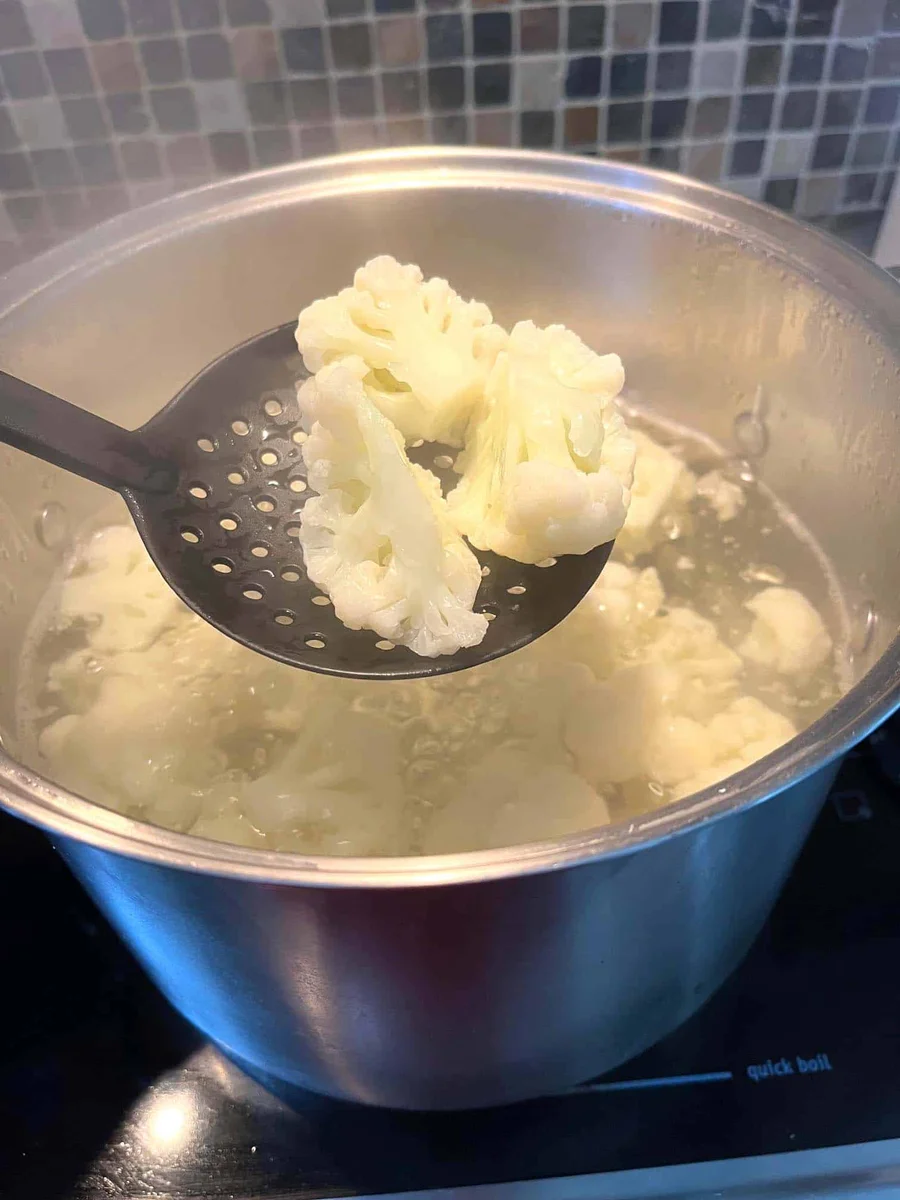
Boiled cauliflower is a straightforward vegetable side, cooked until tender while retaining a little bite. It needs only cauliflower, water and optional salt, and is easy to serve on its own or add to another dish.
Ingredients
- 1 headfresh cauliflower
- 1 litrewater
- 1 tbsp (optional)salt
Instructions
- 1
Boil the water
Fill a large pot with the water and bring it to a boil.
- 2
Salt the water
If you like, add 1 tablespoon of salt to the boiling water.
- 3
Prepare the cauliflower
While the water heats, rinse the cauliflower and cut it into florets.
- 4
Add the florets
When the water is boiling, add the cauliflower florets.
- 5
Cook until tender
Boil for 4–10 minutes, according to how tender you like it. Start checking after 4 minutes by tasting a piece.
- 6
Drain the cauliflower
When it is cooked to your liking, lift it out with a slotted spoon or drain it in a colander.
- 7
Serve or use
Serve straight away, or use the cooked cauliflower as desired in another recipe.
What is boiled cauliflower?
Cauliflower is a member of the brassica family, and boiling is one of the simplest ways to cook its compact florets. This plain American-style side relies on a short cook and a quick taste test rather than extra seasoning or sauce.
The method works because you can stop cooking as soon as the florets reach your preferred texture. Keep them in the water briefly for a little bite, or cook longer for softer cauliflower.
Nutrition and macros by portion
The nutrition label shows one serving as written: 36 calories, 3g protein, 7g carbs, 0g fat.
| Portion | Adjustment | kcal | Protein | Carbs | Fat |
|---|---|---|---|---|---|
| Lighter | Keep the portion modest | 25 kcal | 2g | 5g | 0g |
| This serving | As written | 36 kcal | 3g | 7g | 0g |
| Hungry | Serve a larger portion | 54 kcal | 5g | 11g | 1g |
The cauliflower provides most of this dish’s carbohydrates and a small amount of protein, while the recipe contains very little fat. For a more filling plate, serve a portion alongside a protein-rich main and another vegetable or wholegrain.
Choosing and preparing the cauliflower
Fresh cauliflower: Choose a firm head with tightly packed florets. Rinse it before cutting, then make florets of similar size so they cook at roughly the same rate.
Even pieces: Trim any large florets into smaller ones. Very small pieces may soften quickly, so check them early.
Getting the timing right
Boiling water: Wait until the water is boiling before adding the florets, as the recipe directs. Salt is optional and goes into the water before the cauliflower.
Doneness check: Begin tasting after 4 minutes, then continue cooking within the stated 4–10-minute range until the texture suits you. The exact time depends on the size of the florets and how soft you want them.
Keeping a little crunch
Texture: For cauliflower with a slight bite, remove it as soon as a piece is tender enough to eat but not soft throughout. If you prefer a softer side, leave it in for longer and check frequently.
Drain promptly: Lift the florets out or use a colander as soon as they are done. Leaving them in the hot water can carry on cooking them.
Serving ideas
Simple side: Serve the cauliflower as soon as it is drained. It also works as a cooked vegetable component in another recipe, as the method suggests.
Meal pairing: Pair it with a main dish and a source of protein, such as beans, eggs or meat, to make a more complete plate.
Recipe notes & tips
- Cut the head into florets of similar size for more even cooking.
- Start checking the texture after 4 minutes, as small florets may cook quickly.
- Taste a floret rather than relying only on the clock to judge doneness.
- Use the optional salt only if you want to season the cooking water.
- Drain the cauliflower promptly once it reaches your preferred texture.
Variations
- Keep it plain: Leave out the optional salt for a simple, unseasoned side.
- Choose more bite: Check the florets early and drain them as soon as they are just tender.
- Cook it softer: Continue boiling and taste frequently until the florets suit your preference.
- Use it in another dish: Drain the cooked florets and add them to a recipe that calls for cooked cauliflower.
Common mistakes to avoid
- Uneven florets: Cut large pieces down so they cook at a similar pace.
- Overcooking: Start tasting after 4 minutes and drain as soon as the texture is right.
- Leaving it in the water: Remove the cauliflower promptly after cooking so it does not keep softening.
- Guessing by time alone: Test a piece, since floret size and preferred tenderness affect the cooking time.
How to store
Refrigerate leftover cauliflower in a covered container and use within 3–4 days. Reheat until hot, using a microwave or briefly warming it in a pan; avoid prolonged heating if you want to preserve its texture.
Frequently asked questions
How long should I boil cauliflower?
The recipe gives a range of 4–10 minutes. Start tasting a piece after 4 minutes and stop when it reaches your preferred tenderness.
Should I salt the water?
Salt is optional. Add 1 tablespoon to the boiling water if you want to season it.
How do I keep cauliflower from getting too soft?
Check it early and often, beginning at 4 minutes. Drain it as soon as a tasted piece has the texture you want.
Can I use frozen cauliflower?
This recipe specifies fresh cauliflower. If using frozen florets, follow the packet’s cooking guidance and check the texture as they cook.
Can I prepare it ahead?
You can cook it ahead and refrigerate it in a covered container. Reheat it briefly before serving, keeping in mind that extra cooking can make it softer.
Cook it from the original
This recipe comes from melaniecooks.com. Their page has the author’s own photos, notes and tips — the best place to cook it from.
Open the recipe on melaniecooks.com