
Cuban-Style Picadillo
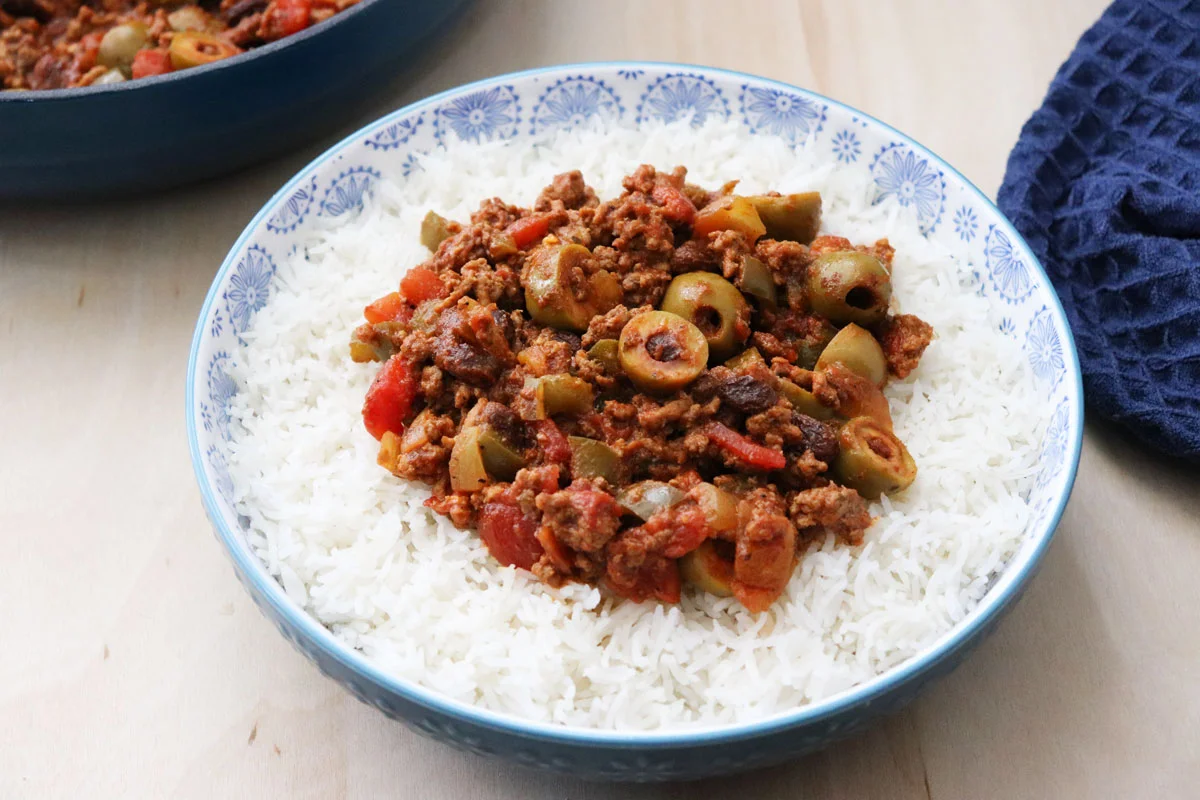
Cuban-style picadillo is a savoury-sweet ground beef stew simmered with tomatoes, raisins, green olives and warm spices. It makes a comforting one-pot meal, especially served with rice to catch the rich sauce.
Ingredients
- 450 gground beef
- 1green bell pepper, diced
- 75 g (½ cup)raisins
- 100 g (⅔ cup)green olives, chopped in halves
- 1 mediumonion, diced
- 3 clovesgarlic, minced
- 213 mltomato sauce
- 2 mediumtomatoes, diced
- 1 packetsazón seasoning
- 1 tspolive oil
- 2 tspcumin
- 1 tsporegano
- 80 ml (⅓ cup)white wine
- 1 tspblack pepper
- ½ tspsalt
Instructions
- 1
Heat the oil
Warm the olive oil in a large, heavy-based pot over a medium heat.
- 2
Soften vegetables
Add the onion and green pepper, and sauté them in the pot.
- 3
Brown the beef
Add the ground beef and cook until browned.
- 4
Add ingredients
Tip in all the remaining ingredients and stir to combine.
- 5
Bring to boil
Cover the pot and bring the sauce to a boil.
- 6
Simmer the sauce
Reduce the heat to low and cook for 15 minutes, or until the sauce reaches your preferred thickness. Stir occasionally to stop it catching on the bottom of the pot.
- 7
Serve with rice
Serve the picadillo with rice.
What is Cuban-style picadillo?
Picadillo is a family of seasoned minced-meat dishes found across Latin America and Spain, with recipes varying from place to place. Cuban-style versions are known for combining savoury meat and tomato with ingredients such as olives and raisins.
Here, green pepper, onion, garlic and spices build the base, while wine, olives and raisins add tangy, fruity notes. The result is a thick, boldly flavoured stew that pairs naturally with rice.
Nutrition and macros by portion
The nutrition label shows one serving as written: 444 calories, 22g protein, 26g carbs, 28g fat.
| Portion | Adjustment | kcal | Protein | Carbs | Fat |
|---|---|---|---|---|---|
| Lighter | Lean beef, more pepper | 311 kcal | 15g | 18g | 20g |
| This serving | As written | 444 kcal | 22g | 26g | 28g |
| Hungry | Larger rice portion | 666 kcal | 33g | 39g | 42g |
The beef supplies much of the protein and fat, while the raisins and tomato sauce contribute carbohydrates; the oil also adds fat. Serve with a moderate portion of rice and add vegetables or salad to round out the plate.
Build the flavour base
Onion and pepper: sauté them in the oil before adding the beef so they begin to soften and flavour the pot.
Garlic and spices: they join the other ingredients after the beef browns, distributing their aroma through the tomato sauce as it simmers.
Balance sweet and savoury
Raisins: these bring concentrated sweetness to contrast with the beef and tomato. They soften as the sauce cooks.
Olives: their briny flavour keeps the raisins from making the dish taste overly sweet. Chopping them in halves lets their flavour spread through the pot.
Choose the right simmer
After the covered sauce comes to a boil, lower the heat and let it simmer for 15 minutes. A gentle simmer melds the ingredients without scorching the thick tomato mixture.
Stir occasionally, as directed, and check the consistency towards the end. The sauce is ready when it has thickened to your liking.
Make the most of the wine
The white wine adds a bright, savoury note alongside the tomatoes and seasoning. Stir it in with the rest of the ingredients so it can cook into the sauce during the simmer.
Use a wine you would be happy to drink; the recipe does not specify a particular style.
Serve it simply
Rice is the suggested accompaniment and gives the thick sauce somewhere to go. Spoon the picadillo over it or serve the two side by side.
For a fuller plate, add a green salad or simply cooked vegetables. Keep accompaniments mild so the olives and spiced tomato sauce remain the focus.
Recipe notes & tips
- Dice the onion and pepper to a similar size so they soften at much the same pace.
- Break up the beef as it browns so it mixes evenly into the sauce.
- Stir the pot now and then during the simmer, especially around the base.
- Taste near the end before adding extra salt, as the olives and seasoning already bring savoury flavour.
- Let the sauce simmer a little longer if you prefer it thicker, stirring regularly.
Variations
- Use leaner beef: choose a lean ground beef to reduce the amount of fat in the finished dish.
- Add heat: include chopped chilli with the onion and pepper for a spicier sauce.
- Swap the wine: use a little water or stock if you prefer to cook without wine.
- Change the olives: use pitted green olives and chop them smaller for a more even distribution.
- Serve differently: spoon the picadillo into baked potatoes instead of serving it with rice.
Common mistakes to avoid
- Crowding the pot: brown the beef in batches if it will not fit in a loose layer.
- Cooking too hot: keep the heat low after boiling so the tomato sauce does not catch.
- Skipping the stirring: scrape the bottom occasionally to prevent the thick sauce from burning.
- Adding salt too early: taste after the olives and seasoning have been mixed in, then adjust if needed.
- Stopping before it thickens: simmer until the sauce reaches the consistency you prefer.
How to store
Refrigerate leftovers in a covered container and eat within 3–4 days. Reheat in a saucepan over a low heat, stirring until piping hot; add a small splash of water if the sauce has thickened too much.
Frequently asked questions
What should I serve with picadillo?
Rice is the suggested accompaniment and works well with the thick sauce. A salad or simply cooked vegetables can go alongside it.
Can I make picadillo ahead?
Yes. Cook it as directed, cool it promptly and refrigerate it in a covered container. Reheat thoroughly before serving.
How can I tell when the sauce is ready?
After 15 minutes of gentle simmering, check whether the sauce has thickened to your preference. It should be moist but not overly runny.
Can I leave out the raisins?
You can omit them, though the dish will lose some of its sweet contrast with the savoury beef and olives.
Can I use dried herbs instead of fresh?
The recipe already calls for dried oregano, so use the listed amount as written.
Cook it from the original
This recipe comes from mealsbymavis.com. Their page has the author’s own photos, notes and tips — the best place to cook it from.
Open the recipe on mealsbymavis.com