
Gluten-Free Molasses Cookies
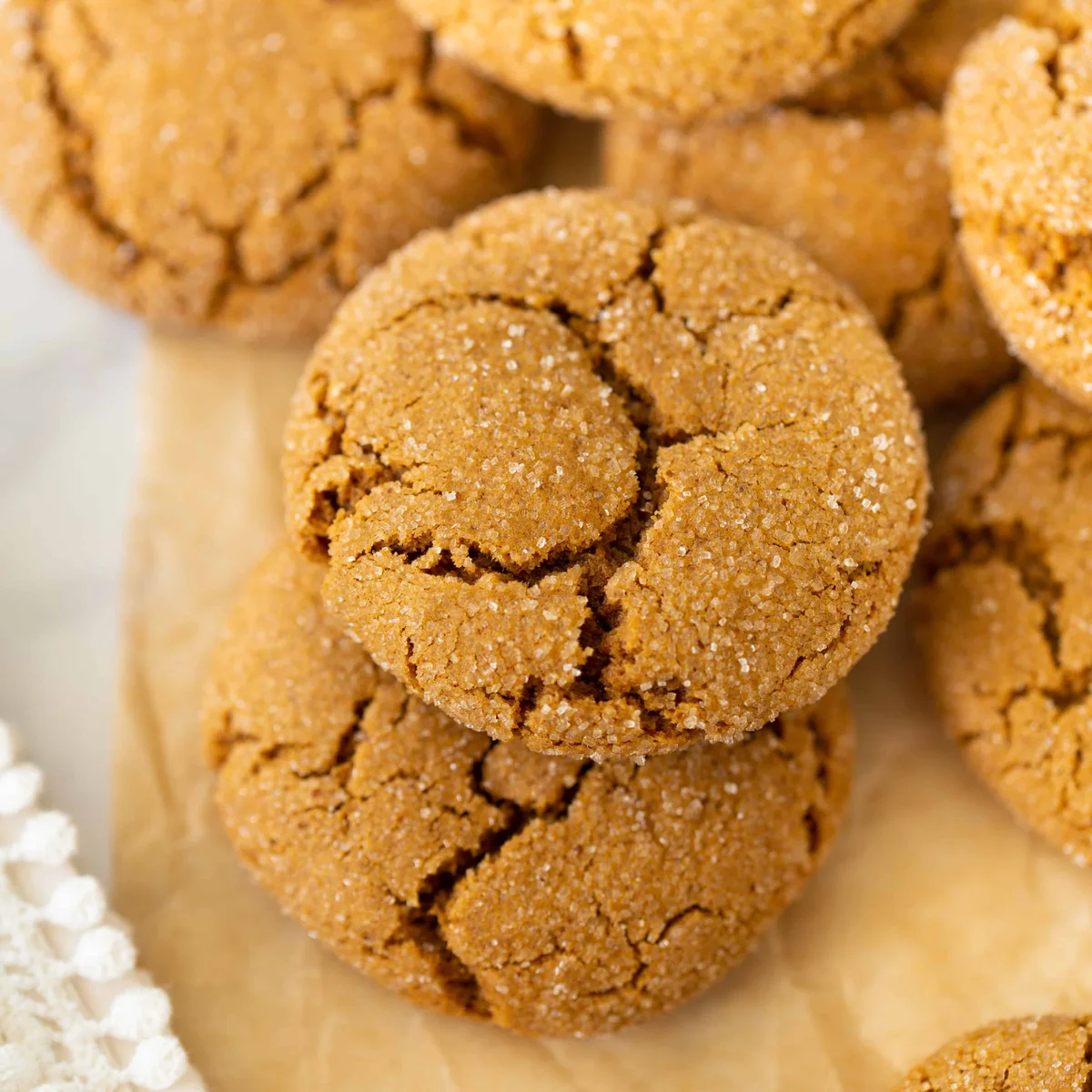
These chewy American molasses cookies are warmly spiced, with a crisp sugar coating and a soft centre. Chill the dough for at least an hour before baking so it is easier to handle and the cookies keep their shape.
Ingredients
- 1egg
- 100 g (½ cup)brown sugar
- 1 teaspoonvanilla
- 64 g (¼ cup)almond butter
- 60 ml (¼ cup)molasses
- 57 g (¼ cup), softenedbutter or vegan butter
- 1 teaspoonground cinnamon
- ¾ teaspoonground ginger
- ¼ teaspoonground nutmeg
- ½ teaspoonsalt
- ½ teaspoonbicarbonate of soda
- 150 g (1¼ cups)gluten-free 1:1 baking flour
- About 100 g (½ cup), if usingraw or granulated sugar, for rolling
Instructions
- 1
Mix the wet ingredients
In a stand mixer bowl or a large mixing bowl, combine the egg, brown sugar, vanilla, almond butter, molasses and softened butter. Mix until smooth and creamy.
- 2
Add and chill
Add the remaining ingredients and mix thoroughly until combined. Cover the dough and refrigerate it for at least 1 hour.
- 3
Shape the cookies
Heat the oven to 177°C (350°F). If using, put about 100 g (½ cup) sugar in a bowl. Scoop the dough into balls of about 1–2 tablespoons each, roll them in the sugar and place them on a baking sheet.
- 4
Bake and cool
Bake for 9–11 minutes, until the edges are golden and the centre has set. Leave the cookies on the baking sheet for 2–3 minutes, then transfer them to a wire rack to cool completely.
- 5
Store leftovers
Keep any leftover cookies in an airtight container.
What are molasses cookies?
Molasses cookies are an American-style spiced cookie, known for their deep, bittersweet flavour and tender, chewy texture. This gluten-free version combines molasses with cinnamon, ginger and nutmeg, then adds a sugar coating for a delicate crunch.
Almond butter contributes richness, while a gluten-free 1:1 baking flour keeps the recipe straightforward. The result is a warmly flavoured cookie that works well with a cup of tea or coffee.
Nutrition and macros by portion
The nutrition label shows one serving as written: 100 calories, 1g protein, 15g carbs, 3g fat.
| Portion | Adjustment | kcal | Protein | Carbs | Fat |
|---|---|---|---|---|---|
| Lighter | Smaller cookie scoops | 70 kcal | 1g | 11g | 2g |
| This serving | As written | 100 kcal | 1g | 15g | 3g |
| Hungry | Two-cookie portion | 150 kcal | 2g | 23g | 5g |
The flour and brown sugar provide most of the carbohydrates, while butter and almond butter contribute much of the fat; the egg and almond butter add some protein. For a more balanced snack, enjoy a cookie with a source of protein such as yoghurt or a glass of milk.
Choosing the ingredients
Molasses: Its robust sweetness gives the cookies their characteristic flavour and colour. Use the stated amount so it does not overwhelm the other spices.
Gluten-free flour: Choose a 1:1 baking blend intended to replace wheat flour in baking. The original recipe maker likes using King Arthur Flour Gluten-Free Flour.
Butter: Use softened butter, or softened vegan butter as the recipe allows. This helps it mix smoothly with the egg, sugar and almond butter.
Why the dough needs chilling
Chilling: Refrigerate the covered dough for at least 1 hour before shaping. The rest makes the dough firmer and easier to scoop and roll.
Planning: The listed total time is 30 minutes, but the required chilling period adds at least an hour before baking. Allow for that when deciding when to start.
Getting the sugar coating right
Rolling: Scoop the chilled dough into balls of about 1–2 tablespoons and roll each one in raw or granulated sugar. The coating adds a crisp outside that contrasts with the chewy middle.
Spacing: Arrange the balls on a baking sheet with room between them. This gives the cookies space as they bake.
How to judge doneness
Edges: Bake at 177°C (350°F) for 9–11 minutes, looking for golden edges. The centres should look set rather than wet.
Cooling: Let the cookies rest on the baking sheet for 2–3 minutes before moving them to a wire rack. They are delicate while hot, so this brief rest helps them firm up for transfer.
Serving and pairing
Serve the cookies once they have cooled completely, when the sugar coating has set and the centres have settled into their chewy texture. They are also enjoyable while slightly warm, though they will be more fragile.
Pair them with tea, coffee or a glass of milk. Their spice and molasses flavour also makes them a natural addition to a plate of other simple biscuits.
Recipe notes & tips
- Chill the dough for at least 1 hour before shaping.
- Use a gluten-free 1:1 baking flour designed for baking.
- Soften the butter before mixing so it blends smoothly.
- Roll the dough balls in sugar just before placing them on the baking sheet.
- Check the cookies at 9 minutes, as ovens can vary.
- Wait 2–3 minutes before transferring the cookies from the baking sheet.
Variations
- Vegan option: Use vegan butter as suggested in the ingredient list.
- Coarser coating: Roll the dough balls in raw sugar for a more pronounced crunch.
- Granulated coating: Use granulated sugar for a finer, even coating.
- Spice emphasis: Adjust the balance of cinnamon, ginger and nutmeg to suit your taste.
- Smaller cookies: Scoop smaller portions and begin checking them at the early end of the baking time.
Common mistakes to avoid
- Skipping the chill: The dough will be harder to handle; refrigerate it for at least 1 hour.
- Using the wrong flour blend: A flour without a 1:1 baking purpose may behave differently; use a gluten-free 1:1 baking flour.
- Overbaking: The cookies can lose their chewy centre; check for set centres and golden edges at 9–11 minutes.
- Moving them too soon: Hot cookies can break; leave them on the baking sheet for 2–3 minutes first.
- Forgetting the coating: The sugar adds the recipe's crisp exterior; roll each dough ball before baking if using it.
How to store
Store cooled leftovers in an airtight container. The recipe does not specify a storage duration; for the best texture, keep the container sealed and eat the cookies while fresh.
Frequently asked questions
How long does the dough need to chill?
At least 1 hour in the refrigerator, covered. This chilling time is required before shaping and baking.
Can I use vegan butter?
Yes. The ingredient list allows vegan butter as an alternative; soften it before mixing.
Do I have to roll the cookies in sugar?
The recipe makes the coating optional. Rolling the dough balls in raw or granulated sugar gives the baked cookies a crunchy exterior.
What gluten-free flour should I use?
Use a gluten-free 1:1 baking flour. The recipe creator says they like King Arthur Flour Gluten-Free Flour.
How do I know when the cookies are baked?
Bake for 9–11 minutes, until the edges are golden and the centres have set. Let them rest on the baking sheet for 2–3 minutes before transferring.
Can I make the cookies smaller?
Yes. The recipe calls for dough balls of about 1–2 tablespoons, so you can use the smaller end of that range. Check smaller cookies towards the beginning of the 9–11-minute baking window.
Cook it from the original
This recipe comes from meaningfuleats.com. Their page has the author’s own photos, notes and tips — the best place to cook it from.
Open the recipe on meaningfuleats.com