
Beer Battered Fish
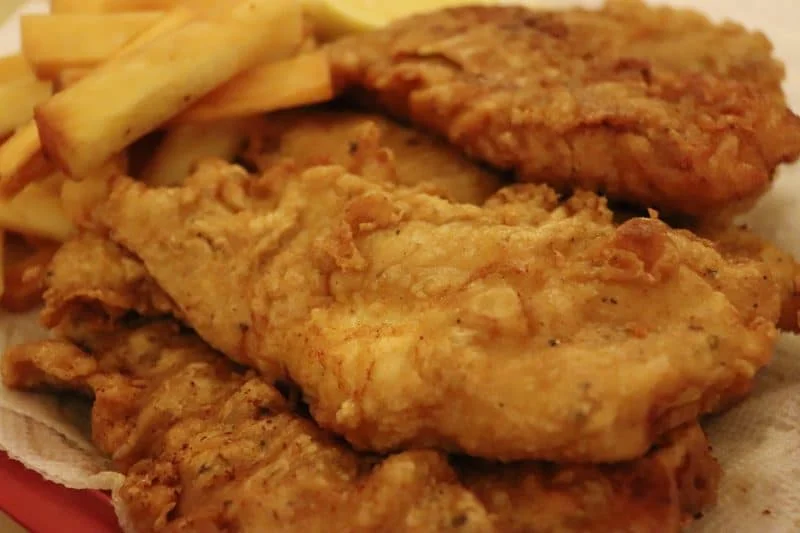
Beer-battered fish pairs cod with a crisp coating made from flour and dark beer. It is a straightforward choice for a British-style fish supper, with a short ingredient list and a golden finish from deep-frying.
Ingredients
- 6cod fillets
- 150 g (1¼ cups)plain flour
- 355 ml (1½ cups)dark beer (stout or porter)
- 4 g (2 tsp)paprika
- 7.5 g (1½ tsp)salt
- 3 g (1½ tsp)black pepper
- 950 ml (4 cups), or enough to cover and fry each fishvegetable or rapeseed oil
Instructions
- 1
Heat the oil
Heat the oil in a wok, Dutch oven or deep fryer until it reaches about 175°C (350°F).
- 2
Mix the dry ingredients
In a bowl, combine 120 g (1 cup) of the flour with the paprika and about 2.5 g (½ tsp) each of the salt and black pepper.
- 3
Make the batter
Pour the beer into the flour mixture gradually, whisking until smooth.
- 4
Season the fish
Season the cod with the remaining salt and black pepper.
- 5
Coat each fillet
Working with one fillet at a time, dust it lightly with some of the remaining flour, then dip it into the beer batter.
- 6
Fry until golden
Carefully lower the fish into the hot oil and fry until golden brown, about 10 minutes.
- 7
Drain and repeat
Transfer the fish to a plate lined with paper towels. Repeat the coating and frying steps with the remaining fillets.
What is beer-battered fish?
Beer-battered fish is a familiar British-style fish supper: fish is coated in a seasoned batter and fried until crisp. This version uses cod and dark beer, with paprika adding a gentle savoury note.
The method keeps the coating simple: a light dusting of flour helps the batter cling, while whisking the beer into the seasoned flour makes a smooth mixture.
Nutrition and macros by portion
The nutrition label shows one serving as written: 256 calories, 3g protein, 23g carbs, 15g fat.
| Portion | Adjustment | kcal | Protein | Carbs | Fat |
|---|---|---|---|---|---|
| Lighter | Smaller fillet, more salad | 179 kcal | 2g | 16g | 11g |
| This serving | As written | 256 kcal | 3g | 23g | 15g |
| Hungry | Add chips and peas | 384 kcal | 5g | 35g | 23g |
The cod provides most of the protein, while the flour and beer supply carbohydrates; the frying oil contributes most of the fat. Balance the plate with peas or a generous side salad, and add chips if you want a more filling meal.
Choosing the ingredients
Cod: Use fillets of similar thickness so they cook at a similar pace. Pat them dry before seasoning if their surface is wet.
Dark beer: Stout or porter gives the batter a deeper flavour. Pour it in gradually and whisk until the mixture is smooth.
Flour and seasoning: The recipe divides the flour between dusting and batter. Keep the remaining salt and pepper for the fish itself.
Getting the coating right
Dusting: A thin layer of flour gives the batter a surface to grip. Shake off any excess so it does not make the coating heavy.
Batter: Whisk until smooth, then dip each fillet just before frying. Handle the coated fish carefully as you lower it into the oil.
Frying and doneness
Oil temperature: Aim for about 175°C before adding the fish. If the oil is not hot enough, the coating can absorb more oil instead of turning crisp.
Colour and timing: Fry each fillet for about 10 minutes, until the coating is golden brown. The exact time can vary with the thickness of the fillets, so check that the fish is cooked through before serving.
Keeping the fish crisp
In the fryer: Avoid crowding the pan; cook in batches if needed so the oil stays hot. Return the oil to temperature between batches.
After frying: Drain the fillets on paper towels and serve promptly. For a classic plate, pair them with chips and peas, or add a fresh salad for contrast.
Recipe notes & tips
- Dry the cod surface before seasoning so the flour dusting adheres more evenly.
- Measure the oil temperature with a thermometer if you have one.
- Whisk the beer into the flour gradually to help prevent lumps.
- Lower each fillet carefully into the oil to reduce splashing.
- Fry in batches if necessary, leaving space around each piece.
- Serve soon after draining for the crispest coating.
Variations
- Use haddock: Swap in haddock fillets of a similar thickness.
- Adjust the paprika: Use less for a milder coating or a little more for a stronger paprika flavour.
- Choose a lighter beer: Use a different beer if you prefer a less robust flavour.
- Add lemon: Serve with lemon wedges for a bright finish.
- Make it a fish supper: Serve with chips and peas for a traditional-style plate.
Common mistakes to avoid
- Wet fish: The batter may not cling well; pat the fillets dry before coating.
- Lumpy batter: Pour the beer in gradually while whisking.
- Cold oil: The coating may turn greasy; wait until the oil reaches about 175°C.
- Crowded pan: The oil temperature can drop; fry the fillets in batches.
- Uneven fillets: Pieces may finish at different times; use similar-sized fillets where possible.
How to store
Refrigerate leftover fish in a covered container for up to 2 days. Reheat in an oven until hot, noting that the batter may not be as crisp as when freshly fried.
Frequently asked questions
Can I use another type of fish?
Yes. Haddock is a suitable alternative to cod; choose fillets with a similar thickness so they cook at a comparable rate.
What kind of beer works best?
The recipe suggests stout or porter. These dark beers give the batter a fuller flavour.
How can I tell when the fish is cooked?
The coating should be golden brown after about 10 minutes. Check that the fish inside is cooked through, allowing for variation in fillet thickness.
Can I prepare the batter ahead?
It is best to mix the batter shortly before frying and dip each fillet just before it goes into the oil.
Can I make this without a deep fryer?
Yes. The recipe can be made in a wok or Dutch oven, provided there is enough oil to cover and fry each piece.
Cook it from the original
This recipe comes from mealsbymavis.com. Their page has the author’s own photos, notes and tips — the best place to cook it from.
Open the recipe on mealsbymavis.com