
Kerala Style Fish Roast Recipe
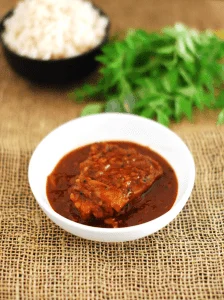
This Kerala-style fish roast simmers fish in a warmly spiced onion, tomato and tamarind gravy. It makes a flavourful meal with rice, and the sauce thickens as the fish cooks.
Ingredients
- 325 gfish, cleaned (pomfret used in the original recipe)
- 12–15small onions or pearl onions, sliced
- 2.5 tsp eachcrushed ginger and garlic
- 1/2 tspturmeric powder
- 3 tspchilli powder
- 1 small to mediumtomato, sliced
- A gooseberry-sized piecetamarind, soaked in 2–3 tbsp warm water
- 1 cupwater
- 1/4 tspmustard seeds
- A pinchfenugreek seeds
- As neededcoconut oil
- As neededcurry leaves
- To tastesalt
Instructions
- 1
Fry the spices
Heat coconut oil in a pan. Add the mustard and fenugreek seeds and let them crackle, then add the sliced onions, ginger and garlic. Cook until the onions turn golden brown. Stir in the chilli and turmeric powders and fry for a minute or two. Add the soaked tamarind pulp and 1/4 cup water, then mix well.
- 2
Simmer the fish
Add the tomato and salt. Once the tomato is slightly soft, add the fish and turn the pieces gently to coat them in the masala. Pour in 1 cup water, rotating the pan so the masala covers the fish. Bring to the boil, then simmer for 12–15 minutes, until the fish is cooked and the gravy has thickened.
What is Kerala-style fish roast?
Fish roast is a Kerala-style preparation in which fish cooks in a spiced, tangy gravy rather than being dry-roasted. This version builds its flavour from small onions, ginger, garlic, chilli, tomato and tamarind.
The method is straightforward: fry the aromatics first, then simmer the fish in the sauce. The result is a hearty dish that pairs naturally with rice.
Nutrition and macros by portion
The nutrition label shows one serving as written: 160 calories, 19g protein, 10g carbs, 6g fat.
| Portion | Adjustment | kcal | Protein | Carbs | Fat |
|---|---|---|---|---|---|
| Lighter | Use less coconut oil | 112 kcal | 13g | 7g | 4g |
| This serving | As written | 160 kcal | 19g | 10g | 6g |
| Hungry | Serve with extra rice | 240 kcal | 29g | 15g | 9g |
The fish supplies most of the protein, while the onions, tomato and any rice served alongside contribute carbohydrates. Coconut oil carries much of the fat; serve with rice and a generous portion of vegetables to balance the plate.
Build the masala gently
Onions: Cook them until golden brown so they soften and form a savoury base for the gravy.
Spices: Add the chilli and turmeric after the onions have browned, and fry them briefly. Keep them moving so they release their aroma without scorching.
Make the tamarind mixture
Tamarind: Soak the piece in 2–3 tablespoons of warm water, then use the pulp in the pan. This brings a sour note that balances the chilli and rich coconut oil.
Water: The method adds 1/4 cup with the tamarind and later calls for 1 cup with the fish. Add each at the stated stage and rotate the pan to distribute the masala.
Handle the fish carefully
Coating: Turn the fish gently in the masala so the pieces are covered without breaking them up. Rotating the pan after adding water helps move the sauce around the fish.
Doneness: Begin checking towards the end of the 12–15 minute simmer. The fish should be cooked through, while still holding its shape.
Let the gravy thicken
Simmer: Once the pan comes to the boil, lower the heat and cook gently. A steady simmer gives the fish time to cook as the sauce reduces.
Finish: The recipe is ready when the fish is done and the gravy has thickened. Avoid prolonged cooking after that point, which can make fish pieces fall apart.
Choose a simple accompaniment
Rice: Serve the fish and gravy with plain rice, which soaks up the tangy, spiced sauce.
On the side: A mild vegetable side can round out the meal without competing with the chilli and tamarind flavours.
Recipe notes & tips
- Slice the small onions evenly so they brown at a similar pace.
- Have the tamarind soaked before you begin cooking.
- Fry the chilli and turmeric for only a minute or two, as directed.
- Use a wide pan so the fish pieces can sit in the masala.
- Rotate the pan rather than stirring vigorously once the fish is added.
Variations
- Adjust the heat: Reduce the chilli powder for a milder gravy.
- Try another fish: Use another firm fish that can hold together during simmering.
- Add curry leaves: Include them with the aromatics for a fragrant note.
- Change the tang: Adjust the amount of tamarind pulp to suit your taste.
- Serve with rice: Spoon the gravy over plain rice for a simple meal.
Common mistakes to avoid
- Burning the spices: Add the chilli and turmeric after the onions brown, and fry only briefly.
- Stirring roughly: Turn the fish gently or rotate the pan to keep the pieces intact.
- Cooking at a hard boil: Lower the heat after the pan reaches a boil and simmer the fish.
- Stopping too early: Cook for 12–15 minutes and check that the fish is done and the gravy has thickened.
- Adding tamarind without soaking: Soak it in 2–3 tablespoons of warm water first so you can use the pulp.
How to store
Refrigerate leftovers in a covered container and use within 1–2 days. Reheat gently in a pan until hot, adding a splash of water if the gravy has thickened too much.
Frequently asked questions
Can I use a different fish from pomfret?
Yes. Choose a fish that holds its shape during simmering, and check it for doneness as it cooks.
How do I know when the fish is cooked?
Check a piece towards the end of the 12–15 minute simmer. It should be cooked through but not falling apart.
Can I make the gravy less spicy?
Use less chilli powder than the listed 3 teaspoons. The other spices and tamarind will still flavour the sauce.
Why does the method use water twice?
It adds 1/4 cup with the tamarind pulp, then calls for 1 cup after the fish is coated in masala. Follow those amounts at their respective stages.
What should I serve with fish roast?
Plain rice is a simple match for the tangy gravy. A mild vegetable side works well alongside it.
Cook it from the original
This recipe comes from mariasmenu.com. Their page has the author’s own photos, notes and tips — the best place to cook it from.
Open the recipe on mariasmenu.com