
Vegetable Biryani
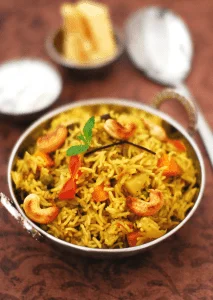
Vegetable biryani is a fragrant rice dish cooked with vegetables, whole spices and a fresh herb-and-chilli paste. This pressure-cooker version makes a satisfying one-pot meal, finished with crisp fried cashews.
Ingredients
- 2.5 tsp eachChopped ginger and garlic
- 2Green chillies, chopped
- 1 tbspLemon juice
- 2 tbspChopped coriander leaves
- 1 tbspChopped mint leaves
- 3Crushed cardamom pods
- 1Bay leaf
- 3Cloves
- 2.5 cm (1 inch)Cinnamon
- 2 medium-largeOnions, sliced
- 1 largeCarrot, cubed
- 1 small-mediumPotato, cubed
- 2 largeMushrooms, sliced
- 75 g (1/2 cup)Peas, frozen if preferred
- 1/2 tspTurmeric powder
- 1/2 tspFennel powder
- 1 mediumTomato, sliced
- 380 g (2 cups)Basmati rice
- 480 ml (2 cups)Thin coconut milk or water
- To tasteGhee or oil
- 8–10Cashews
- To tasteSalt
Instructions
- 1
Make the paste
Blend the ginger, garlic, green chillies, coriander, mint and lemon juice with 1 tbsp water until smooth.
- 2
Fry the spices
Heat oil or ghee in a pressure cooker. Add the cardamom, cloves, bay leaf and cinnamon, fry for 1 minute, then add the sliced onions.
- 3
Cook the masala
When the onions turn golden brown, stir in the ground paste and fry for 2–3 minutes. Add the turmeric and fennel powder and fry for 2 minutes. Add the tomato and salt, mix well, and after 2 minutes add all the vegetables and mix again.
- 4
Cook the rice
Add the washed rice and mix gently. Pour in the coconut milk or water and add 2 tsp ghee if you cooked the masala in oil. Bring to the boil, close the cooker and fit the weight. Turn the heat to its lowest setting and cook for 8–10 minutes, then switch off the heat. Leave the cooker closed for a further 20 minutes.
- 5
Fluff the rice
Open the cooker and fluff the rice with a fork. Heat ghee or oil in a small pan and fry the cashews.
- 6
Garnish and serve
Scatter the fried cashews over the biryani. Serve hot with raita, pappad and pickle.
- 7
Chill leftovers
Store any remaining biryani in the fridge, where it keeps for 2–3 days.
What is vegetable biryani?
Biryani is a South Asian rice dish associated with Indian cooking, built around aromatic spices and rice cooked with other ingredients. This version combines basmati with vegetables and a fresh paste of herbs, chilli, ginger and garlic.
The pressure-cooker method brings the rice and vegetables together in one pot. Coconut milk or water provides the cooking liquid, while fried cashews add a crisp finish.
Nutrition and macros by portion
The nutrition label shows one serving as written: 515 calories, 11g protein, 78g carbs, 17g fat.
| Portion | Adjustment | kcal | Protein | Carbs | Fat |
|---|---|---|---|---|---|
| Lighter | Use water, less ghee | 361 kcal | 8g | 55g | 12g |
| This serving | As written | 515 kcal | 11g | 78g | 17g |
| Hungry | Serve a larger portion | 773 kcal | 17g | 117g | 26g |
Most of the carbohydrates come from the basmati rice, potato and peas; the vegetables and cashews contribute some protein, while ghee, oil and coconut milk provide much of the fat. Balance a serving with raita and an extra portion of fresh vegetables if available.
Build the flavour base
Whole spices: cardamom, cloves, bay leaf and cinnamon go into the hot fat first, giving their aroma time to infuse it.
Herb paste: blending the coriander and mint with ginger, garlic, chilli and lemon makes a cohesive seasoning. Fry it after the onions have browned so its raw edge cooks off before the vegetables go in.
Prepare the vegetables
Even pieces: cut the carrot and potato into similarly sized cubes so they cook at a similar pace. Slice the mushrooms and onions as directed.
Frozen peas: they can go straight into the cooker with the other vegetables. Mix them through gently to avoid crushing them.
Handle the rice gently
Rinse the basmati rice before adding it, as the method calls for washed rice. Once it is in the cooker, fold it through the masala gently to help keep the grains intact.
After cooking: use a fork to fluff the rice rather than stirring vigorously. This helps separate the grains without turning the vegetables to mush.
Mind the cooker timing
Low heat: after bringing the contents to a boil and closing the cooker, reduce the heat to its lowest setting for the stated 8–10 minutes. Follow your pressure cooker’s own instructions for fitting and using its weight.
Resting time: leave the cooker closed for 20 minutes after switching off the heat. This is part of the method, so resist opening it early.
Choose the cooking liquid
Coconut milk: thin coconut milk makes the rice richer and adds a gentle coconut flavour. Use the recipe’s stated 480 ml.
Water: use the same stated quantity if you prefer a less rich result. The method also adds 2 tsp ghee when the masala was cooked in oil.
Serve it as a meal
Cool accompaniments: raita gives a fresh contrast to the warm spices, while pickle brings a sharper, tangier note. Pappad adds crunch alongside the soft rice.
Finish: scatter the cashews over the biryani just before serving so they keep their crispness. Serve the dish hot.
Recipe notes & tips
- Have the vegetables cut and the herb paste ready before you start frying the spices.
- Stir the rice gently once it has been added to the cooker.
- Use thin coconut milk or water, as specified, rather than a thicker coconut product.
- Keep the cooker closed for the full 20-minute resting period after switching off the heat.
- Fry the cashews shortly before serving so they remain crisp.
- Serve the biryani with raita, pappad and pickle as suggested.
Variations
- Use water: swap it for the thin coconut milk for a less rich, less coconut-flavoured biryani.
- Adjust the chilli: use fewer green chillies for a milder paste.
- Add vegetables: replace or supplement the listed vegetables with other suitable chopped vegetables, keeping pieces a similar size.
- Toast the cashews: fry them until golden for a more pronounced crunch.
- Use ghee: cook the masala in ghee for a buttery aroma, or use oil and add the stated 2 tsp ghee with the liquid.
Common mistakes to avoid
- Burning the spices: fry the whole spices for only the stated minute before adding the onions.
- Adding rice too roughly: fold it through gently to keep the grains from breaking.
- Opening the cooker early: leave it closed for the full 20-minute rest after switching off the heat.
- Using thick coconut milk: choose thin coconut milk or water as the recipe specifies.
- Stirring hard after cooking: fluff the rice with a fork rather than mixing it vigorously.
How to store
Refrigerate leftovers in a covered container for 2–3 days. Reheat until piping hot throughout; add a small splash of water if the rice seems dry.
Frequently asked questions
Can I use water instead of coconut milk?
Yes. The recipe gives thin coconut milk or water as alternatives, using 480 ml of either.
Do I need to soak the basmati rice?
Soaking is not specified in this method. Wash the rice before adding it to the cooker.
Can I use frozen peas?
Yes. Frozen peas are explicitly suitable and can be added with the other vegetables.
Why should I leave the cooker closed after cooking?
The method calls for a 20-minute rest with the cooker closed after switching off the heat. Keep it closed for that time before fluffing the rice.
What should I serve with vegetable biryani?
Serve it hot with raita, pappad and pickle, as suggested in the recipe.
How long does vegetable biryani keep?
It keeps in the fridge for 2–3 days. Store leftovers covered and reheat until piping hot.
Cook it from the original
This recipe comes from mariasmenu.com. Their page has the author’s own photos, notes and tips — the best place to cook it from.
Open the recipe on mariasmenu.com