
Caldo de Camarón (Mexican shrimp soup)
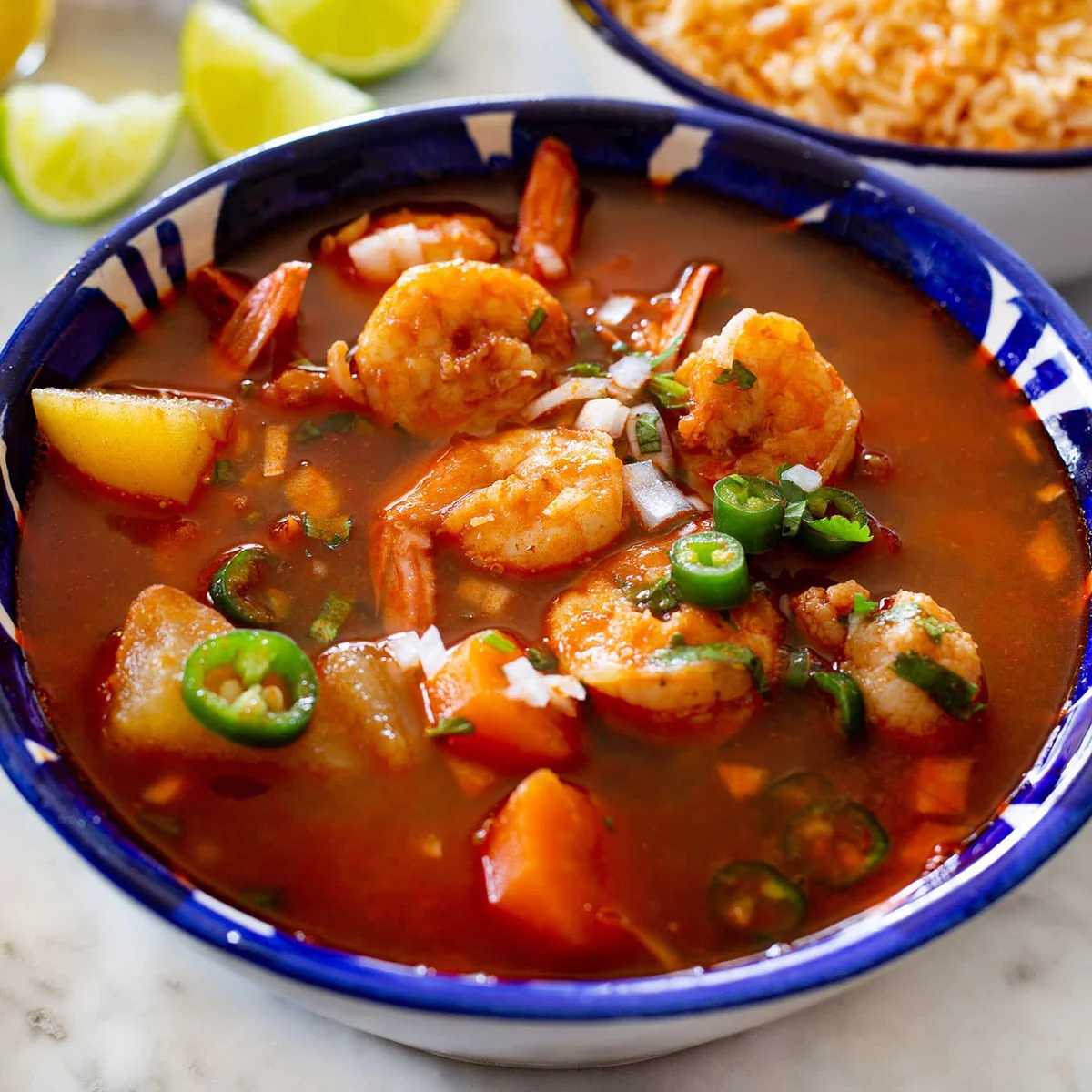
Caldo de camarón is a Mexican shrimp soup with a rich chilli-and-tomato broth, whole shrimp and chunky vegetables. It takes a little time to build the broth and sauce, but most of the cooking is hands-off simmering.
Ingredients
- 1 kgshrimp, cleaned with tails on
- 3guajillo peppers, seeds and veins removed
- 2chipotle peppers in adobo
- 454 gtomatoes, cut into chunks
- 1 smallonion, cut into chunks
- 2 mediumpotatoes, cut into cubes
- 2 largecarrots, cut into chunks
- ½ smallcauliflower, cut into large florets
- 2 clovesgarlic, peeled
- ½ tspblack peppercorns
- ½ tbsporegano
- ¼ tspcumin seeds
- 1 bunchcoriander (or 2 sprigs fresh epazote)
- 2 tbspolive oil
- to tastesalt
- from the cleaned shrimpshrimp heads and shells
- as neededvegetable scraps, such as carrots, onion and celery
- 1garlic clove
- 1bay leaf
- 2 tbspolive oil
- as neededonion, chopped
- as neededcoriander, chopped
- as neededgreen chillies, chopped
- as neededlimes, for their juice
Instructions
- 1
Start the broth
This shrimp broth is optional. Heat the olive oil over a medium heat in a stockpot.
- 2
Cook the scraps
Add the vegetable scraps, onion and garlic. Cook for 3 minutes, stirring constantly.
- 3
Add shrimp shells
Stir in the shrimp heads and shells and cook for 2–3 minutes.
- 4
Simmer the broth
Pour in 1.9 litres of water and bring it to the boil. Add the bay leaf and salt, reduce the heat and simmer for 25 minutes.
- 5
Strain the broth
Carefully strain the broth into a bowl and set it aside until needed.
- 6
Heat the oil
To make the chilli sauce, heat 3 tablespoons of olive oil in a deep pan over a medium heat.
- 7
Cook onion and garlic
Add the onion and garlic and cook for 4 minutes, stirring constantly.
- 8
Toast the spices
Add the dried peppers and cook for 2 minutes. Add the black peppercorns and cumin seeds and cook for a few seconds.
- 9
Soften tomatoes
Stir in the tomato chunks and cook for 3 minutes, or until they have softened slightly.
- 10
Simmer the sauce
Pour in 240 ml of water, then add the chipotle peppers and oregano. Simmer for 5 minutes, turn off the heat and let the mixture cool to room temperature.
- 11
Blend until smooth
Transfer the mixture to a blender with ½ of water and blend until thick and smooth.
- 12
Strain the sauce
Heat 2 tablespoons of olive oil in a large stockpot. Set a strainer over the pot and carefully pour the sauce through it. Simmer for 2 minutes.
- 13
Add vegetables
Add the diced vegetables, the shrimp broth if you made it, and the coriander.
- 14
Cook until tender
Bring the soup to the boil and cook for 15–20 minutes, or until the vegetables are cooked through.
- 15
Finish with shrimp
Add the fresh shrimp and cook for 3–5 minutes, depending on their size. Adjust the salt to taste.
- 16
Garnish and serve
Ladle into bowls and garnish with chopped onion, coriander and chillies. Serve with a squeeze of lime.
What is caldo de camarón?
Caldo de camarón is a Mexican shrimp soup, often made with a deeply flavoured broth and vegetables. This version gets its colour and warmth from guajillo and chipotle peppers, with tomato rounding out the sauce.
The shrimp shells can be simmered with vegetable scraps to make an optional broth. Blending and straining the chilli mixture gives the soup a smooth base that contrasts with its generous chunks of vegetables and shrimp.
Nutrition and macros by portion
The nutrition label shows one serving as written: 518 calories, 57g protein, 41g carbs, 16g fat.
| Portion | Adjustment | kcal | Protein | Carbs | Fat |
|---|---|---|---|---|---|
| Lighter | Use less olive oil | 363 kcal | 40g | 29g | 11g |
| This serving | As written | 518 kcal | 57g | 41g | 16g |
| Hungry | Add extra potatoes | 777 kcal | 86g | 62g | 24g |
The potatoes and vegetables provide most of the carbohydrates, while the shrimp is the main source of protein. Olive oil contributes much of the fat; serve a bowl with extra non-starchy vegetables or a crisp salad if you want a more varied plate.
Building the broth
Shell broth: Sauté the shrimp heads and shells with the vegetable scraps before adding water; this gives the liquid a savoury seafood flavour. If you skip this optional step, proceed with water in place of the broth.
Straining: Pour the finished broth carefully through a strainer and discard the solids. Keep it ready for when the vegetables go into the soup.
Getting the chilli sauce right
Dried peppers: Guajillos bring a mild, earthy chilli flavour, while chipotles in adobo add a smokier note. Removing the guajillo seeds and veins helps keep their heat in check.
Cooling: Let the cooked tomato and pepper mixture reach room temperature before blending. Blend it until smooth, then strain it into the stockpot for a more even broth.
Cooking the vegetables
Chunk size: Cut the potatoes and carrots into fairly even pieces so they cook at a similar pace. Keep the cauliflower florets large so they hold their shape in the soup.
Doneness: Simmer the vegetables for 15–20 minutes, checking that a knife can pass through the potatoes and carrots without resistance. Add the shrimp only after this stage.
Adding shrimp at the end
Timing: Shrimp cook quickly, so add them once the vegetables are tender and simmer for 3–5 minutes, adjusting for their size. They are ready when opaque and just firm.
Texture: Avoid simmering the shrimp for longer than needed, as they can become tough. Taste the broth for salt once they are cooked.
Serving the soup
Garnishes: Chopped onion, coriander and green chillies add fresh crunch and a little extra heat. A squeeze of lime brings a bright, tart finish to the rich broth.
On the side: Serve it as a filling main course, with warm tortillas or crusty bread for dipping. Add the lime at the table so each person can adjust the acidity.
Recipe notes & tips
- Keep the shrimp shells if you want to make the optional broth.
- Prepare and cut the vegetables before you start simmering the sauce.
- Use a deep pan for the chilli mixture to leave room for the tomatoes and liquid.
- Blend the sauce only after it has cooled to room temperature.
- Check the potatoes and carrots for tenderness before adding the shrimp.
- Put lime wedges on the table so everyone can season their own bowl.
Variations
- Use epazote: Swap the coriander in the soup for the 2 sprigs of fresh epazote.
- Adjust the heat: Use fewer chipotles for a milder, less smoky broth.
- Add more greens: Stir in extra chopped coriander just before serving.
- Make it shell-free: Skip the optional shrimp broth and use water for the soup liquid.
- Change the vegetables: Use other suitable vegetable scraps for the optional broth.
Common mistakes to avoid
- Boiling the shrimp too long: Add them after the vegetables are tender and cook only until opaque.
- Blending the mixture while hot: Let it cool to room temperature before blending.
- Skipping the sauce strainer: Pour the blended sauce through a strainer for a smoother broth.
- Cutting vegetables unevenly: Use similar-sized pieces so they finish cooking at roughly the same time.
- Adding lime to the whole pot: Serve lime separately so the soup's acidity can be adjusted bowl by bowl.
How to store
Refrigerate leftovers in a covered container for up to 2 days. Reheat gently in a saucepan until piping hot, taking care not to simmer the shrimp for long; the vegetables may soften further.
Frequently asked questions
Can I skip making the shrimp broth?
Yes. The broth is optional; use water for the soup liquid if you do not make it.
How do I know when the shrimp are cooked?
They should be opaque and just firm. The recipe allows 3–5 minutes, depending on their size.
Can I make the chilli sauce ahead?
You can prepare and blend the sauce ahead, then refrigerate it in a covered container. Bring it back to the recipe's simmering stage when you start the soup.
How spicy is this soup?
The chipotles bring smoky heat, while the guajillos add chilli flavour. Use fewer chipotles if you prefer a milder soup.
What can I serve with caldo de camarón?
Warm tortillas or crusty bread work well for dipping. Finish each bowl with lime juice and the chopped garnishes.
Cook it from the original
This recipe comes from maricruzavalos.com. Their page has the author’s own photos, notes and tips — the best place to cook it from.
Open the recipe on maricruzavalos.com