
Pork adobo (ribs in adobo sauce)
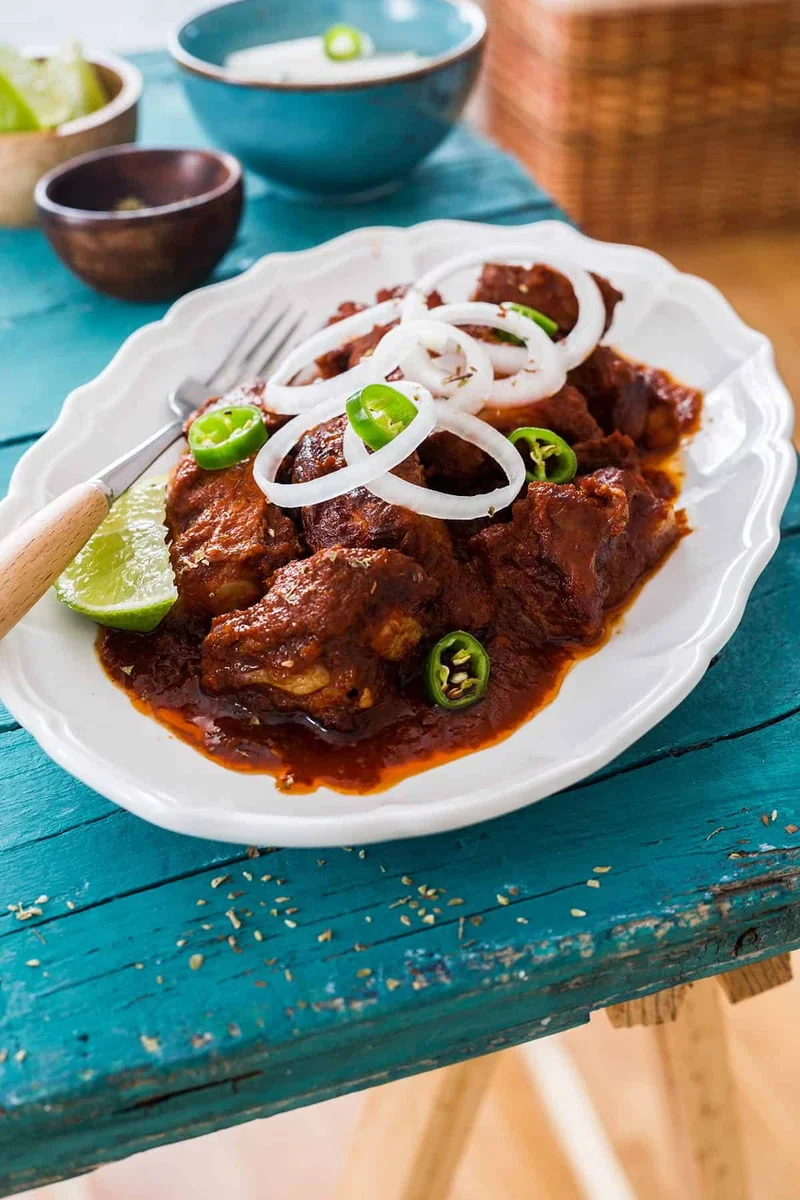
Pork ribs are simmered until tender, browned in their own fat and finished in a rich sauce made from dried Mexican chiles and spices. Serve them with rice, fried beans and pickled onions for a hearty meal.
Ingredients
- 1 kgpork ribs, cut into small pieces
- 2 tbsp (30 ml)lard or another cooking fat
- 1ancho chilli
- 4guajillo chillies
- 4pasilla chillies
- 80 ml (⅓ cup)white vinegar
- 1 clovegarlic, peeled
- 4–5whole peppercorns
- ¼ tspwhole cumin seeds
- ½ tspdried oregano
- 2bay leaves
- to tastesalt
Instructions
- 1
Soak the chillies
Using scissors, cut the chillies in half lengthways and discard the seeds. Rinse them, place in a bowl and cover with boiling water. Leave to soak for at least 30 minutes, or until the water has almost cooled.
- 2
Blend the sauce
Put the chillies and all the spices in a blender. Add 1 teaspoon of salt, the vinegar and ½ cup of the chilli-soaking water.
- 3
Blend until smooth
Blend to make a thick, velvety sauce. Depending on your blender, this may take 3–4 minutes.
- 4
Simmer the ribs
Put the pork in a large casserole, add water and a little salt, and bring to the boil. Cover and cook over a medium heat for 30–40 minutes, or until the meat is very tender. Remove the ribs to a plate, strain the cooking liquid and reserve it.
- 5
Brown the ribs
Heat the lard in the same casserole, add the ribs and fry until lightly golden.
- 6
Reduce the sauce
Add the prepared sauce and stir to coat the ribs; cook for 2 minutes so the flavours mingle. Add some of the reserved cooking liquid and bring to the boil. Cook uncovered over a medium-high heat until the sauce has reduced slightly and thickened. Taste and adjust the salt, then turn off the heat.
What is pork adobo?
Adobo is a name used for a range of seasoned sauces and preparations across Latin America. In this Mexican-style version, pork ribs are simmered and then coated in a sauce of dried chillies, vinegar and spices.
The method builds flavour in stages: tender meat first, a little browning next, then a brief simmer in the sauce. The result is a rich, tangy dish often served with rice, fried beans and pickled onions.
Nutrition and macros by portion
The nutrition label shows one serving as written: 690 calories, 32g protein, 12g carbs, 57g fat.
| Portion | Adjustment | kcal | Protein | Carbs | Fat |
|---|---|---|---|---|---|
| Lighter | Trim visible rib fat | 483 kcal | 22g | 8g | 40g |
| This serving | As written | 690 kcal | 32g | 12g | 57g |
| Hungry | Add rice and beans | 1035 kcal | 48g | 18g | 86g |
The pork ribs provide most of the protein and fat, while the lard adds further fat; the dried chillies contribute a small amount of carbohydrate and fibre. Serve with a modest portion of rice and add pickled onions or another vegetable for contrast and a more balanced plate.
Choosing the chillies
Dried chillies: ancho, guajillo and pasilla each contribute to the sauce’s layered flavour. Removing the seeds keeps the sauce smoother and avoids adding extra heat from them.
Soaking water: reserve some of the liquid for blending, as directed. It helps loosen the chillies into a thick sauce without diluting their flavour as much as plain water would.
Getting the sauce smooth
Blending: allow the chillies to soften thoroughly before they go into the blender. Blend for the full 3–4 minutes if needed; the sauce should look thick and velvety rather than flecked with large pieces.
Spices: use whole peppercorns and cumin as specified, and blend them with the chillies. This distributes their flavour through the sauce.
Tender ribs, then browning
Simmering: keep the casserole at a steady medium heat for 30–40 minutes. The ribs are ready for the next stage when the meat is very tender.
Browning: drain the ribs before frying them in the hot lard. A light golden colour is the cue to add the sauce; the ribs do not need to be deeply browned.
Reducing the adobo
Reserved broth: add it gradually after the sauce has cooked with the ribs for 2 minutes. It gives the sauce enough liquid to simmer while keeping the pork’s cooking flavour in the dish.
Final texture: cook uncovered over medium-high heat until the sauce thickens and clings to the ribs. Stir as needed and taste for salt before turning off the heat.
Serving the ribs
Rice and beans: serve alongside the ribs to make a satisfying plate and to catch any extra sauce. Pickled onions add a bright, sharp contrast to the rich pork.
At the table: spoon some of the thick adobo over the ribs and offer extra sauce on the side if any remains in the casserole.
Recipe notes & tips
- Cut the chillies open over a board so the seeds are easy to discard.
- Let the chilli-soaking water cool almost completely before measuring it for the blender.
- Use a large casserole so the ribs can cook in a single layer as much as possible.
- Strain and keep the pork broth; add only as much as needed to reach the sauce consistency you like.
- Taste the sauce at the end, since the reserved broth and the ribs can affect how much salt it needs.
Variations
- Milder sauce: use fewer chillies and keep the same soaking and blending method.
- More tang: add a small splash of vinegar to the finished sauce and taste before adding more.
- Extra garlic: blend in another peeled clove for a stronger garlic note.
- Serve with tortillas: offer warm tortillas alongside the ribs to scoop up the adobo.
- Vegetable side: add a crisp salad or cooked greens to complement the rich pork.
Common mistakes to avoid
- Skipping the soak: hard chillies can blend unevenly; soak them for at least 30 minutes.
- Leaving the seeds in: the sauce may become rough; remove them when cutting the chillies.
- Blending too briefly: visible pieces can remain; continue until the sauce is velvety.
- Browning before tenderising: the ribs may stay tough; simmer them first as directed.
- Adding too much broth: the sauce can turn thin; pour it in gradually and reduce uncovered.
- Leaving the pan covered at the end: steam slows reduction; cook uncovered until the sauce thickens.
How to store
Refrigerate leftovers in a covered container for up to 3 days. Reheat gently in a saucepan until piping hot, adding a splash of water or reserved broth if the sauce has thickened too much.
Frequently asked questions
Can I make the adobo sauce ahead?
Yes. Blend it after soaking the chillies and refrigerate it in a covered container for up to 2 days, then continue with the recipe.
How do I know when the ribs are tender?
After 30–40 minutes, check that the meat is very tender when pierced. If it is still firm, continue simmering and check again.
Can I use another cut of pork?
Ribs are the cut specified here and provide a rich result. Another cut may need a different cooking time, so check it for tenderness before browning.
What can I use instead of lard?
The recipe allows another cooking fat. Use one that is suitable for frying and heat it before adding the ribs.
What should I serve with pork adobo?
Rice, fried beans and pickled onions are traditional accompaniments suggested for this dish. Warm tortillas or a fresh vegetable side also work well.
Can I freeze leftovers?
Yes. Freeze the cooled ribs and sauce in a suitable airtight container. Thaw in the fridge and reheat gently until piping hot.
Cook it from the original
This recipe comes from maricruzavalos.com. Their page has the author’s own photos, notes and tips — the best place to cook it from.
Open the recipe on maricruzavalos.com