
Ciabatta Garlic Bread Recipe
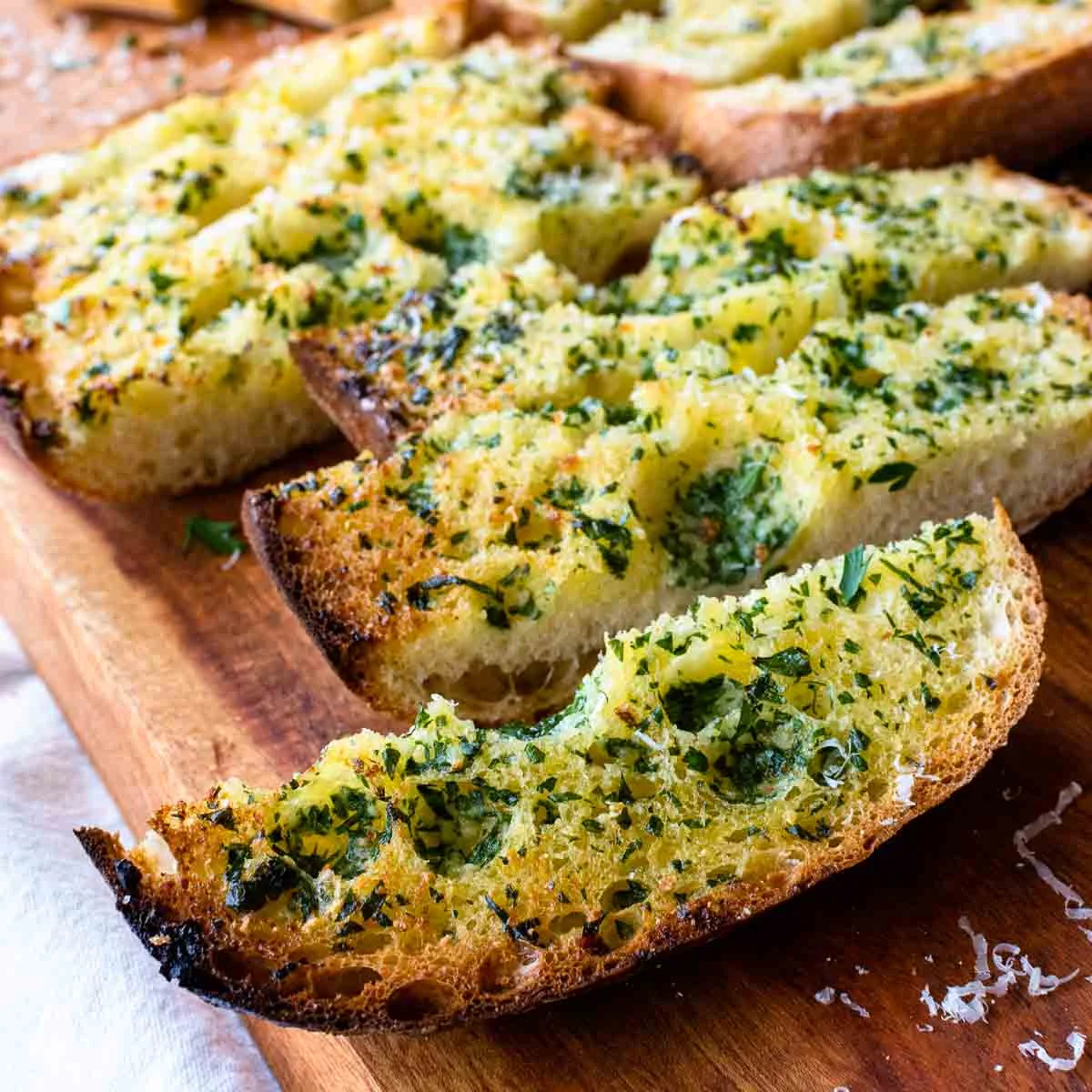
Ciabatta garlic bread pairs a crisp, golden crust with a soft centre, all coated in savoury garlic butter. It is quick to prepare and makes an easy side for pasta, soup or a sharing spread.
Ingredients
- 1ciabatta loaf
- 115 g (½ cup)salted butter
- 4garlic cloves
- 2 tablespoons, plus extra for sprinkling over the hot garlic breadfinely grated Parmesan cheese
- 2 tablespoonsfinely chopped flat-leaf parsley
- ⅛ teaspoonfine salt
Instructions
- 1
Preheat the oven
Heat the oven to 220°C (425°F) and set out a large baking sheet.
- 2
Slice the ciabatta
Cut the loaf in half lengthways and place both halves cut-side up on the baking sheet.
- 3
Make garlic paste
Peel and finely chop the garlic. Sprinkle it with the salt, then use the flat side of a knife to crush it. Scrape the garlic back into a pile and repeat several times, until it forms a fine paste.
- 4
Mix the butter
In a small bowl, combine the butter, garlic paste, Parmesan and parsley.
- 5
Spread the mixture
Use a palette knife or similar tool to spread the butter mixture in a thin, even layer over the cut sides of both ciabatta halves.
- 6
Bake and serve
Bake the bread cut-side up for 10–15 minutes, until the butter has melted and the bread is lightly golden. Take it out of the oven and immediately sprinkle with extra grated Parmesan. Cut into 5 cm (2-inch) slices and serve hot.
What is ciabatta garlic bread?
Garlic bread is a familiar American-style side, made by spreading seasoned butter over bread and baking it until fragrant and crisp at the edges. This version uses ciabatta, an Italian loaf known for its open crumb and chewy texture.
Ciabatta’s airy interior takes on the butter while its crust gives each slice a satisfying crunch. Parmesan and parsley add savoury and fresh notes to the garlic.
Nutrition and macros by portion
The nutrition label shows one serving as written: 159 calories, 4g protein, 18g carbs, 8g fat.
| Portion | Adjustment | kcal | Protein | Carbs | Fat |
|---|---|---|---|---|---|
| Lighter | Use less garlic butter | 111 kcal | 3g | 13g | 6g |
| This serving | As written | 159 kcal | 4g | 18g | 8g |
| Hungry | Serve a larger portion | 239 kcal | 6g | 27g | 12g |
The ciabatta provides most of the carbohydrates, while butter supplies most of the fat; Parmesan contributes some protein along with extra fat. Serve a slice or two alongside a vegetable-rich soup or salad to make a more balanced plate.
Why ciabatta works
Open crumb: the larger holes in ciabatta let the garlic butter settle into the bread rather than sitting only on the surface.
Sturdy crust: the loaf holds its shape under the butter and develops a lightly crisp exterior as it bakes.
Making the garlic butter
Garlic paste: crushing the chopped cloves with salt makes a fine paste that spreads more evenly than larger pieces. Work across the pile, then gather and crush it again until smooth.
Even mixture: combine the paste thoroughly with the butter, Parmesan and parsley so the flavour is distributed across both halves.
Spreading and baking
Thin layer: spread the butter mixture right across each cut surface, aiming for an even coating rather than thick patches. This helps the bread bake at a similar rate from end to end.
Doneness: bake for 10–15 minutes at 220°C (425°F). Look for melted butter and a lightly golden surface; check towards the shorter end of the time range if your loaf is small.
Serving it hot
Fresh from the oven: add the extra Parmesan as soon as the bread comes out so it catches on the warm butter. Slice into 5 cm pieces and serve while the crust is still crisp.
On the side: the bread goes well with tomato-based pasta dishes, soup or a simple salad. It can also be served as part of a sharing meal.
The finishing touches
Salt: the butter is already salted, and the recipe uses only a small amount more to help crush the garlic. Keep the Parmesan in mind too, as it contributes a salty, savoury flavour.
Parsley: finely chopped flat-leaf parsley mixes readily into the butter and gives the finished bread a fresh, herby accent.
Recipe notes & tips
- Let the butter soften enough to mix easily and spread in an even layer.
- Chop and crush the garlic finely so larger pieces do not dominate individual bites.
- Use a large baking sheet so both halves can sit cut-side up without overlapping.
- Check the bread after 10 minutes, as loaf size and oven performance can affect browning.
- Sprinkle on the extra Parmesan as soon as the bread comes out of the oven.
Variations
- Add black pepper: mix a little freshly ground pepper into the butter for a gentle bite.
- Try fresh herbs: replace some of the parsley with finely chopped chives.
- Use another hard cheese: swap the Parmesan for finely grated Pecorino for a sharper finish.
- Add chilli: stir a pinch of chilli flakes into the butter mixture for a little heat.
- Make it cheesier: add a little extra Parmesan to the butter and finish with more after baking.
Common mistakes to avoid
- Uneven garlic: large chunks can make some bites much stronger; crush the garlic into a fine paste.
- Thick butter patches: they can leave the topping uneven; spread it in a thin, consistent layer.
- Overbaking: the bread can become too dry; check at 10 minutes and remove it once lightly golden.
- Crowded baking sheet: overlapping halves may bake unevenly; leave them cut-side up with room around them.
- Late Parmesan: it may not cling well once the bread cools; sprinkle it on immediately after baking.
How to store
For the best crust, serve the bread straight from the oven. Store leftovers in an airtight container in the fridge for up to 2 days, then reheat in an oven until warmed through; the crust may be less crisp after storage.
Frequently asked questions
Can I prepare the garlic butter ahead?
Yes. Mix the butter, garlic, Parmesan and parsley ahead and keep it covered in the fridge. Let it soften enough to spread before assembling the bread.
Can I use unsalted butter?
Yes, but the finished flavour may be less seasoned. The recipe includes ⅛ teaspoon of fine salt, so taste the butter mixture and adjust only if needed.
How can I tell when the bread is ready?
The butter should be melted and the top lightly golden after 10–15 minutes. Remove it once those cues appear so the bread does not dry out.
Can I use a different loaf?
You can use another sturdy loaf that can be split lengthways, though the texture will differ from ciabatta. Choose bread with a firm crust that can support the butter.
Can I freeze the prepared garlic bread?
The recipe does not specify freezing, but you can freeze the assembled, unbaked halves wrapped well. Bake from frozen until the butter has melted and the bread is lightly golden, checking the timing as needed.
Cook it from the original
This recipe comes from marcellinaincucina.com. Their page has the author’s own photos, notes and tips — the best place to cook it from.
Open the recipe on marcellinaincucina.com