
Pastiera Napoletana Recipe
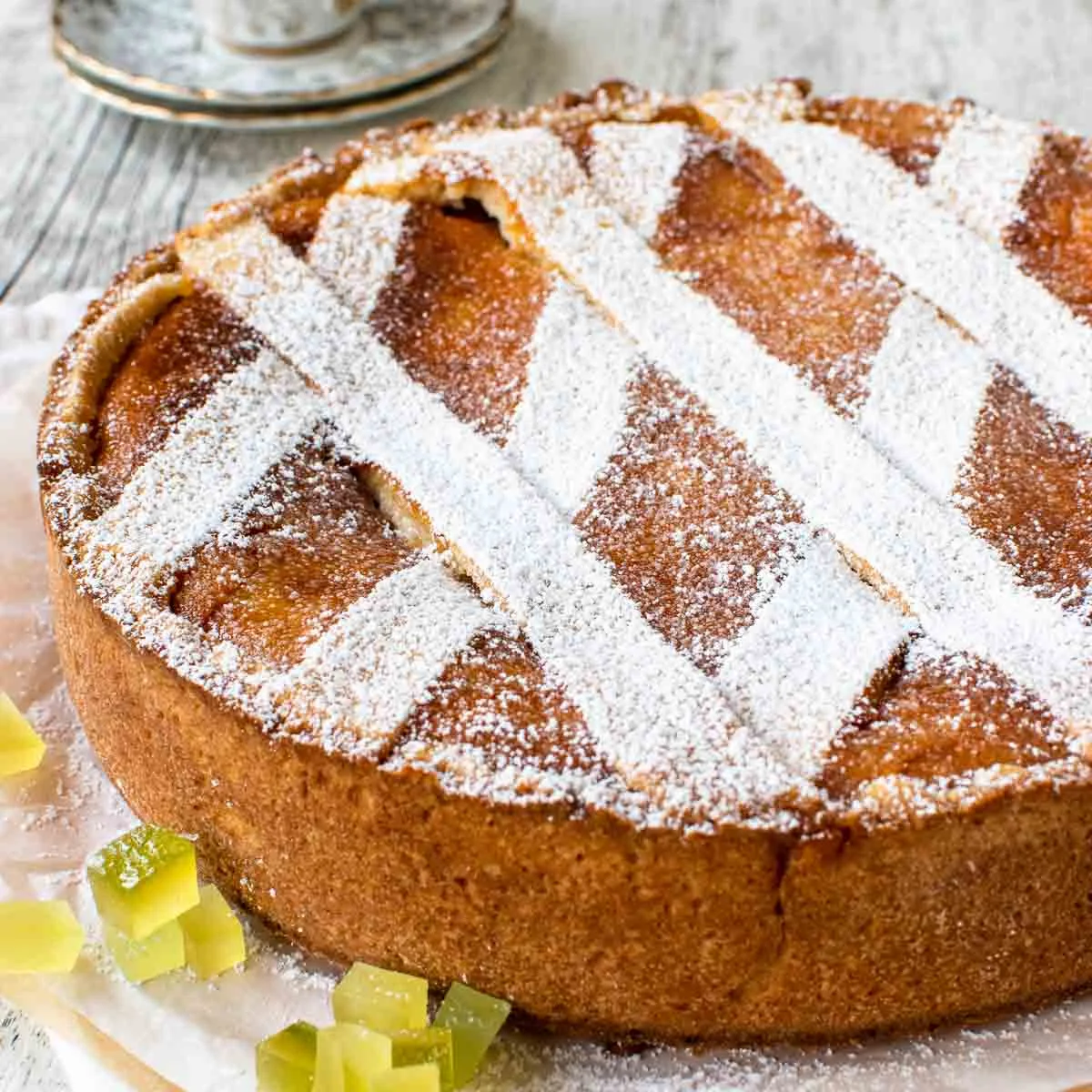
Pastiera Napoletana is a Neapolitan Easter pie with a tender pastry case and a creamy ricotta and cooked-wheat filling scented with citrus and orange blossom. It makes a celebratory centrepiece that can be prepared ahead and served at room temperature or chilled.
Ingredients
- 280 g (10 oz)grano cotto (cooked wheat)
- 180 ml (¾ cup)whole milk
- 1 strip, about 7.5 cm long (3 inches)lemon zest
- 290 g (2¼ cups), plus extra for dustingplain flour
- 140 g (5 oz), cold and choppedunsalted butter
- 100 g (½ cup)granulated sugar
- 2 teaspoons, finely gratedlemon zest
- A pinchsalt
- 1egg
- 1egg yolk
- 450 g (16 oz)whole milk ricotta
- 200 g (1 cup)granulated sugar
- 3eggs
- ⅔ cup, choppedmixed Italian candied fruit
- 1 tablespoonorange blossom water
- 1 teaspoonvanilla extract
- ½ teaspoon, optionalground cinnamon
Instructions
- 1
Cook the wheat
Put the grano cotto, milk and long strip of lemon zest in a saucepan. Cook gently over low heat for about 30 minutes, stirring regularly, until thick and creamy. Spread the mixture on a plate and leave it to cool.
- 2
Make the pastry
Add the flour, cold butter, 100 g sugar, finely grated lemon zest and salt to a food processor. Pulse until crumbly.
- 3
Bring together
Add the egg and egg yolk, then process until the dough gathers into a ball. If it seems too dry, add a squeeze of lemon juice or a few drops of chilled water.
- 4
Chill the dough
Remove the dough from the processor, flatten it into a disc and wrap it in cling film. Refrigerate while you prepare the filling.
- 5
Mix the ricotta
In a large bowl, beat the ricotta and 200 g sugar with an electric mixer or by hand until smooth and creamy.
- 6
Finish the filling
Mix in the 3 eggs, candied fruit, orange blossom water, vanilla and cinnamon if using. Add the cooled grano cotto mixture and beat gently to combine. Set aside while you roll the pastry.
- 7
Prepare the oven
Heat the oven to 180°C (375°F). Butter a 22.5 cm springform cake tin or high-sided pie tin and line its base.
- 8
Divide the pastry
Take the dough from the fridge and divide it into two pieces, about three-quarters and one-quarter. Flatten the larger piece into a rough circle and dust it lightly with flour.
- 9
Line the tin
Roll the larger piece between two sheets of non-stick baking parchment until it is large enough to cover the base and sides of the tin. Dust with a little more flour if it sticks. The pastry needs to reach about 5 cm up the sides.
- 10
Ease in pastry
Wind the pastry around the rolling pin and unroll it over the prepared tin. Ease it into the base and up the sides, patching any tears or holes.
- 11
Add the filling
Spoon the ricotta mixture into the pastry case and level it. Trim excess pastry just above the filling and keep the trimmings.
- 12
Cut the lattice
Press the reserved pastry and trimmings together, then roll them between two sheets of non-stick baking parchment. Cut seven strips to fit across the pie: four in one direction and three in the other.
- 13
Bake until golden
Bake in the preheated oven for about 50–60 minutes, or longer if needed, until golden brown. The pie will puff slightly and brown on top.
- 14
Cool the pie
Leave the pastiera to cool completely. Its surface will flatten as it cools.
- 15
Serve and store
Serve at room temperature or chilled, dusted with icing sugar. Keep any leftover pastiera in the fridge for 5–7 days.
What is pastiera Napoletana?
Pastiera is a traditional Neapolitan Easter pie, associated with Holy Week and served at Easter lunch. It is now enjoyed across Italy as part of the seasonal celebration.
This version pairs a sweet, crumbly pasta frolla case with ricotta, cooked wheat, candied fruit and fragrant citrus notes. The lattice top lets the filling show through and gives the pie its recognisable finish.
Nutrition and macros by portion
The nutrition label shows one serving as written: 499 calories, 11g protein, 63g carbs, 20g fat.
| Portion | Adjustment | kcal | Protein | Carbs | Fat |
|---|---|---|---|---|---|
| Lighter | Smaller slice, fresh fruit | 349 kcal | 8g | 44g | 14g |
| This serving | As written | 499 kcal | 11g | 63g | 20g |
| Hungry | Larger slice | 749 kcal | 17g | 95g | 30g |
The cooked wheat and pastry flour supply most of the carbohydrates, while butter and whole milk ricotta contribute much of the fat. Ricotta and eggs provide the protein. Serve a slice with fresh fruit for a simple way to balance the plate.
The cooked wheat
Grano cotto: Simmering the wheat with milk and a strip of lemon zest softens it and thickens the mixture before it meets the ricotta. Stir regularly over low heat so it cooks evenly without catching.
Cooling: Spread the cooked mixture on a plate and let it cool before adding it to the filling. Adding it warm can make the ricotta mixture looser.
A workable pasta frolla
Cold butter: Pulsing it with the flour and sugar gives the pastry a crumbly texture. Process only until the egg and yolk bring it together; overworking can make the pastry tougher.
Rolling: Chilling firms the dough, while rolling it between parchment makes it easier to move into the tin. If it cracks, press the pieces back together rather than trying to stretch them.
Balancing the filling
Ricotta: Beat it with the sugar until smooth before adding the eggs. This helps the filling combine evenly without leaving lumps.
Flavourings: Candied fruit, orange blossom water, vanilla and optional cinnamon give the filling its sweet, aromatic character. Add the cooled wheat last and mix gently to keep the texture cohesive.
Lining and shaping
Pastry case: Ease the rolled pastry into the tin and patch any holes so the filling stays contained. Keep the sides about 5 cm high, as directed, and trim the excess above the filling.
Lattice: Roll the reserved pastry with the trimmings and cut seven strips. Lay four one way and three across them to form the top pattern.
Baking and cooling cues
Doneness: Bake for about 50–60 minutes at 180°C, allowing extra time if the top has not browned. The pie should be golden and slightly puffed.
Cooling: The surface will settle as the pastiera cools. Let it cool completely before serving so the filling has time to firm up.
Serving the pie
Pastiera can be served at room temperature or chilled, with icing sugar dusted over the top just before serving. Its citrus and floral notes pair well with coffee or tea.
For a dessert spread, serve small slices alongside fresh fruit. The pie is rich and substantial, so it can also stand on its own after a lighter meal.
Recipe notes & tips
- Stir the wheat mixture regularly as it simmers so it does not catch on the bottom of the pan.
- Let the cooked wheat cool fully before mixing it into the ricotta.
- Keep the pastry cold and handle it gently when rolling and lining the tin.
- Patch small breaks in the pastry instead of stretching the dough to cover them.
- Check for a golden top at 50 minutes, but allow more baking time if it still looks pale.
- Wait until the pie is completely cool before slicing for neater portions.
Variations
- Cinnamon: Include the optional ground cinnamon for a warmer spice note.
- Citrus: Add a little extra finely grated lemon zest to emphasise the pie's citrus aroma.
- Candied fruit: Use a different mix of Italian candied fruit while keeping the same total amount.
- Chilled serving: Refrigerate the cooled pie and serve it cold for a firmer filling.
- Plain finish: Serve without icing sugar if you prefer a less sweet finish on top.
Common mistakes to avoid
- Cooking over high heat: The wheat can catch before it thickens; keep the pan over low heat and stir regularly.
- Adding warm wheat: It can loosen the ricotta filling; cool the mixture completely first.
- Overworking the pastry: It may become tough; process only until the dough forms a ball.
- Pulling cracked pastry: Stretching can create thinner spots; patch tears with spare dough instead.
- Slicing while warm: The filling may not hold its shape; cool the pie completely before cutting.
- Removing it when pale: The pie may need longer than the stated time; bake until the surface is golden.
How to store
Once completely cool, cover and refrigerate the pastiera for 5–7 days. Serve chilled or let a portion come to room temperature; the recipe does not specify reheating.
Frequently asked questions
Can I make pastiera ahead?
Yes. The recipe allows it to be served chilled, so you can bake it ahead, cool it completely and keep it covered in the fridge until serving.
How do I know when the pastiera is baked?
The top should be golden brown and the pie should be slightly puffed. It may need longer than 50–60 minutes depending on your oven.
Why does the top flatten after baking?
The pie is expected to settle as it cools. Leave it to cool completely before serving.
Can I leave out the cinnamon?
Yes. Cinnamon is optional, so you can omit it without changing the other ingredients.
Should I serve it warm or cold?
It can be served at room temperature or chilled. Dust it with icing sugar just before serving.
How long does pastiera keep?
Store it in the fridge; the recipe says it keeps for 5–7 days.
Cook it from the original
This recipe comes from marcellinaincucina.com. Their page has the author’s own photos, notes and tips — the best place to cook it from.
Open the recipe on marcellinaincucina.com