
Authentic Ribollita Recipe
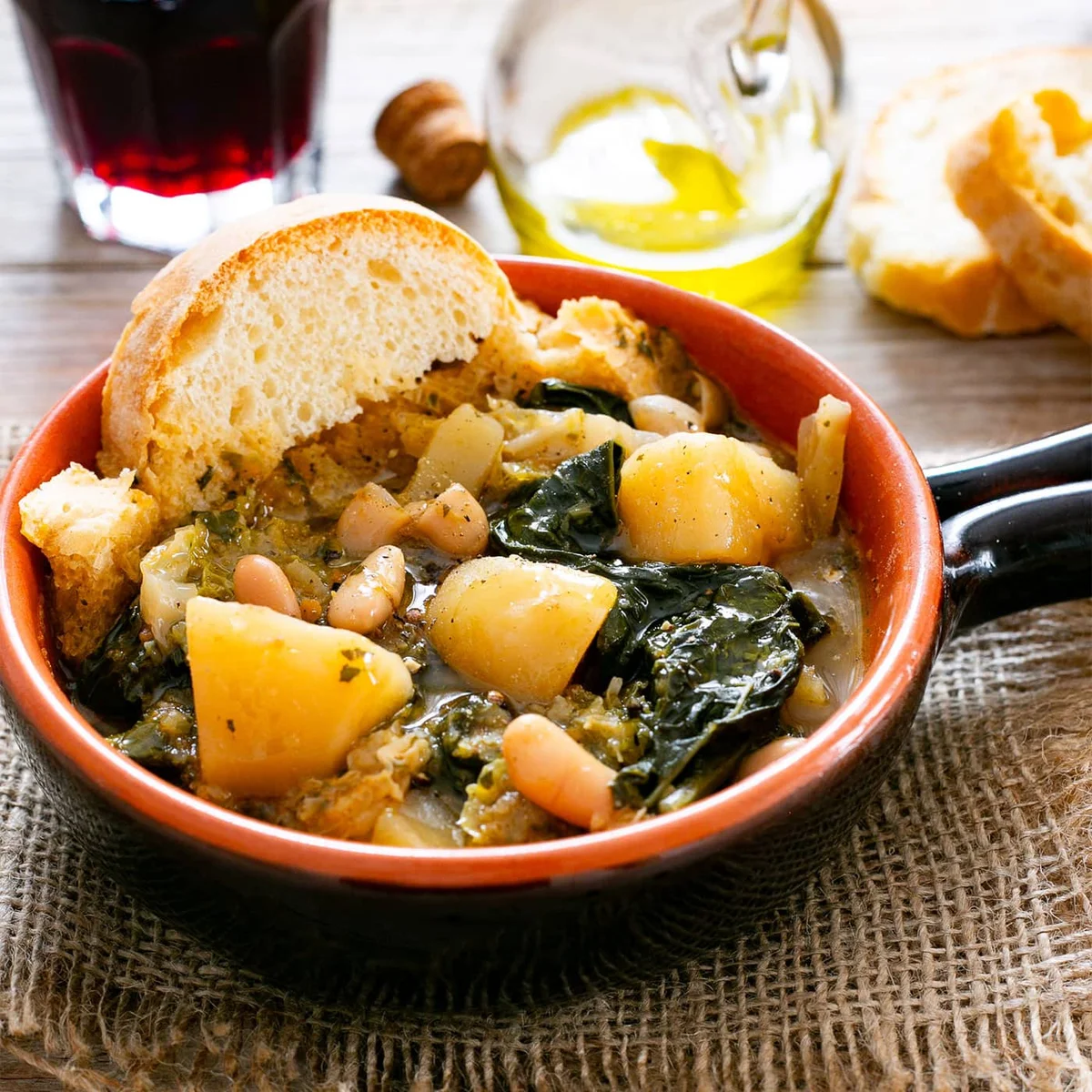
Ribollita is a hearty Tuscan soup of beans, leafy vegetables and stale bread, traditionally reheated before serving. This slow-simmered version makes a generous pot for a cold day, with the bread layered through the soup to soak up its broth.
Ingredients
- 1 small bunchlacinato kale, cleaned and cut into wide strips
- 120 ml (½ cup)soffritto (chopped carrot, onion and celery)
- 340 g (12 oz)Savoy cabbage, cut into wide strips
- 227 g (½ lb)Swiss chard, cut into chunks
- 240 ml (1 cup)tomato sauce
- 500 g (1.1 lb) cooked, plus 480 ml (2 cups) cooking watercannellini beans
- 500 g (1.1 lb)russet potatoes
- 60 ml (4 tablespoons), plus more for servingextra virgin olive oil
- 454 g (1 lb)stale, unsalted Tuscan bread
- 1 sprigrosemary
- 2 sprigsthyme
- To tastesalt and pepper
Instructions
- 1
Cook the soffritto
Heat the extra virgin olive oil in a large stockpot. Add the chopped carrot, onion and celery and sauté over medium heat for 3–4 minutes.
- 2
Add the potatoes
Stir in the potato chunks and cook for 1 minute.
- 3
Add the tomato
Pour in the tomato sauce, season with salt and pepper, and cook for 2–3 minutes.
- 4
Soften the greens
Add the kale, Swiss chard and Savoy cabbage. Cook for 4–5 minutes, or until the vegetables begin to soften.
- 5
Blend the beans
While the greens cook, blend half of the cannellini beans with 480 ml (2 cups) of their cooking water.
- 6
Combine the beans
Pour the blended bean mixture into the pot and add the remaining cannellini beans.
- 7
Season the soup
Season with salt and pepper and add the rosemary and thyme. Pour in enough water to cover the ingredients, then bring the soup to a boil.
- 8
Simmer the soup
Turn the heat down and cover the pot. Simmer for 1 hour 30 minutes, adding more water from time to time. Keep the soup fairly liquid, as the bread will absorb a lot of it.
- 9
Layer bread and soup
Put a layer of stale bread in a separate pan. Cover it with hot soup, including broth and vegetables, then add another layer of bread. Continue layering until all the ingredients are used.
- 10
Rest and reheat
Leave the layered soup to stand for 30 minutes, then warm it briefly on the stovetop.
- 11
Finish with oil
Serve in bowls with a generous drizzle of extra virgin olive oil.
What is ribollita?
Ribollita is a Tuscan bread-and-vegetable soup whose name means “reboiled”, reflecting the practice of reheating leftover soup. Beans and sturdy greens make it substantial, while stale bread thickens the broth and turns the dish into a meal.
This version combines lacinato kale, cabbage, Swiss chard, potatoes and cannellini beans. Blending some of the beans gives the broth body, and layering the bread into the hot soup lets it absorb the flavour.
Nutrition and macros by portion
The nutrition label shows one serving as written: 452 calories, 17g protein, 75g carbs, 12g fat.
| Portion | Adjustment | kcal | Protein | Carbs | Fat |
|---|---|---|---|---|---|
| Lighter | Less bread, more greens | 316 kcal | 12g | 53g | 8g |
| This serving | As written | 452 kcal | 17g | 75g | 12g |
| Hungry | Larger bowl, extra bread | 678 kcal | 26g | 113g | 18g |
The beans and bread provide most of the carbohydrates, while the beans also contribute protein. Olive oil supplies most of the fat, with the vegetables adding bulk and flavour. For a more balanced plate, pair a serving with a fresh salad or another non-starchy vegetable.
Build the flavour base
Soffritto: carrot, onion and celery start the soup with a gently savoury base. Give them their full 3–4 minutes in the olive oil before adding the potatoes.
Tomato: a short cook after adding the sauce helps it mingle with the vegetables before the liquid goes in. Season in stages, then taste again before serving.
Choose bread that can hold up
Stale bread: use bread that has dried out rather than fresh, soft slices. It will soak up the broth without immediately dissolving into a paste.
Tuscan bread: the recipe calls for unsalted bread, so the soup’s seasoning can be adjusted without the bread making it unexpectedly salty. If your bread is salted, taste carefully as you season.
Let the greens soften slowly
Leafy vegetables: kale, cabbage and chard all need a little time in the pot. Cook them until they start to soften before adding the beans and covering everything with water.
Long simmer: keep the soup at a gentle simmer for 1 hour 30 minutes with the lid on. Add water as needed so the ingredients remain covered and there is enough broth for the bread.
Layer for the right texture
Bread and broth: put bread at the bottom of a separate pan, then cover it with hot soup, broth and vegetables. Repeat the layers so the bread is distributed throughout rather than all sitting on top.
Rest and reheat: leave the layered soup for 30 minutes before briefly warming it on the stovetop. The bread will take up liquid as it rests, so keep some broth in the mixture.
Serve it simply
Finish each bowl with a drizzle of extra virgin olive oil, as directed. Ribollita is filling on its own; for a lighter contrast, serve it with a crisp green salad.
Because the bread continues to absorb liquid, bring extra hot water or broth to the table if you prefer a looser bowl.
Recipe notes & tips
- Cut the potatoes into evenly sized chunks so they cook at a similar rate.
- Keep the pot at a gentle simmer rather than a vigorous boil during the long cooking stage.
- Add water gradually during simmering, keeping enough broth for the bread layers.
- Use a wide pan for the bread and soup layers so they are easier to assemble.
- Taste the soup after simmering and adjust the salt and pepper before layering.
Variations
- Use dried beans: cook cannellini beans until tender and reserve some of their cooking liquid for blending.
- Change the greens: replace one of the leafy vegetables with another sturdy green while keeping the overall mix generous.
- Add garlic: include chopped garlic with the soffritto for a more pronounced savoury base.
- Make it looser: add extra water or bean cooking liquid before layering if you prefer more broth.
- Use a different rustic loaf: choose a firm, unsalted stale bread that can absorb liquid without falling apart.
Common mistakes to avoid
- Using fresh soft bread: it can collapse quickly; choose stale bread with a firm crumb.
- Letting the pot boil hard: vigorous boiling can break down the vegetables; lower the heat once it reaches a boil.
- Adding too little liquid: the bread soaks up broth; add water during simmering and keep the soup well supplied.
- Skipping the bean blend: blending half the beans helps thicken the soup; purée them with their cooking water as directed.
- Serving straight after layering: the bread needs time to absorb the soup; rest it for 30 minutes before reheating.
How to store
Refrigerate leftovers in a covered container and use within 3–4 days. Reheat gently on the stovetop, adding a splash of water if the bread has absorbed most of the broth.
Frequently asked questions
Can I make ribollita ahead?
Yes. The soup can be cooked ahead, then layered with the bread and rested before reheating. Keep enough liquid in the pot because the bread will absorb broth as it sits.
Can I use tinned cannellini beans?
Yes. Drain and rinse them, and use water or stock in place of the reserved bean cooking water for blending.
What bread works best?
Use stale, firm bread that can soak up broth without immediately disintegrating. The recipe specifies unsalted Tuscan bread.
How do I keep the soup from becoming too thick?
Add water during the simmer as needed and leave enough broth for the bread layers. You can also stir in a little hot water when reheating.
Can I freeze ribollita?
You can freeze it, though the bread and vegetables may soften further after thawing. Cool it promptly, freeze in a sealed container, and reheat gently with extra liquid if needed.
Cook it from the original
This recipe comes from maricruzavalos.com. Their page has the author’s own photos, notes and tips — the best place to cook it from.
Open the recipe on maricruzavalos.com