
Palada Pradhaman
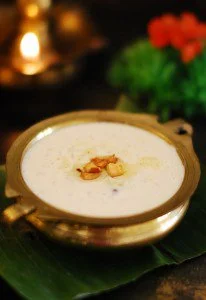
Palada pradhaman is a creamy Kerala payasam made with ada, milk and condensed milk, finished with cashews and cardamom. This pressure-cooker version keeps the method straightforward and can be served hot, warm or chilled.
Ingredients
- 120 ml (1/2 cup)ada
- 480 ml (2 cups)full-fat milk
- 300 ml (1 1/4 cups)water
- 1/2 tin (200 g tin)condensed milk
- 30 ml (2 tbsp), optionalsugar
- 8 g (1 tbsp)chopped cashews
- 1crushed cardamom
- 7.5 ml (1/2 tbsp)ghee
Instructions
- 1
Combine and cook
Put the milk, water and condensed milk in a pressure cooker. Wash the ada, add it to the cooker and stir well. Bring the mixture to the boil, then close the cooker and fit the weight. Cook over full heat until the first whistle, then reduce to low-medium and cook for 5–6 whistles. Switch off the heat.
- 2
Check the texture
Leave the cooker closed for 15–20 minutes, until the pressure has dropped. Check that the ada is cooked and assess the consistency, remembering that the payasam thickens as it rests. If the ada needs more cooking or you prefer a thicker payasam, cook it uncovered over a low heat, stirring from time to time.
- 3
Fry and finish
Heat the ghee in a pan and fry the chopped cashews until golden brown. Add them to the payasam along with the crushed cardamom. Serve hot, warm or chilled.
What is palada pradhaman?
Palada pradhaman is a South Indian, particularly Kerala, payasam: a sweet pudding traditionally made with ada, small pieces of rice-based pasta. It is often served at festive meals and celebrations.
Here, milk and condensed milk make a rich, creamy base, while pressure cooking softens the ada. A final addition of ghee-fried cashews and cardamom brings a buttery crunch and fragrant finish.
Nutrition and macros by portion
The nutrition label shows one serving as written: 260 calories, 6g protein, 39g carbs, 9g fat.
| Portion | Adjustment | kcal | Protein | Carbs | Fat |
|---|---|---|---|---|---|
| Lighter | Use less condensed milk | 182 kcal | 4g | 27g | 6g |
| This serving | As written | 260 kcal | 6g | 39g | 9g |
| Hungry | Serve a larger bowl | 390 kcal | 9g | 59g | 14g |
The ada and condensed milk provide most of the carbohydrates, while the milk, condensed milk and ghee contribute much of the fat; milk also supplies some protein. Serve a modest bowl after a meal with vegetables and a protein-rich savoury dish to balance the plate.
The ingredients that matter
Ada: Wash it before adding it to the cooker, as directed, and check its texture after cooking. The pieces should be tender rather than chalky or hard in the centre.
Milk and condensed milk: Full-fat milk gives the pudding a rounded, creamy feel, while condensed milk supplies sweetness and body. The optional sugar lets you adjust the sweetness to taste.
Using a pressure cooker
First whistle: Bring the mixture to the boil before closing the cooker, then begin the lower-heat cooking phase after the first whistle. The recipe calls for 5–6 more whistles at low-medium heat.
Pressure release: Leave the cooker closed for 15–20 minutes while the pressure drops. This gives the ada more time in the hot liquid before you check whether it is tender.
Getting the consistency right
Resting: The payasam thickens as it stands, so judge the consistency with that change in mind. It may look looser in the cooker than it will after resting.
Finishing on the hob: If the ada is still firm or you want a thicker result, simmer the payasam uncovered over low heat and stir from time to time. Stop once the ada is cooked and the texture suits you.
The cashew and cardamom finish
Cashews: Fry the chopped pieces in ghee until golden brown, then tip them into the payasam. Watch them closely as they colour quickly.
Cardamom: Add it at the end so its aroma stays noticeable. Stir it through with the cashews before serving.
Serving and timing
Serving temperature: This payasam can be enjoyed hot, warm or chilled. If serving it cold, allow time for it to cool and thicken before portioning.
Make-ahead note: The recipe gives no total cooking time, but includes 15–20 minutes for the pressure to drop. Allow extra time if the ada needs further cooking or you want to chill the finished pudding.
What to serve alongside
After a meal: Serve a small bowl as a sweet finish after a savoury Indian meal, such as rice, vegetables and curry.
For a festive spread: Offer it with other dishes as part of a larger meal. Its creamy sweetness is especially welcome after savoury, spiced food.
Recipe notes & tips
- Wash the ada before adding it to the milk mixture.
- Stir the mixture well before bringing it to the boil.
- Start counting the 5–6 whistles at low-medium heat after the first whistle.
- Let the pressure drop naturally for 15–20 minutes before opening the cooker.
- Check both the ada's tenderness and the payasam's consistency before serving.
- Fry the cashews until golden, not dark brown.
Variations
- Adjust the sweetness: Leave out the optional sugar if the condensed milk makes the payasam sweet enough.
- Thicken it further: Simmer uncovered over low heat, stirring occasionally, until the texture is to your liking.
- Serve it chilled: Cool the finished payasam and refrigerate it before serving.
- Keep it warm: Serve the payasam hot or warm instead of chilling it.
- Emphasise the garnish: Add the ghee-fried cashews and crushed cardamom just before serving.
Common mistakes to avoid
- Opening too early: Wait 15–20 minutes for the pressure to drop before opening the cooker.
- Skipping the ada check: Taste a piece after pressure cooking and simmer longer if it is still firm.
- Expecting it to stay loose: The payasam thickens as it rests, so allow for that before reducing it further.
- Cooking the cashews too dark: Remove them once golden so they do not turn bitter.
- Adding sugar automatically: Taste the payasam first, as the condensed milk already sweetens it.
How to store
Cool leftovers and store them in a covered container in the fridge for up to 3 days. Reheat gently in a pan, stirring and adding a splash of milk or water if it has thickened; it can also be served chilled.
Frequently asked questions
What is ada?
Ada is a rice-based ingredient formed into small pieces or flakes and used in payasam. Wash it before cooking as directed in this recipe.
Can I leave out the sugar?
Yes. The recipe marks the sugar as optional, so taste the mixture and add it only if you want extra sweetness.
How do I know when the ada is cooked?
Check a piece after the pressure has dropped; it should be tender. If it remains firm, continue cooking the payasam uncovered over low heat.
Why is the payasam thinner straight after cooking?
It thickens as it rests. Check the consistency after the cooker has been opened and the payasam has had a chance to settle.
Can I serve palada pradhaman cold?
Yes. The recipe can be served hot, warm or chilled; refrigerate it after cooling if you prefer it cold.
Cook it from the original
This recipe comes from mariasmenu.com. Their page has the author’s own photos, notes and tips — the best place to cook it from.
Open the recipe on mariasmenu.com