
Easy Guinness Bread Recipe
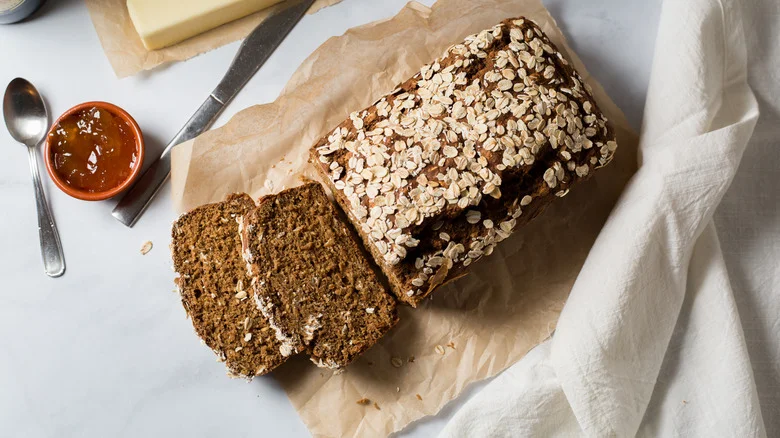
This moist wholemeal quick bread gets malty depth from Guinness, a gentle sweetness from molasses and a hearty texture from oats. It is a straightforward loaf to make when you want savoury bread without kneading or yeast.
Ingredients
- 450 g (3¾ cups)wholemeal flour, stoneground if possible
- 90 g (1 cup), plus extra for dustingrolled oats
- 2 teaspoonsbicarbonate of soda
- 2 teaspoonsbaking powder
- 1 teaspoonsalt
- 355 ml (12 oz)Guinness stout
- 240 ml (1 cup)buttermilk
- 30 ml (2 tablespoons)molasses
Instructions
- 1
Heat the oven
Preheat the oven to 204°C (400°F).
- 2
Prepare the tin
Grease a 13 × 18 cm (5 × 7-inch) loaf tin with butter. If you like, line it with greased baking parchment as well.
- 3
Mix the dry ingredients
Add the flour, oats, bicarbonate of soda, baking powder and salt to a mixing bowl. Whisk until evenly combined.
- 4
Mix the wet ingredients
In a separate bowl, whisk together the Guinness, buttermilk and molasses.
- 5
Combine the mixtures
Pour the wet mixture gradually into the dry ingredients and stir just until combined. Avoid overmixing.
- 6
Fill the tin
Transfer the batter to the prepared tin and smooth the surface.
- 7
Add the oat topping
Scatter extra oats over the batter and press them in gently with the back of a spoon.
- 8
Bake the loaf
Bake for 45–50 minutes, until risen and golden brown. A toothpick inserted in the centre should come out clean.
- 9
Cool the bread
Leave the loaf in the tin for 5 minutes, then move it to a wire rack and let it cool completely.
- 10
Slice and store
Slice and serve. Keep any leftovers in a closed paper bag at room temperature for up to 3 days, or freeze them.
What is Guinness bread?
Guinness bread is a stout-enriched loaf with a hearty, malty flavour. This version is a quick bread rather than a yeasted loaf, so it relies on raising agents instead of kneading and proving.
Stout and molasses bring depth and a hint of sweetness, while wholemeal flour and oats give the crumb a substantial texture. It draws on Irish stout flavours in an easy-to-make loaf often baked in American kitchens.
Nutrition and macros by portion
The nutrition label shows one serving as written: 275 calories, 10g protein, 55g carbs, 2g fat.
| Portion | Adjustment | kcal | Protein | Carbs | Fat |
|---|---|---|---|---|---|
| Lighter | Use less molasses | 193 kcal | 7g | 39g | 1g |
| This serving | As written | 275 kcal | 10g | 55g | 2g |
| Hungry | Serve a larger slice | 413 kcal | 15g | 83g | 3g |
The supplied nutrition figures list 55 g of carbohydrate, largely from the wholemeal flour, oats and molasses; the stout and buttermilk also contribute. Flour, oats and buttermilk provide some protein, while the recipe contains little fat apart from any butter used to grease the tin. Serve a slice with soup or a protein-rich savoury topping and vegetables for a more balanced plate.
Why these ingredients work
Wholemeal flour: its bran and germ give the loaf a robust, earthy character. Stoneground flour can add a slightly varied texture, but the recipe works with other wholemeal flour too.
Guinness and molasses: the stout contributes roasted, malty notes, while a small amount of molasses rounds them out with sweetness. Buttermilk adds moisture and acidity to the batter.
Oats: rolled oats add texture inside the loaf and make a simple topping. Keep the topping modest so it stays in place as the bread rises.
Mix gently for a tender crumb
Quick-bread batter does not need vigorous mixing. Stir only until the dry ingredients are moistened; a few small lumps are preferable to working the batter until smooth.
Pouring in the wet mixture gradually helps distribute it through the flour without requiring extra stirring. Once the batter comes together, transfer it to the tin.
Check the centre for doneness
The loaf is ready when it has risen and turned golden brown, and a toothpick inserted in the centre comes out clean. If batter clings to it, bake for a little longer and check again.
Let it rest in the tin for 5 minutes before turning it out. Cooling completely on a wire rack helps the crumb settle before slicing.
Serving and texture
This loaf is hearty enough to serve with soup, or alongside a savoury meal. Its malty sweetness also suits butter or a savoury cheese.
For neat slices, wait until the bread has cooled completely and use a serrated knife. The crust and oat topping may be a little crumbly, so slice with a gentle sawing motion.
Plan the bake
The oven needs to be fully heated before the batter goes in, as the raising agents begin working once the wet and dry ingredients meet. Prepare the tin and have both mixtures ready first.
The stated bake time is 45–50 minutes, but use the loaf’s colour and the toothpick test as your cues. Cooling time comes after baking and is important for the loaf’s texture.
Recipe notes & tips
- Measure the flour without packing it tightly into the cup before weighing or using a volume measure.
- Whisk the dry ingredients thoroughly so the raising agents are distributed through the flour.
- Stir the batter only until no dry patches remain to avoid a heavy loaf.
- Press the topping oats lightly into the batter so they adhere during baking.
- Use a toothpick in the centre of the loaf to check that it is baked through.
- Cool the loaf on a wire rack before slicing to help the crumb set.
Variations
- Add seeds: scatter a small handful of seeds over the top with the oats.
- Use treacle: replace the molasses with the same amount of treacle for a similar dark sweetness.
- Add dried fruit: fold a little dried fruit into the batter just before filling the tin.
- Make it savoury: serve slices with a sharp cheese or alongside soup.
- Try another stout: use a similar dark stout in place of Guinness for a different malty note.
Common mistakes to avoid
- Overmixing the batter: it can make the loaf dense, so stop as soon as the ingredients are combined.
- Skipping the tin preparation: grease the tin and use optional greased parchment to help release the loaf.
- Underbaking the centre: check with a toothpick and continue baking if batter still clings to it.
- Slicing while hot: let the loaf cool completely on a rack so the crumb can settle.
- Pouring in the wet mixture all at once: add it gradually to make combining the batter easier.
How to store
Keep leftover bread in a closed paper bag at room temperature for up to 3 days, as directed. It can also be frozen; thaw it before serving, or warm slices gently in the oven.
Frequently asked questions
Can I make this without Guinness?
The recipe relies on stout for its characteristic malty flavour. Another dark stout can be used, though the taste may differ.
How do I know when the loaf is baked?
Look for a risen, golden-brown loaf and insert a toothpick into the centre. It should come out clean.
Why should I avoid overmixing?
This is a quick-bread batter, so it only needs stirring until combined. Extra mixing can leave the loaf heavy.
Can I prepare the batter ahead?
It is best to mix and bake the batter promptly, since the bicarbonate of soda and baking powder are the raising agents. Have the tin ready before combining the wet and dry mixtures.
Can I freeze Guinness bread?
Yes. Freeze the loaf or individual slices, then thaw before serving.
What goes well with this bread?
Serve it with soup or a savoury meal, or add butter or cheese to a slice.
Cook it from the original
This recipe comes from mashed.com. Their page has the author’s own photos, notes and tips — the best place to cook it from.
Open the recipe on mashed.com