
Vegan Meringue
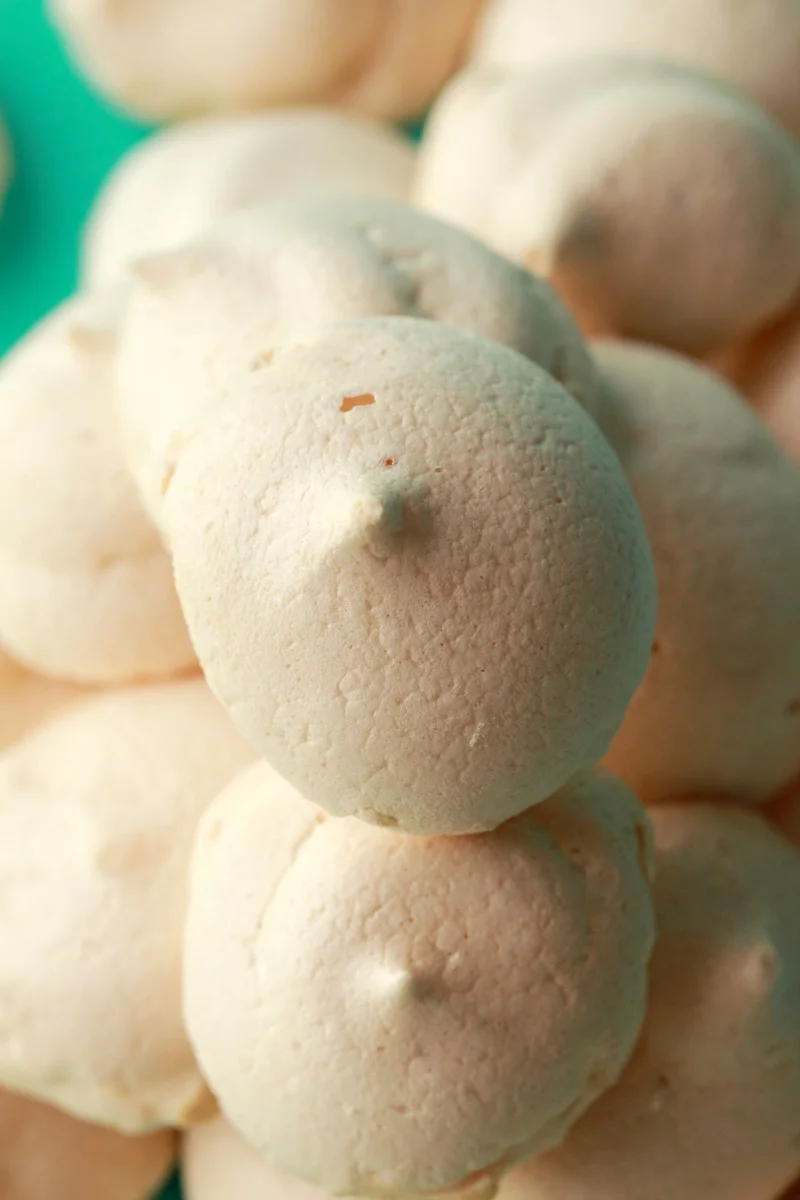
These crisp, airy vegan meringue cookies are made by whipping chickpea liquid with sugar and vanilla. They are a playful way to turn aquafaba into a light sweet treat, with a long, gentle rest in the oven helping them dry out.
Ingredients
- 90 ml (6 tablespoons)aquafaba (liquid from a can of chickpeas)
- 1.25 ml (¼ teaspoon)cream of tartar
- 100 g (½ cup)white granulated sugar
- 2.5 ml (½ teaspoon)vanilla extract
Instructions
- 1
Add aquafaba
Put the chickpea liquid, or aquafaba, and cream of tartar into the bowl of a stand mixer.
- 2
Whip until foamy
Begin whipping at a low speed and continue until the mixture becomes foamy.
- 3
Build the peaks
Increase the speed gradually, whipping until the mixture is white and glossy and starts to form stiff peaks.
- 4
Add the sugar
With the mixer running at high speed, add the sugar gradually.
- 5
Add the vanilla
Mix in the vanilla extract.
- 6
Whip until stiff
Continue whipping until the meringue is glossy and forms stiff peaks.
- 7
Preheat the oven
Heat the oven to 121°C (250°F).
- 8
Line a tray
Cover a baking tray with baking parchment.
- 9
Shape the meringues
Pipe the mixture into cookie shapes on the lined tray. You can spoon it onto the tray instead, though piping is easier.
- 10
Bake and rest
Bake for 45 minutes, then switch off the oven without opening the door. Leave the meringues inside for 1 hour, timing the rest.
- 11
Remove from oven
Once the meringues have baked for 45 minutes and rested in the switched-off oven for a further 60 minutes, take them out.
- 12
Store airtight
The meringues should be airy and crisp. If the weather is hot or humid, put them in an airtight container and store them in the fridge to help them keep for longer.
What are vegan meringues?
Meringues are light sweets made by whipping an ingredient into a foam and adding sugar before drying the mixture in the oven. This version uses aquafaba, the liquid from a can of chickpeas, in place of egg whites.
Aquafaba-based meringue is a plant-based adaptation of a familiar American-style cookie. Here, cream of tartar helps support the foam, while a low oven and a closed-door rest help the piped shapes become crisp.
Nutrition and macros by portion
The nutrition label shows one serving as written: 6 calories, 0g protein, 2g carbs, 0g fat.
| Portion | Adjustment | kcal | Protein | Carbs | Fat |
|---|---|---|---|---|---|
| Lighter | Fewer meringue cookies | 4 kcal | 0g | 1g | 0g |
| This serving | As written | 6 kcal | 0g | 2g | 0g |
| Hungry | Larger cookie portion | 9 kcal | 0g | 2g | 0g |
The sugar supplies most of the carbohydrate, while the aquafaba contributes little energy per cookie; this recipe contains no added fat and very little protein. Serve a few alongside fresh fruit for a more rounded snack.
Choosing the aquafaba
Canned chickpea liquid: use the liquid from a can, rather than chickpeas that have been rinsed. Measure 90 ml so the proportion of liquid to sugar stays consistent.
Cream of tartar: add it before whipping, as directed. It helps the aquafaba foam hold its shape as you beat it.
Building a stable foam
Start gently: whip at low speed until the liquid is foamy, then increase the speed gradually. This gives you a chance to build the foam before adding the sugar.
Add sugar slowly: pour it in gradually while whipping at high speed. Keep beating after adding the vanilla until the mixture looks glossy and forms stiff peaks.
Piping and shaping
Piping: transfer the finished mixture into shapes on a parchment-lined tray. Leave a little space between them so the shapes do not touch.
Spoonfuls: if you do not have a piping bag, spoon the mixture onto the parchment instead. The cookies may look less uniform, but they will still bake using the same method.
The quiet oven finish
Gentle heat: bake at 121°C for 45 minutes. The method relies on the meringues drying rather than browning, so keep to the stated temperature and time.
Closed door: when baking is done, switch off the oven and leave the door shut for 1 hour. Opening it during this rest interrupts the slow cooling that helps the cookies dry and crisp.
Serving and keeping them crisp
Serve the cookies on their own with tea or coffee, or alongside fresh fruit for a simple contrast to their sweetness. Add them just before serving if using them to decorate another dessert.
Moisture can soften crisp meringues. Keep them in an airtight container, and follow the recipe's advice to refrigerate the container when the weather is hot or humid.
Recipe notes & tips
- Measure the aquafaba before you begin so the mixture has the intended proportions.
- Increase the mixer speed gradually rather than starting at full speed.
- Add the sugar slowly while the mixer is running at high speed.
- Pipe onto baking parchment to make shaping easier.
- Set a timer for both the 45-minute bake and the 1-hour oven rest.
- Keep the oven door shut throughout the cooling rest.
Variations
- Different shapes: pipe small kisses or simple swirls onto the parchment.
- Spoon-shaped cookies: use a spoon instead of a piping bag for a more relaxed finish.
- Vanilla adjustment: reduce or omit the vanilla for a milder flavour.
- Dessert topping: crumble the cooled meringues over fruit just before serving.
- Small batches: divide the ingredient quantities proportionally if making fewer cookies.
Common mistakes to avoid
- Opening the oven early: the recipe depends on a closed-door rest, so leave it shut for the full hour.
- Adding sugar all at once: add it gradually while whipping to incorporate it into the foam.
- Stopping too soon: continue beating until the mixture is glossy and forms stiff peaks.
- Skipping the parchment: line the tray so the meringues have a prepared surface to bake on.
- Storing uncovered: humidity can soften the cookies, so keep them in an airtight container.
How to store
Keep the meringues in an airtight container to protect their crisp texture. In hot or humid weather, store the container in the fridge, as recommended in the recipe; the recipe does not specify a storage duration.
Frequently asked questions
What is aquafaba?
Aquafaba is the liquid from a can of chickpeas. In this recipe it is whipped with cream of tartar to form the base of the meringue.
Can I shape these without a piping bag?
Yes. Spoon the mixture onto the parchment-lined tray instead; piping is simply the easier way to make shaped cookies.
How do I know when the meringue is ready to pipe?
It should look glossy and form stiff peaks when the beaters are lifted. Keep whipping until it reaches that stage.
Why must I leave the oven closed after baking?
The recipe uses the oven's residual heat for a 1-hour rest after the 45-minute bake. Keep the door shut throughout that time.
How should I store vegan meringues in humid weather?
Put them in an airtight container and store it in the fridge, as the recipe recommends for hot or humid conditions.
Cook it from the original
This recipe comes from lovingitvegan.com. Their page has the author’s own photos, notes and tips — the best place to cook it from.
Open the recipe on lovingitvegan.com