
How to Make Poha Chiwda - Diwali Special Recipe
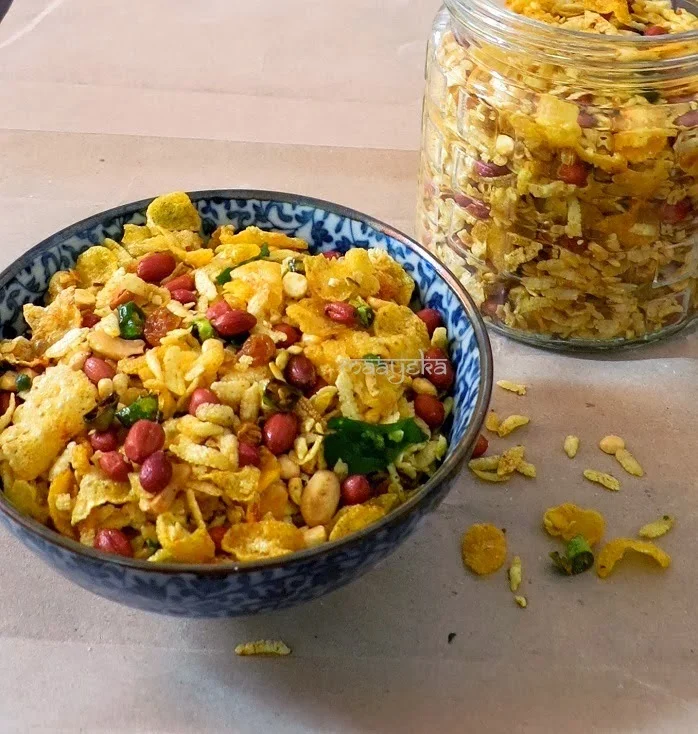
Poha chiwda is a crisp Gujarati snack made by frying flattened rice with corn chivda, nuts, lentils, chillies and spices. It is a handy make-ahead nibble for Diwali or for serving with a hot or cold drink.
Ingredients
- 45 g (1.5 cups)flattened rice (poha/chivda)
- 30 g (1 cup)corn chivda
- 110 g (¾ cup)peanuts
- 70 g (½ cup)roasted chana dal (daliya)
- 65 g (½ cup)cashew nuts
- 20 g (2 tbsp)raisins
- 15 g (1 tbsp)green chillies, chopped
- 10curry leaves
- 1 tspchilli powder
- 2 tspcaster sugar
- A pinchcitric acid powder
- ¾ tspturmeric
- To tastesalt
Instructions
- 1
Mix the spices
Combine the chilli powder, caster sugar, citric acid, turmeric and salt in a small bowl. Set the mixture aside.
- 2
Heat the oil
Pour enough oil into a deep, wide pan or kadhai for deep-frying and heat it.
- 3
Prepare for frying
Set all the ingredients within reach before you begin, as the frying needs to move quickly. Keep a colander ready to catch the fried ingredients.
- 4
Fry the leaves
Add the curry leaves to the hot oil and fry until crisp, then drain them in the colander.
- 5
Fry the chillies
Fry the chopped green chillies until crisp, then drain them.
- 6
Fry the peanuts
Fry the peanuts over medium heat until golden, then drain them in the colander.
- 7
Fry the cashews
In the same way, deep-fry the cashew nuts and roasted chana dal over medium heat until nicely golden. Drain them in the colander.
- 8
Fry the raisins
Add the raisins to the hot oil and remove them as soon as they swell. Drain them straight away; overcooked raisins can turn chewy and hard.
- 9
Fry the poha
Add a handful of poha to the hot oil. Once it rises and floats, lift it out with a fine metal sieve and transfer it to the colander.
- 10
Avoid overcrowding
Fry the poha in small batches rather than overcrowding the pan, so it cooks properly.
- 11
Keep it pale
Do not overcook the poha or wait for it to turn golden; it stays white after frying.
- 12
Fry remaining poha
Fry the remaining poha in the same way, followed by the corn chivda.
- 13
Collect the batches
Keep adding all the fried ingredients to the same colander.
- 14
Combine the ingredients
Coarsely crush the fried curry leaves and mix them through all the fried ingredients.
- 15
Add the spice mix
As soon as all the ingredients have been fried, sprinkle the prepared spice mixture over the hot chivda and mix well.
- 16
Cool and store
Leave the chivda to cool completely, then transfer it to an airtight container.
- 17
Serve the snack
Serve with any hot or cold beverage.
What is poha chiwda?
Poha chiwda is a crunchy Indian snack made from flattened rice, often mixed with nuts, lentils, curry leaves and spices. This version follows a Gujarati-style combination and is associated here with Diwali snacking.
The contrast of crisp poha, crunchy nuts and sweet raisins makes each handful varied. Frying the components separately helps each one reach its own ideal texture before the spice mix brings them together.
Nutrition and macros by portion
The nutrition label shows one serving as written: 12 calories, 0g protein, 2g carbs, 1g fat.
| Portion | Adjustment | kcal | Protein | Carbs | Fat |
|---|---|---|---|---|---|
| Lighter | Use less fried nuts | 8 kcal | 0g | 1g | 0g |
| This serving | As written | 12 kcal | 0g | 2g | 1g |
| Hungry | Serve a larger portion | 18 kcal | 0g | 3g | 1g |
The flattened rice and corn chivda provide most of the carbohydrates, while the peanuts, cashews and frying oil contribute much of the fat; the nuts and chana dal also provide some protein. Pair a portion with fresh fruit or another fibre-rich side to make a more balanced snack plate.
Set up before frying
Workstation: Arrange the ingredients and keep the colander and fine metal sieve nearby before heating the oil. The method moves quickly once frying starts, especially for the raisins and poha.
Spice mix: Measure the seasonings into a small bowl first. That makes it easier to coat the hot fried ingredients promptly at the end.
Fry each ingredient carefully
Nuts and dal: Fry the peanuts, cashews and roasted chana dal over medium heat until they reach a golden colour, then drain them. Keeping them in separate batches makes it easier to judge their doneness.
Raisins: Take them out as soon as they swell in the hot oil. Leave them too long and they can become chewy and hard.
Poha: Add only a handful at a time. It is ready when it rises and floats, and it should remain pale rather than turn golden.
Keep the poha crisp
Small batches matter because crowded poha will not cook properly. Use the sieve to lift each batch from the oil, then let it drain with the other fried ingredients.
The curry leaves are crushed coarsely after frying, so their flavour can spread through the mixture without losing all their texture.
Season while warm
Once frying is finished, add the spice mix promptly while the chivda is still hot. Toss thoroughly so the chilli, turmeric, sugar, citric acid and salt are distributed across the different pieces.
Wait until the mixture has cooled completely before sealing it away. Packing it while warm can trap moisture in the container.
Serving ideas
The recipe suggests serving this snack with a hot or cold beverage. It also works well as part of a spread of small savoury bites for a gathering.
For a more substantial snack plate, serve a measured portion alongside fresh fruit or another simple accompaniment rather than eating straight from the storage container.
Recipe notes & tips
- Keep the colander and sieve close to the pan before starting.
- Fry the ingredients in separate batches so you can remove each at the right moment.
- Use medium heat for the peanuts, cashews and chana dal, as directed.
- Take the raisins out as soon as they swell.
- Fry the poha by the handful and remove it once it floats.
- Let the finished mixture cool fully before putting it in an airtight container.
Variations
- Adjust the heat: Use less chilli powder or fewer green chillies for a milder batch.
- Change the nuts: Replace some of the peanuts or cashews with another nut, while keeping the total mixture balanced.
- Add almonds: Include sliced almonds among the fried nuts for another crunchy element.
- Vary the sweetness: Adjust the caster sugar to suit your taste.
- Serve in portions: Offer small bowls alongside different hot or cold drinks.
Common mistakes to avoid
- Crowding the pan: The poha may not cook properly; fry it a handful at a time.
- Overcooking the poha: It does not need to turn golden; remove it once it floats.
- Leaving raisins in too long: They can become chewy and hard; take them out as soon as they swell.
- Starting without preparation: Frying moves quickly; arrange the ingredients and draining equipment first.
- Sealing while warm: Trapped moisture can affect the crisp texture; cool the mixture completely before storing.
How to store
Once completely cool, keep the chiwda in an airtight container. The recipe gives no storage duration; keep it dry and discard it if its texture or smell changes. No reheating method is specified.
Frequently asked questions
How do I know when the poha is done?
It rises and floats in the hot oil. Remove it then; it should remain pale rather than turn golden.
Why should I fry the poha in small batches?
Overcrowding prevents it from cooking properly. A handful at a time is easier to manage and drain.
When should I remove the raisins?
Take them out as soon as they swell in the hot oil. Leaving them longer can make them chewy and hard.
Can I make poha chiwda ahead?
Yes. Cool it completely after frying and store it in an airtight container.
What can I serve with poha chiwda?
The recipe recommends serving it with any hot or cold beverage.
Cook it from the original
This recipe comes from maayeka.com. Their page has the author’s own photos, notes and tips — the best place to cook it from.
Open the recipe on maayeka.com