
Mango Daal
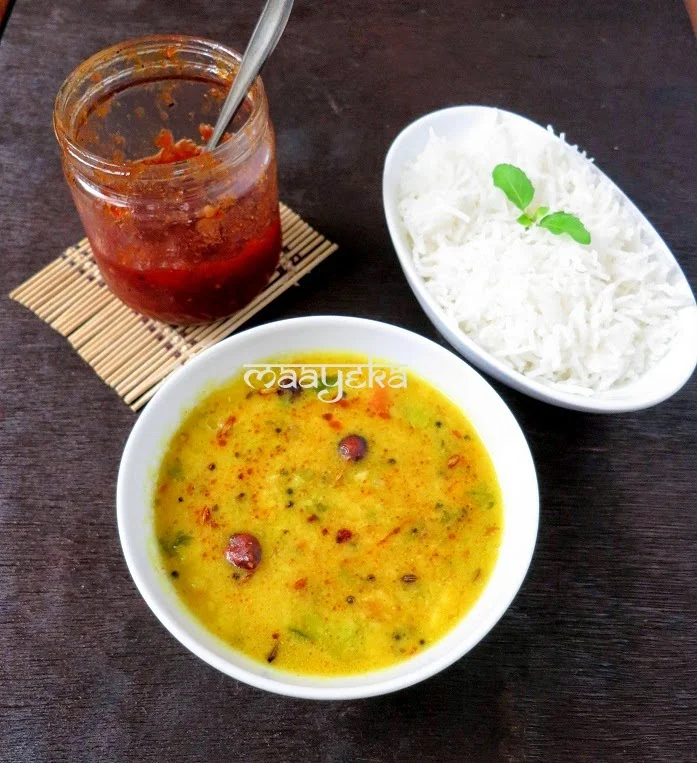
Mango daal is a Uttar Pradesh-style pigeon pea dish simmered with raw mango, tomato and warming spices. The mango brings a tangy edge, while a final spiced oil tempering adds aroma and depth.
Ingredients
- 200 g (1 cup)tuvar daal (arhar or pigeon peas)
- 165 g (1 cup), peeled and choppedraw mango
- 1tomato, chopped
- 2green chillies, chopped
- 2.5 cm (1 inch), choppedginger
- 1/2 tspturmeric powder
- 1 tspred chilli powder
- 1 tspground coriander
- 1 tspsugar
- to tastesalt
- 2 tbspcooking oil or ghee
- 1 tspmustard seeds
- 1/2 tspfennel seeds
- 1/2 tspfenugreek seeds
- 1/3 tspasafoetida powder
- 10curry leaves
- 4whole dried red chillies
Instructions
- 1
Soak the daal
Rinse the pigeon peas and soak them in water for 15 minutes.
- 2
Load the cooker
Put the soaked daal in a pressure cooker with 360 ml water, the chopped tomato, 125 g of the chopped mango, the green chillies, turmeric and 1 tsp cooking oil.
- 3
Cook until soft
Cook over medium heat for 3–4 whistles, or until the daal is soft to the touch.
- 4
Mash the daal
Let the pressure cooker cool completely before opening it, then mash the daal lightly.
- 5
Season the daal
Add the remaining 40 g chopped mango, salt, chilli powder, ground coriander, sugar and ginger.
- 6
Simmer gently
Stir in 480 ml water, or enough to reach your preferred thickness, and simmer for about 10 minutes.
- 7
Heat the ghee
For the tempering, heat ghee in a small pan and add the mustard, fenugreek and fennel seeds.
- 8
Finish the tempering
When the mustard seeds begin to crackle, add the asafoetida, curry leaves and whole red chillies.
- 9
Pour over the daal
Pour the hot tempering over the boiling daal.
- 10
Simmer briefly
Simmer for 1 minute, then add chopped fresh coriander.
- 11
Serve hot
Serve with boiled rice and a spoonful of ghee on top.
What is mango daal?
Daal is a broad family of Indian dishes made with pulses, and this version pairs pigeon peas with raw mango. It is associated here with Uttar Pradesh cuisine, where tart fruit can bring a lively counterpoint to a gently spiced, comforting bowl.
Staged mango: most of the fruit cooks with the daal, while the remainder goes in later. That approach gives the dish both a mellow mango flavour and brighter, more distinct pieces.
Nutrition and macros by portion
The nutrition label shows one serving as written: 253 calories, 10g protein, 38g carbs, 8g fat.
| Portion | Adjustment | kcal | Protein | Carbs | Fat |
|---|---|---|---|---|---|
| Lighter | Use less finishing ghee | 177 kcal | 7g | 27g | 6g |
| This serving | As written | 253 kcal | 10g | 38g | 8g |
| Hungry | Serve with extra rice | 380 kcal | 15g | 57g | 12g |
The pigeon peas and rice served alongside provide most of the carbohydrates, while the peas also contribute protein. Oil or ghee supplies much of the fat; serve with rice and add a vegetable side to round out the plate.
Choosing the mango
Raw mango: choose firm, unripe fruit, which gives the daal its characteristic tartness. Peel it and cut it into small, even pieces so it cooks through without disappearing entirely.
Pigeon peas: tuvar daal is the pulse used here. Rinsing and soaking it for 15 minutes gives it a head start before pressure cooking.
Pressure-cooking the daal
Safe opening: wait until the cooker has cooled completely before opening it, as the method specifies. The peas should be soft to the touch after 3–4 whistles over medium heat.
Gentle mashing: mash only slightly once cooked. This thickens the broth while leaving some texture in the peas and mango.
Balancing the flavour
Tart and warm: raw mango supplies acidity, while sugar rounds its sharpness. The chilli, turmeric and ground coriander build a warm, savoury base.
Adjust the salt and water as the daal simmers. The recipe allows extra water according to the thickness you prefer, so add it with your serving style in mind.
Getting the tempering right
Crackling seeds: heat the ghee in a small pan, then add the mustard, fenugreek and fennel seeds. Wait for the mustard to start crackling before adding the asafoetida, curry leaves and whole red chillies.
Pour it over the boiling daal and simmer for 1 minute. This brief finish lets the aromatic tempering spread through the pot without cooking it for long.
Serving mango daal
Rice pairing: serve the daal hot with boiled rice, as suggested in the recipe. The rice makes a simple base for the tangy, spiced sauce.
Finish: a spoonful of ghee is the suggested topping. Add fresh coriander at the end for a fresh herbal note.
Recipe notes & tips
- Soak the pigeon peas for the full 15 minutes before pressure cooking.
- Keep the cooker closed until it has cooled completely.
- Reserve the final quarter of the mango to add after mashing for a fresher, more distinct tang.
- Add water gradually during the simmer if you want a thinner daal.
- Have the tempering ingredients ready before heating the ghee, as the seeds and leaves go in quickly.
- Serve soon after the tempering is added so its aroma stays vivid.
Variations
- Adjust the heat: use fewer green or dried chillies for a milder bowl.
- Use ghee: choose ghee instead of cooking oil for the tempering and a richer finish.
- Make it thinner: add more water during the simmer to create a looser consistency.
- Keep it thicker: use less than 480 ml water and add more only if needed.
- Freshen the finish: add extra chopped fresh coriander just before serving.
Common mistakes to avoid
- Opening the cooker early: wait until it has cooled completely before opening.
- Leaving the peas firm: cook for 3–4 whistles over medium heat, or until they are soft to the touch.
- Mashing too much: mash lightly so some texture remains.
- Adding all the mango at once: reserve 40 g to add after cooking for a brighter fruit flavour.
- Burning the tempering: add the remaining spices and leaves as soon as the mustard seeds start crackling.
- Guessing the consistency: add water to the daal gradually until it reaches your preferred thickness.
How to store
Cool leftovers promptly, then store them in a covered container in the fridge for up to 3 days. Reheat gently in a saucepan, stirring and adding a splash of water if the daal has thickened; heat until steaming throughout.
Frequently asked questions
Can I make this without a pressure cooker?
The provided method uses a pressure cooker. For a stovetop version, simmer the soaked pigeon peas with the listed ingredients until soft, adding water as needed; the cooking time will vary.
How do I know when the daal is cooked?
The recipe gives 3–4 whistles over medium heat as a guide. Check that the pigeon peas are soft to the touch before proceeding.
Can I change how thick the daal is?
Yes. The method calls for 480 ml water at the simmering stage, or an amount suited to your preferred thickness. Add it gradually and adjust as it cooks.
What can I serve with mango daal?
Serve it hot with boiled rice, as the recipe suggests. A spoonful of ghee on top is optional.
Can I prepare it ahead?
You can cook the daal ahead and refrigerate it once cooled. Reheat it gently and add a little water if needed; the recipe's fresh tempering is best added close to serving.
Cook it from the original
This recipe comes from maayeka.com. Their page has the author’s own photos, notes and tips — the best place to cook it from.
Open the recipe on maayeka.com