
Mysore Rasam
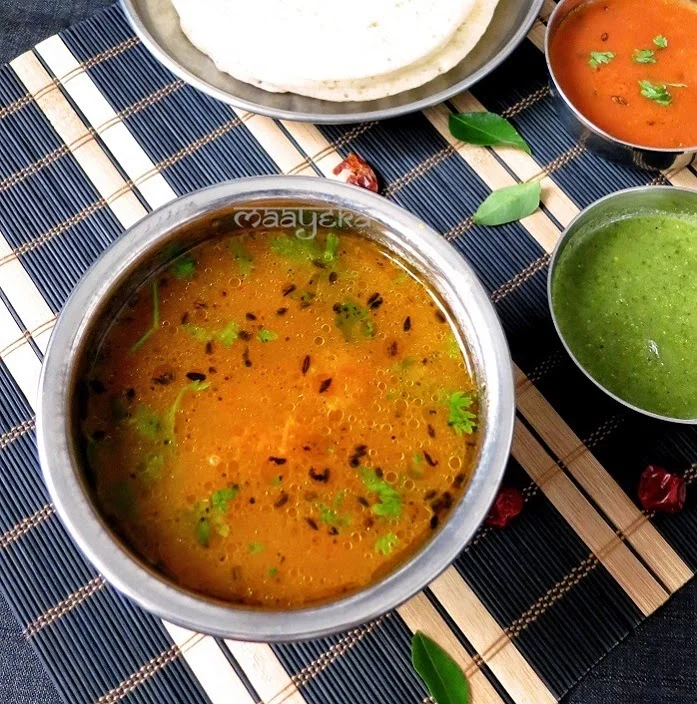
Mysore rasam is a tangy South Indian lentil and tomato soup, brightened with tamarind, spices and a fragrant tempering. Serve it hot as a light starter or alongside rice, dosa, vada or idlis.
Ingredients
- 4 tbsppigeon peas (tuvar dal)
- 2tomatoes
- 1green chilli
- 1/2 tspturmeric
- 1.5 tsprasam powder
- 1 tspjaggery
- 2.5 tspthick tamarind pulp
- 3 tbspfresh coriander, chopped
- to tastesalt
- 2 tspghee or oil
- 1/2 tspmustard seeds
- 1/2 tspcumin seeds
- 1/2 tspasafoetida
- 2whole dried red chillies
- 8curry leaves
Instructions
- 1
Soak the lentils
Rinse the tuvar dal and leave it to soak for 15 minutes.
- 2
Cook the tomatoes
Put the roughly chopped tomatoes and 1/2 cup of water in the pressure cooker. Cook until the cooker gives one whistle.
- 3
Mash the tomatoes
Remove the cooked tomatoes and gently mash them with a ladle or whisk.
- 4
Add the lentils
Put the soaked tuvar dal, chopped green chilli, 1 tsp oil and about 1.5 cups of water into the cooker.
- 5
Pressure cook
Cook for 3–4 whistles, or until the dal is soft and mushy.
- 6
Mash the lentils
Open the cooker and mash the cooked dal.
- 7
Simmer the soup
In a pan, combine the mashed dal and tomatoes with salt, turmeric, tamarind pulp, 1/4 tsp asafoetida and about 3 cups of water. Cook over a medium heat for 2–3 minutes.
- 8
Season the rasam
Add 2 tsp rasam powder, the jaggery and a few curry leaves. Simmer for 2 minutes.
- 9
Make the tempering
Heat oil in a small pan and add the mustard and cumin seeds. When they begin to crackle, add the asafoetida, curry leaves and whole dried red chillies.
- 10
Add the tempering
Pour the tempering into the boiling rasam.
- 11
Finish with coriander
Turn off the heat and stir in the chopped fresh coriander.
- 12
Serve hot
Serve hot, with a spoonful of ghee on top if you like.
- 13
Choose an accompaniment
Serve as a starter or with rice, dosa, vada or idlis.
What is Mysore rasam?
Rasam is a South Indian soup-style dish, often served with rice or enjoyed on its own. This Mysore version brings together lentils, tomato and tamarind for a tangy, savoury bowl.
The dal gives it body, while the tomato and tamarind keep it lively. A spiced tempering added at the end brings aroma and a finishing layer of flavour.
Nutrition and macros by portion
The nutrition label shows one serving as written: 105 calories, 4g protein, 16g carbs, 3g fat.
| Portion | Adjustment | kcal | Protein | Carbs | Fat |
|---|---|---|---|---|---|
| Lighter | Use less ghee | 74 kcal | 3g | 11g | 2g |
| This serving | As written | 105 kcal | 4g | 16g | 3g |
| Hungry | Serve with rice | 158 kcal | 6g | 24g | 5g |
The rice and carbohydrates come mainly from the tuvar dal, tomatoes and jaggery; ghee or oil provides most of the fat, while the lentils contribute the protein. For a more balanced plate, serve a portion with rice and a generous side of vegetables.
The lentil and tomato base
Tuvar dal: soaking it for 15 minutes helps it cook until soft enough to mash. The recipe cooks the lentils and tomatoes separately before combining them.
Tomatoes: cooking and mashing them first makes them easy to incorporate into the soup. Mash gently so they blend into the liquid without needing to be completely smooth.
Balancing the flavour
Tamarind and jaggery: tamarind provides the characteristic tang, while jaggery adds a little sweetness. Stir both in with the other seasonings, then simmer briefly.
Rasam powder: this is the main prepared spice blend in the soup. Add it at the simmering stage so its flavour can mingle with the dal and tomato.
Getting the texture right
Mash the cooked dal while it is still warm, then combine it with the mashed tomatoes and water. This gives the rasam a fuller texture than leaving the lentils whole.
The method adds about 3 cups of water at the simmering stage, in addition to the water used to cook the tomatoes and dal. Add the water as directed and let the soup cook for 2–3 minutes before adding the final seasonings.
The finishing tempering
Crackling seeds: heat the oil and wait for the mustard and cumin seeds to begin crackling before adding the remaining tempering ingredients. This is the cue to move on to the asafoetida, curry leaves and dried chillies.
Fresh finish: pour the tempering into the boiling rasam, then turn off the heat and add the coriander. Ghee on top is optional when serving.
How to serve it
As a starter: serve the rasam hot in small bowls, with optional ghee on top. Its tangy flavour also makes it a warming accompaniment to a meal.
With a meal: serve it with rice, dosa, vada or idlis, as suggested in the recipe. Choose one or more accompaniments according to whether you want a light starter or a more substantial plate.
Recipe notes & tips
- Rinse and soak the tuvar dal for the full 15 minutes before cooking.
- Mash the cooked tomatoes and dal separately before combining them for an even base.
- Keep the heat at medium while simmering the dal, tomato and tamarind mixture.
- Add the tempering when the mustard and cumin seeds start crackling.
- Stir in the coriander after turning off the heat to keep its flavour fresh.
- Treat the spoonful of ghee on top as optional when serving.
Variations
- Adjust the tang: use the listed tamarind pulp, then taste before serving and adjust the salt to your preference.
- Choose the fat: use ghee for the tempering or oil as an alternative, as listed.
- Add a finishing spoon: top each serving with a spoonful of ghee if desired.
- Serve it with rice: pair a bowl of rasam with rice for a simple meal.
- Choose a South Indian side: serve it with dosa, vada or idlis instead of rice.
Common mistakes to avoid
- Skipping the soak: give the tuvar dal 15 minutes in water before pressure cooking.
- Leaving the lentils whole: mash the cooked dal as directed so it blends into the soup.
- Adding the tempering too early: pour it into the rasam after the seeds crackle and the other tempering ingredients are added.
- Overcooking the coriander: turn off the heat before stirring in the fresh coriander.
- Forgetting the tomato cooking water: cook the roughly chopped tomatoes with 1/2 cup of water as specified.
How to store
Cool leftovers and refrigerate them in a covered container, then use within 3 days. Reheat gently in a pan until hot throughout, stirring as needed; add a little water if the rasam has thickened.
Frequently asked questions
Can I make this rasam without a pressure cooker?
The method uses a pressure cooker for both the tomatoes and the dal. Follow the same stages in a saucepan if needed, cooking until the tomatoes soften and the dal is tender enough to mash; the cooking time may differ.
How do I know when the dal is ready?
It should be soft and mushy after 3–4 whistles, as described in the method, and easy to mash.
Is the ghee on top essential?
No. The recipe describes it as optional, so you can serve the rasam without it.
What can I serve with Mysore rasam?
Serve it as a starter or pair it with rice, dosa, vada or idlis.
Can I prepare the rasam ahead?
You can make it ahead and refrigerate it in a covered container for up to 3 days. Reheat it gently and stir before serving.
Cook it from the original
This recipe comes from maayeka.com. Their page has the author’s own photos, notes and tips — the best place to cook it from.
Open the recipe on maayeka.com