
Chicken Asparagus Stir Fry
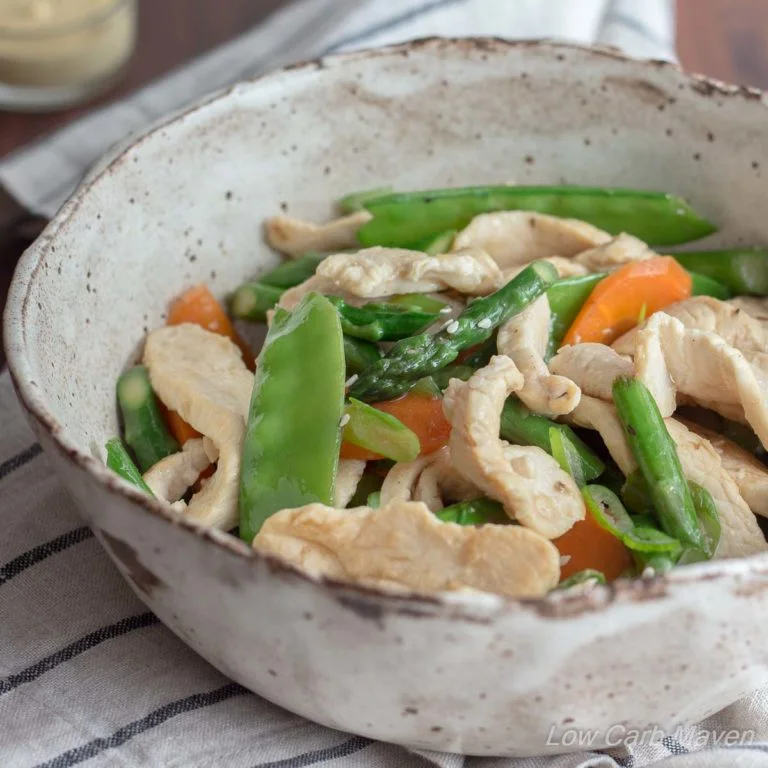
This Chinese-inspired chicken asparagus stir-fry pairs lean chicken with crisp-tender vegetables in a savoury, lightly thickened sauce. It comes together in about 30 minutes, with quick cooking that keeps the vegetables bright and the chicken juicy.
Ingredients
- 680 g (1 1/2 pounds)skinless chicken breast halves
- 15 ml (1 tablespoon)peanut oil, or your preferred oil
- 5 ml (1 teaspoon)peanut oil
- 15 ml (1 tablespoon)peanut oil
- 2 tablespoonsminced ginger (about a 4 cm piece)
- 1 tablespoonminced garlic (about 3 cloves)
- 227 g (1/2 pound)asparagus, trimmed and cut into 4 cm pieces
- 113 g (4 oz)medium carrot, thinly sliced
- 1/2 bunchsliced spring onions, including the light green parts
- 60 ml (1/4 cup)chicken stock
- 30 ml (2 tablespoons)tamari or coconut aminos
- 30 ml (2 tablespoons)dry sherry
- 1 tablespoonerythritol
- 1 1/2 teaspoonscornflour or arrowroot powder
- 1/4 teaspoonsalt
- 10 ml (2 teaspoons)sesame oil
Instructions
- 1
Prepare the aromatics
Mince the garlic and ginger and set them on a small plate beside the hob.
- 2
Cut the vegetables
Prepare the vegetables and arrange them in separate piles on a plate near the hob.
- 3
Slice the chicken
Cut the chicken into thin strips and put them in a small bowl. Add 15 ml (1 tablespoon) of peanut oil and toss to coat each piece; set the bowl near the hob.
- 4
Mix the sauce
In a small bowl, combine the sauce ingredients. Stir the cornflour or arrowroot with the liquids gradually to help it dissolve.
- 5
Set out a dish
Place the serving dish close to the hob so it is ready for the cooked chicken.
- 6
Heat the pan
Heat a wok or large, heavy-based frying pan over high heat until a drop of water skitters across it. Add 5 ml (1 teaspoon) of peanut oil and swirl to coat the surface.
- 7
Cook the chicken
Cook half the chicken until it is halfway done, then stir it and cook the other side until it releases plenty of liquid. Transfer it to the serving dish and repeat with the remaining chicken. Remove the second batch, then carefully wipe excess moisture from the pan.
- 8
Stir-fry vegetables
Add 15 ml (1 tablespoon) of peanut oil to the pan, followed by the garlic and ginger. Stir constantly for about 20 seconds so they do not burn. Add the asparagus and stir to coat; cook for about 1 minute, stirring occasionally. Add the spring onions and carrots, then cook for about 2 minutes, stirring occasionally.
- 9
Finish the stir-fry
Return the chicken to the pan and stir. Add the sauce and cook for about 2 minutes, or until the chicken is hot, the vegetables are bright in colour and the sauce has thickened. Stir in the sesame oil.
What is chicken asparagus stir-fry?
Stir-frying is a Chinese cooking technique in which ingredients are cooked quickly over high heat with frequent movement. This version combines chicken with asparagus, carrot and spring onions in a glossy, savoury sauce.
The short cooking time helps the vegetables keep some bite. Cooking the chicken in batches also gives the pan room to sear it rather than crowding it.
Nutrition and macros by portion
The nutrition label shows one serving as written: 331 calories, 31g protein, 12g carbs, 17g fat.
| Portion | Adjustment | kcal | Protein | Carbs | Fat |
|---|---|---|---|---|---|
| Lighter | Use less cooking oil | 232 kcal | 21g | 9g | 12g |
| This serving | As written | 331 kcal | 31g | 12g | 17g |
| Hungry | Serve with steamed rice | 497 kcal | 46g | 18g | 26g |
The chicken supplies most of the protein, while the carrot, asparagus and sauce contribute carbohydrates. Peanut and sesame oils account for much of the fat. To balance the plate, serve a portion with extra non-starchy vegetables or add a measured serving of rice if you want more carbohydrates.
Get everything ready first
Aromatics: mince the ginger and garlic before heating the wok, as they need only about 20 seconds in the hot oil.
Vegetables: trim and slice everything in advance, then keep each vegetable separate so it can go into the pan at the right stage.
Sauce: mix the liquids with the thickener before cooking. Adding the liquid gradually helps prevent lumps.
Why cook the chicken in batches?
A crowded pan loses heat and the chicken can release moisture instead of browning. Two batches give the pieces better contact with the hot surface.
The chicken is returned to the pan later, so it does not need to be fully cooked during its first turn. Cook it through when it is reheated with the sauce.
Keep the vegetables crisp-tender
Asparagus: add it first among the vegetables and give it about 1 minute, so it starts cooking before the finer additions.
Carrot and spring onions: they follow the asparagus and cook for about 2 minutes. Stir occasionally and look for bright colour with a little bite remaining.
Thicken the sauce without overcooking
The sauce needs about 2 minutes in the pan to heat through and thicken around the chicken and vegetables. Keep the ingredients moving so the sauce coats them evenly.
Add the sesame oil at the end and stir it through. This keeps its aroma distinct from the oil used for cooking.
Serve it straight away
Stir-fries are at their best just after cooking, while the vegetables still have texture and the sauce is glossy. Serve with steamed rice or noodles if you would like a more substantial meal.
For a lighter plate, serve it on its own or alongside extra vegetables. Have the serving dish ready before you start cooking so the chicken can be set aside quickly.
Recipe notes & tips
- Slice the chicken into strips of similar thickness so it cooks evenly.
- Heat the wok thoroughly before adding the oil and chicken.
- Keep the ginger and garlic moving in the pan to stop them scorching.
- Mix the thickener into the sauce gradually to avoid lumps.
- Set the serving dish beside the hob before you begin cooking.
Variations
- Use coconut aminos: choose them instead of tamari for a different savoury flavour.
- Swap the thickener: use arrowroot instead of cornflour, as listed in the recipe.
- Change the oil: use your preferred cooking oil in place of the first listed peanut oil.
- Add heat: stir a little chilli into the sauce before adding it to the pan.
- Serve with rice: spoon the stir-fry over cooked rice for a fuller meal.
Common mistakes to avoid
- Crowding the wok: cook the chicken in two batches so the pan stays hot.
- Burning the aromatics: stir the ginger and garlic continuously and limit this stage to about 20 seconds.
- Starting with a cold pan: heat it until a drop of water skitters before adding oil.
- Adding the sauce too early: return the chicken first, then pour in the sauce to finish cooking.
- Overcooking the vegetables: follow the brief timings and check that they remain bright with some bite.
How to store
Refrigerate leftovers in a covered container and use within 3 days. Reheat in a frying pan over medium heat until piping hot, stirring gently; the vegetables may soften after storage.
Frequently asked questions
Can I use frozen asparagus?
Fresh asparagus is best for the crisp-tender texture described here. If using frozen, thaw and drain it well first, and expect it to soften more quickly.
Can I make the sauce ahead?
Yes. Mix the sauce ingredients shortly before cooking, then stir again before adding it, as the thickener may settle.
How do I know the chicken is cooked?
It should be hot throughout with no pink in the centre. If using a food thermometer, check that the thickest pieces reach 74°C.
Can I cook this without a wok?
Yes. Use a large, heavy-based frying pan and cook the chicken in batches so the ingredients have room to stir-fry.
What can I serve with it?
Steamed rice or noodles both work well. You can also serve it on its own or with extra vegetables.
Cook it from the original
This recipe comes from lowcarbmaven.com. Their page has the author’s own photos, notes and tips — the best place to cook it from.
Open the recipe on lowcarbmaven.com