
Coconut Flour Porridge (low carb, keto, Paleo)
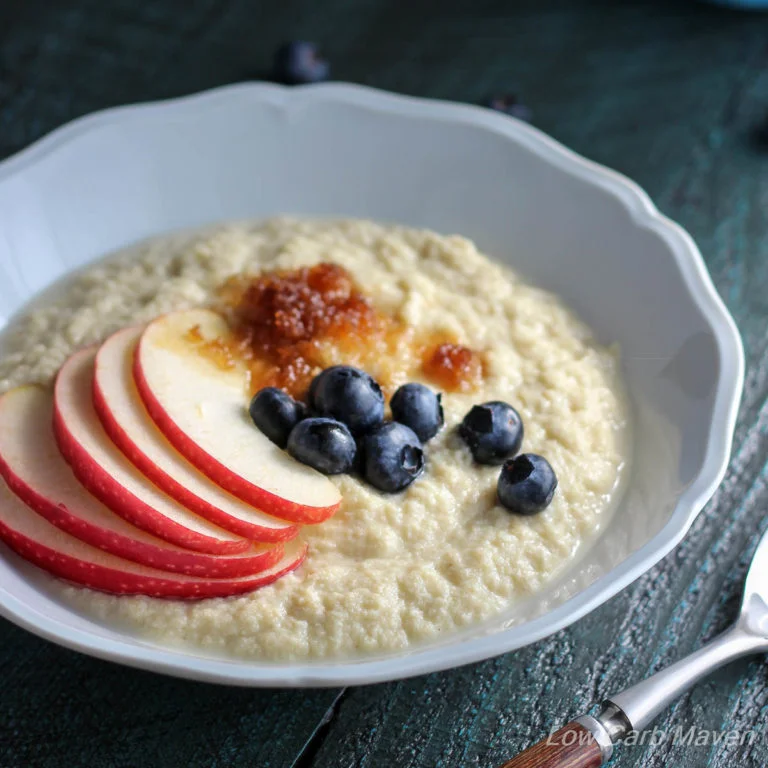
A quick, warm porridge made with coconut flour and golden flax meal instead of oats. Egg, butter and cream give it a rich, creamy texture, while your choice of sweetener lets you adjust the finish.
Ingredients
- 2 tablespoonscoconut flour
- 2 tablespoonsgolden flax meal
- 180 ml (¾ cup)water
- a pinchsalt
- 1 large, beatenegg
- 2 teaspoonsbutter or ghee
- 1 tablespoondouble cream or coconut milk
- 1 tablespoonlow-carb brown sugar or your favourite sweetener
Instructions
- 1
Heat the dry ingredients
Put the coconut flour, golden flax meal, water and salt in a small pot over medium heat and stir. Once the mixture starts to simmer, lower the heat to medium-low and whisk until it begins to thicken.
- 2
Whisk in the egg
Take the pot off the heat. Add the beaten egg in two additions, whisking continuously as you go. Return the pot to the heat and keep whisking until the porridge thickens.
- 3
Finish the porridge
Remove the pot from the heat and whisk for about 30 seconds. Stir in the butter, cream and sweetener.
- 4
Add your toppings
Garnish with toppings of your choice. The original recipe notes 4 g net carbohydrates.
What is coconut flour porridge?
This is a quick, grain-free breakfast porridge made from coconut flour and golden flax meal rather than oats. It suits a warm, spoonable breakfast when you want something that cooks in minutes.
The recipe is an American-style take on breakfast cereal, using familiar porridge-making techniques with alternative flour and meal. Egg and butter help make the result creamy and satisfying.
Nutrition and macros by portion
The nutrition label shows one serving as written: 345 calories, 13g protein, 13g carbs, 29g fat.
| Portion | Adjustment | kcal | Protein | Carbs | Fat |
|---|---|---|---|---|---|
| Lighter | Use less butter | 241 kcal | 9g | 9g | 20g |
| This serving | As written | 345 kcal | 13g | 13g | 29g |
| Hungry | Make a larger portion | 518 kcal | 20g | 20g | 43g |
The coconut flour and flax meal provide most of the carbohydrates, while the egg contributes protein. Butter, cream and egg account for much of the fat. To balance the bowl, serve it with a side of fruit or add a few berries as a topping.
The flour and flax
Coconut flour: it absorbs liquid readily, so whisk the mixture as it heats and watch for it to thicken rather than letting it sit unattended.
Golden flax meal: it adds body and a mild, nutty flavour. Stir it in with the flour and water at the start so it hydrates evenly.
Adding the egg smoothly
Temper the egg: take the pot off the heat before adding it, then whisk in half at a time. This gradual addition helps it blend into the hot mixture.
Keep whisking: return the pot to the heat and stir continuously as the porridge thickens. This helps avoid small cooked bits of egg.
How to judge the texture
Look for a thickened mixture after the first simmer and again after the egg goes in. It should be creamy and spoonable; it will continue to feel thicker as it sits.
Whisking for about 30 seconds off the heat before adding the butter, cream and sweetener gives the porridge a chance to settle before the final additions.
Timing and serving
The stated total time is 7 minutes, so measure out the ingredients before heating the pot. The mixture needs regular attention once it starts to simmer.
Serve it warm with toppings of your choice. A little fruit, nuts or seeds can add contrast, though the recipe does not specify a particular garnish.
Choosing the finishing ingredients
Butter or ghee: either option adds richness. Stir it in after the porridge has been taken off the heat.
Cream or coconut milk: choose one for a creamy finish, then add the sweetener to taste. The recipe suggests low-carb brown sugar or another preferred sweetener.
Recipe notes & tips
- Measure the water and dry ingredients before you start heating the pot.
- Whisk regularly from the moment the mixture begins to simmer.
- Add the beaten egg in two parts while whisking continuously.
- Take the pot off the heat before adding the butter, cream and sweetener.
- Choose coconut milk instead of cream if you prefer its flavour.
- Add toppings just before serving for a contrast in texture.
Variations
- Coconut finish: use coconut milk instead of double cream for a coconut-forward flavour.
- Ghee option: swap the butter for ghee as suggested in the recipe.
- Sweetness level: adjust the amount of your chosen sweetener to suit your taste.
- Berry topping: add a few berries just before serving for a fresh, fruity contrast.
- Nut topping: scatter chopped nuts over the bowl for crunch.
Common mistakes to avoid
- Leaving it unattended: the mixture can thicken quickly, so whisk regularly as it heats.
- Adding the egg all at once: divide it into two additions and whisk continuously to help it blend in smoothly.
- Adding egg over high heat: remove the pot from the heat first, then return it to the hob after the egg is incorporated.
- Skipping the final whisk: whisk for about 30 seconds off the heat before stirring in the finishing ingredients.
- Expecting it to stay loose: coconut flour absorbs liquid, so serve once the porridge reaches a creamy, spoonable thickness.
How to store
This single-serving porridge is best eaten freshly made. If you have leftovers, refrigerate them in a covered container and reheat gently in a small pot, stirring in a little water if needed to loosen the texture.
Frequently asked questions
Can I use coconut milk instead of cream?
Yes. The recipe gives coconut milk as an alternative to double cream; stir it in at the same stage.
Can I use ghee instead of butter?
Yes, ghee is listed as an alternative. Add it with the cream and sweetener after removing the porridge from the heat.
Why is the egg added off the heat?
Adding it gradually while whisking helps it blend into the hot porridge without forming obvious cooked pieces. Return the pot to the heat once the egg is incorporated.
How do I know when the porridge is ready?
It should thicken as you whisk it during both heating stages. Aim for a creamy consistency that is still easy to spoon.
Can I prepare it ahead?
It is quickest and creamiest straight from the pot. You can refrigerate leftovers and reheat them gently, adding a little water if they have become too thick.
What can I use as a topping?
The recipe leaves the garnish up to you. Try berries, nuts or seeds, and add them just before serving.
Cook it from the original
This recipe comes from lowcarbmaven.com. Their page has the author’s own photos, notes and tips — the best place to cook it from.
Open the recipe on lowcarbmaven.com