
Kairi Ni Katki , Sweet Mango Pickle
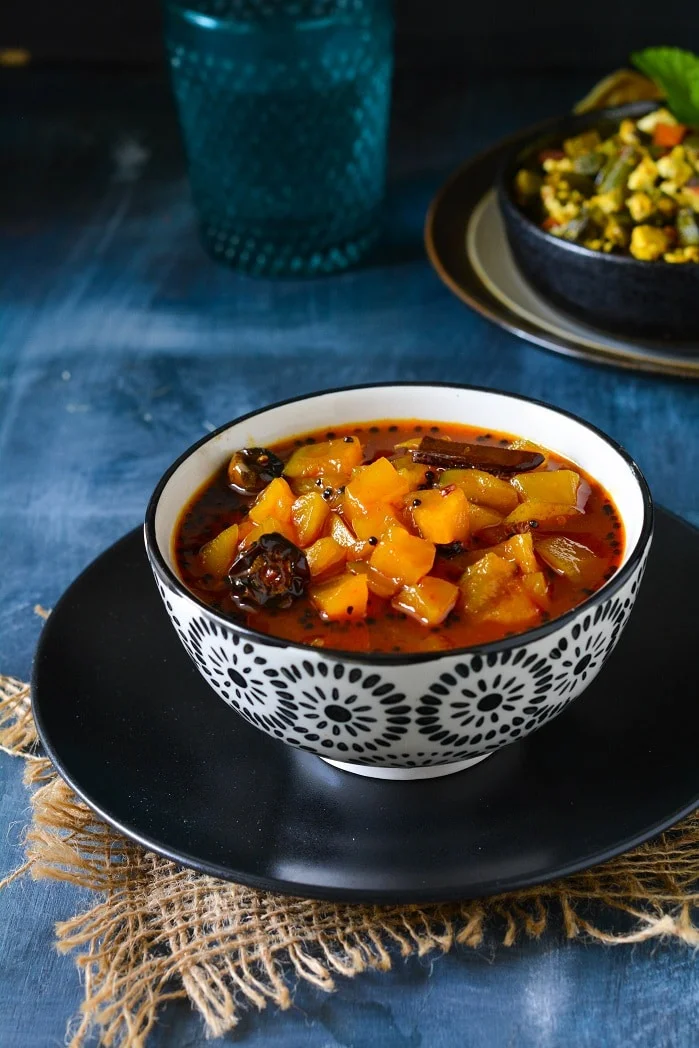
Kairi Ni Katki is a sweet-and-spiced Gujarati pickle made with raw mango and jaggery. It cooks quickly on the hob and is a tangy, fragrant accompaniment to thepla, paratha, khichdi or dal and rice.
Ingredients
- 1/2 kgraw mango
- 1/2 kgjaggery
- to tastesalt
- 2 tspKashmiri chilli powder
- 3/4 tspturmeric powder
- 3 tbspmustard oil
- 1/2 tspmustard seeds
- 1/2 tspcumin seeds
- 8peppercorns
- 4cloves
- 4whole dried red chillies
- 1/2 inchcinnamon
- 1/4 tspasafoetida powder
- 1black cardamom
Instructions
- 1
Prepare the mango
Wash and peel the raw mangoes, then chop them into small pieces.
- 2
Heat the oil
Heat the mustard oil in a pan and add the mustard and cumin seeds.
- 3
Add whole spices
Once the seeds begin to crackle, add the cinnamon, cloves, peppercorns, black cardamom, whole red chillies and asafoetida.
- 4
Sauté the mango
Add the chopped mango, turmeric and salt, then sauté for 1 minute.
- 5
Simmer covered
Cover the pan and simmer for 2 minutes, or until the mango is about half cooked.
- 6
Add the jaggery
Add the jaggery, stir gently and simmer until it has melted completely.
- 7
Cook briefly
Cook for a further 2 minutes over medium heat.
- 8
Finish and cool
Turn off the heat, stir in the Kashmiri chilli powder and leave the pickle to cool completely.
- 9
Jar the pickle
Once it has reached room temperature, transfer it to a glass jar and refrigerate.
- 10
Serve the pickle
Enjoy it with thepla, paratha, khichdi or dal and rice.
What is Kairi Ni Katki?
Kairi Ni Katki, also called Katki Kairi, is a Gujarati sweet pickle made with kairi, or unripe mango, and jaggery. Sweet, sour and warmly spiced, it is served as a small accompaniment rather than as a main dish.
This quick-cooked version combines whole spices with Kashmiri chilli powder, then melts jaggery around the softened mango. The result is a glossy pickle that can be enjoyed soon after it cools.
Nutrition and macros by portion
The nutrition label shows one serving as written: 644 calories, 2g protein, 137g carbs, 11g fat.
| Portion | Adjustment | kcal | Protein | Carbs | Fat |
|---|---|---|---|---|---|
| Lighter | Use less jaggery | 451 kcal | 1g | 96g | 7g |
| This serving | As written | 644 kcal | 2g | 137g | 11g |
| Hungry | Serve a larger spoonful | 966 kcal | 2g | 206g | 16g |
Most of the carbohydrates come from the jaggery, with additional carbohydrates from the mango; the mustard oil supplies most of the fat, while the mango and spices contribute little protein. Serve a modest spoonful alongside a meal with a protein-rich dish and vegetables to balance the plate.
Choosing the mango and jaggery
Mango: Use firm, unripe fruit, which brings the sharp acidity that balances the sweetness. Cut the pieces small so they soften quickly and are easy to serve.
Jaggery: Chop or break it into smaller pieces if it is sold in a hard block. It will melt more readily when stirred into the warm mango mixture.
Blooming the spices
Whole spices: Add the cinnamon, cloves, peppercorns, cardamom, dried chillies and asafoetida after the mustard and cumin seeds start crackling. This brief time in hot oil helps release their aroma.
Ground chilli: Stir the Kashmiri chilli powder in only after turning off the heat, as the method directs. This helps it mix through without sitting in the hottest oil.
Getting the texture right
Mango: After the covered 2-minute simmer, the pieces should be partly softened, not completely broken down. Keep the heat gentle and check them, as the exact time can vary with the size and ripeness of the fruit.
Syrup: Once the jaggery has melted, cook for the further 2 minutes specified. The mixture will be loose while hot and will thicken as it cools.
Balancing sweet and sour
The proportion of jaggery to mango makes this a distinctly sweet pickle, while raw mango supplies the tartness. Taste the mango mixture before serving and adjust the salt to suit your palate.
Kashmiri chilli powder adds colour and a gentler chilli note than the whole dried chillies. For more heat, leave the whole chillies intact in the jar.
Serving ideas
Serve a spoonful alongside thepla or paratha, or add it to a meal of khichdi or dal and rice. Its sweet, tangy flavour is especially useful as a contrasting bite with simple savoury dishes.
Use a clean spoon each time you take some from the jar, and return the rest to the fridge promptly.
Recipe notes & tips
- Cut the mango into pieces of similar size so they soften at roughly the same rate.
- Have the whole spices ready before heating the oil, as they are added in quick succession.
- Stir gently after adding the jaggery to help it melt without crushing the mango.
- Let the pickle cool completely before sealing it in the jar.
- Use a dry, clean spoon when serving from the jar.
Variations
- Adjust the sweetness: Use less jaggery for a sharper, more tart pickle.
- More chilli: Add extra Kashmiri chilli powder after turning off the heat.
- Milder whole spices: Remove the dried chillies before serving.
- Coarser mango: Cut the fruit into larger pieces for a chunkier texture.
- Serve as a relish: Spoon a little alongside a simple rice or lentil meal.
Common mistakes to avoid
- Overcooking the mango: It can collapse into a purée; check after the 2-minute covered simmer and stop when partly tender.
- Adding jaggery too early: Wait until the mango has had its initial covered simmer so it can soften first.
- Scorching the spices: Add them once the seeds crackle and keep the pan moving as needed.
- Adding chilli powder over high heat: Turn off the heat first, then stir it in.
- Jarring the pickle hot: Let it cool to room temperature before transferring it to the jar.
How to store
Keep the cooled pickle in a clean, sealed glass jar in the refrigerator and use a clean, dry spoon each time. The recipe does not specify a storage life, so check for any change in smell or appearance and discard it if in doubt. Serve chilled or let a portion come to room temperature; reheating is not necessary.
Frequently asked questions
Can I use ripe mango?
Firm, unripe mango is best because its tartness balances the jaggery and it holds its shape during cooking. Ripe mango is sweeter and softer, so the result will be different.
How do I know when the mango is half cooked?
After the covered 2-minute simmer, the pieces should be beginning to soften but still hold their shape. Check a piece, as the timing depends on its size and firmness.
When should I add the Kashmiri chilli powder?
Add it after switching off the heat, then mix it through the pickle. This is the final seasoning step in the method.
What can I serve this pickle with?
Serve it with thepla, paratha, khichdi or dal and rice. A small spoonful gives the meal a sweet and tangy contrast.
Does the pickle need to cool before refrigerating?
Yes. Leave it until it reaches room temperature, then transfer it to a glass jar and refrigerate.
Cook it from the original
This recipe comes from maayeka.com. Their page has the author’s own photos, notes and tips — the best place to cook it from.
Open the recipe on maayeka.com