
Peppered Gizzard
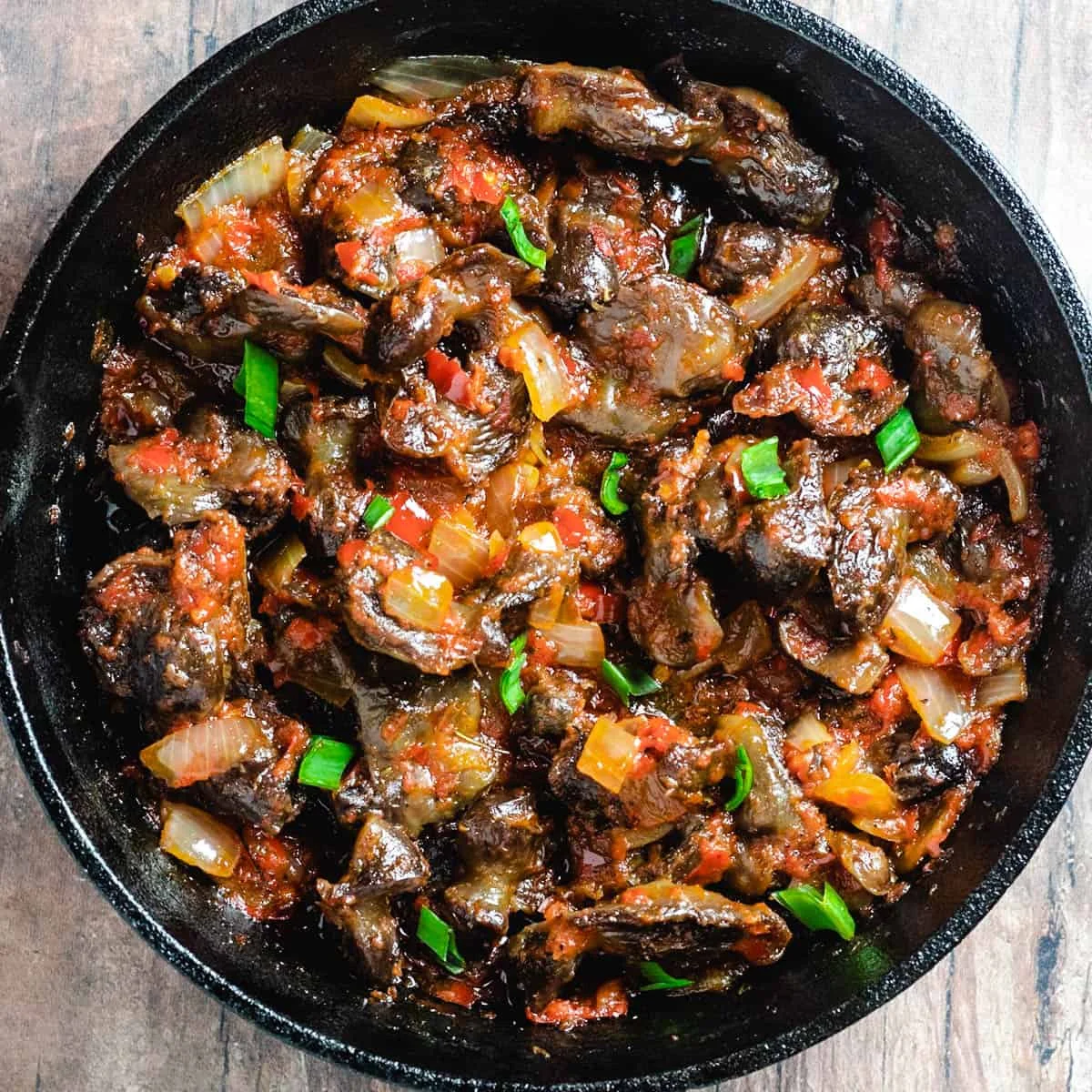
Peppered gizzard is a spicy, savoury dish of tender gizzards fried until crisp and tossed with blended peppers, onions and seasoning. Serve it as a snack or as part of a larger meal.
Ingredients
- 680 g (1.5 lb)gizzards
- 120 ml (1/2 cup)olive oil
- 1red pepper
- 1 (or 1/2)habanero pepper
- 150 g (1 cup chopped)onion, chopped
- 1 tspbouillon powder
- 1/2 tspthyme
- 1/2 tspblack pepper
- 1/4 tspcayenne pepper (omit to reduce the heat)
- 1/2 tsp, or to tastesalt
- to taste, optionalspring onions, for garnish
- as neededolive oil, for frying the gizzards
Instructions
- 1
Boil the gizzards
Wash the gizzards and boil them for 15 minutes with some salt and black pepper.
- 2
Blend the peppers
Coarsely blend the red pepper and habanero.
- 3
Chop the vegetables
Chop the onion and spring onions.
- 4
Drain the gizzards
When the gizzards are cooked, drain them in a colander.
- 5
Heat the oil
Pour frying oil into a large pan.
- 6
Fry until crisp
Once the oil is hot, carefully add the gizzards and fry until crispy.
- 7
Drain the gizzards
Remove the gizzards from the pan when done and set them on kitchen paper.
- 8
Cook the onion
In a smaller pan, measure out 120 ml (1/2 cup) of the same frying oil and add the chopped onion.
- 9
Add peppers and spices
When the onion has softened, add the blended peppers and the spices.
- 10
Check the seasoning
Taste the mixture and add more salt if needed.
- 11
Mix in the gizzards
Add the gizzards and stir until they are well coated.
- 12
Simmer gently
Let the mixture simmer over low heat for 10 minutes.
- 13
Garnish and serve
Stir in the chopped spring onions and serve.
What is peppered gizzard?
Peppered gizzard is a spicy dish found in West African cooking, particularly popular in Nigerian-style menus. Gizzards are the firm, flavourful muscular stomachs of poultry, cooked until tender and then often fried or seasoned.
This version combines crisp fried pieces with a coarse blend of red pepper and habanero, softened onion and warm spices. The brief simmer lets the seasoning cling to the gizzards.
Nutrition and macros by portion
The nutrition label shows one serving as written: 211 calories, 15g protein, 2g carbs, 15g fat.
| Portion | Adjustment | kcal | Protein | Carbs | Fat |
|---|---|---|---|---|---|
| Lighter | Use less frying oil | 148 kcal | 11g | 1g | 11g |
| This serving | As written | 211 kcal | 15g | 2g | 15g |
| Hungry | Serve with rice | 317 kcal | 23g | 3g | 23g |
The gizzards provide most of the protein, while the olive oil contributes most of the fat; the peppers and onion add a small amount of carbohydrate. Serve a portion with vegetables or a modest helping of rice or plantain for a more rounded plate.
The gizzards and their texture
Boiling first: the initial 15-minute boil starts softening the gizzards before frying. Drain them thoroughly so excess water does not make the hot oil spit.
Crisping: fry until the pieces look crisp, then move them to kitchen paper. The gizzards should remain substantial and pleasantly chewy rather than being expected to turn as tender as a quick-frying cut of meat.
Building the pepper sauce
Coarse blend: blend the red pepper and habanero only until roughly combined. A coarse texture gives the finished dish more body than a completely smooth purée.
Heat level: the habanero and cayenne both contribute heat. Use half a habanero or leave out the cayenne if you want a milder result.
Getting the onions right
Softened onions: cook the chopped onion in the measured frying oil until wilted before adding the pepper blend. This gives the sauce a savoury base without needing to brown the onion deeply.
Seasoning: bouillon powder, thyme, black pepper and salt season the sauce. Taste before adding more salt, as bouillon powder can already be salty.
Finishing the dish
Coating: stir the fried gizzards through the pepper mixture so the pieces are evenly covered. Keep the pan at low heat during the 10-minute simmer.
Serving: add the spring onions at the end for a fresh finish. The dish works as a snack or alongside a meal with rice, plantain or another simple accompaniment.
Keeping the oil manageable
Frying oil: the recipe uses oil to fry the gizzards, then measures 120 ml (1/2 cup) of that same oil into a smaller pan for the sauce. Use only as much additional frying oil as needed to fry the pieces in your pan.
Drain well: letting the fried gizzards rest on kitchen paper helps remove surface oil before they go into the sauce.
Recipe notes & tips
- Pat the drained gizzards dry if they are still wet before adding them to the hot oil.
- Use a large pan and fry in batches if the gizzards would otherwise crowd it.
- Blend the peppers coarsely to retain some texture in the sauce.
- Start with half a habanero if you are unsure how much heat you want.
- Taste the sauce before adding extra salt, especially when using a salty bouillon powder.
- Keep the final simmer low so the pepper mixture does not catch on the bottom of the pan.
Variations
- Milder heat: use half a habanero and omit the cayenne pepper.
- More onion: add extra chopped onion for a softer, sweeter sauce.
- Extra garnish: finish with additional chopped spring onions just before serving.
- Smokier flavour: use smoked paprika in place of some of the cayenne.
- With a side: serve with rice or fried plantain to make it part of a larger meal.
Common mistakes to avoid
- Wet gizzards: water can cause hot oil to spit, so drain them well before frying.
- Crowded frying pan: the pieces may cook unevenly, so fry them in batches if needed.
- Too much heat: habanero and cayenne can quickly make the dish very hot; begin with less and adjust next time.
- Over-salting: bouillon powder may be salty, so taste the sauce before adding more salt.
- High simmer: the sauce can catch if the heat is too strong; keep it low for the 10-minute simmer.
How to store
Cool leftovers promptly, place them in a covered container and refrigerate for up to 3 days. Reheat in a pan over a low heat until piping hot, stirring gently; add a small splash of water if the sauce has thickened.
Frequently asked questions
How do I know when the gizzards are cooked?
Boil them for the stated 15 minutes, then check that they are cooked through before frying. They should be firm and chewy rather than raw in the centre.
Can I make this less spicy?
Yes. Use half a habanero or omit it, and leave out the cayenne. You can taste the pepper mixture as it cooks and adjust the heat to suit.
Do I need to use fresh peppers?
Fresh red pepper and habanero are used in this recipe and give the sauce its texture and heat. The recipe does not specify a substitute.
Why are the gizzards fried after boiling?
Boiling begins to soften them, while frying gives the outside a crisp finish before they are coated in the pepper sauce.
Can I prepare the dish ahead?
You can boil and drain the gizzards ahead, then refrigerate them in a covered container and fry and sauce them closer to serving. Cooked leftovers keep refrigerated for up to 3 days.
What can I serve with peppered gizzard?
Serve it as a snack, or alongside rice, plantain or vegetables as part of a larger meal.
Cook it from the original
This recipe comes from lowcarbafrica.com. Their page has the author’s own photos, notes and tips — the best place to cook it from.
Open the recipe on lowcarbafrica.com