
Gujarati Mango Pickle
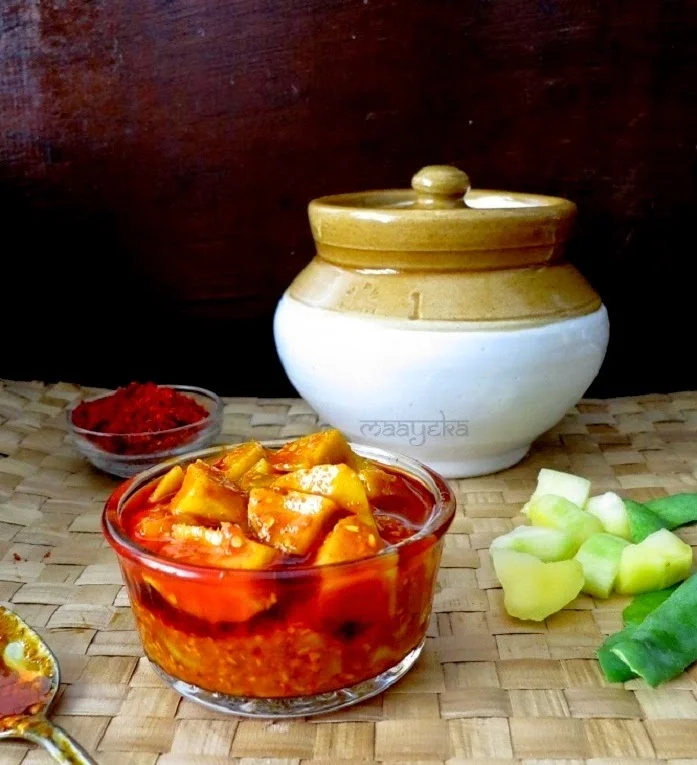
Gujarati raw mango pickle combines tart mango with pickle masala, chilli, jaggery and mustard oil. It takes several hours of drying and a short maturation, making it a punchy accompaniment for paratha, thepla, khichdi or rice.
Ingredients
- 1 kgraw mangoes
- 4 tbsppickle masala
- 4 tbspjaggery
- 1 tbspred chilli powder
- 1 tspKashmiri chilli powder
- 1/2 tspasafoetida powder
- 50 gsalt
- 1 cup (240 ml)mustard oil
- 1 tspturmeric
Instructions
- 1
Prepare the mangoes
Wash and dry the mangoes with a cloth. Peel them, then chop them into small pieces.
- 2
Salt the pieces
Mix the chopped mango with the salt and 1 tsp turmeric. Cover and leave for 5–6 hours.
- 3
Drain the mangoes
Tip the pieces into a steel or plastic colander and let the liquid drain away.
- 4
Dry the pieces
Spread the mango pieces on a cloth for 2 hours to remove excess moisture.
- 5
Add the spices
Put the mango pieces in a bowl. Mix in all the spices and the grated jaggery.
- 6
Cool the oil
Heat the mustard oil well, then let it cool to room temperature. Mix it into the mango and masala mixture.
- 7
Fill the jar
Mix everything thoroughly, then transfer the pickle to a glass or plastic jar.
- 8
Let it mature
Leave the pickle to mature for 2 days, until the mango pieces have softened slightly and taken on the flavours.
- 9
Serve the pickle
Serve with paratha, thepla, khichdi or rice.
What is Gujarati mango pickle?
Gujarati mango pickle, or kachcha aam achar, is a tangy, spiced preserve made with unripe mango. Pickles are a familiar part of meals across the Indian subcontinent, with seasonings and methods varying from region to region.
This version pairs sharp mango with jaggery for sweetness, chilli for heat and mustard oil for its distinctive pungent flavour. A short maturation lets the pieces start to soften and absorb the masala.
Nutrition and macros by portion
The nutrition label shows one serving as written: 2847 calories, 13g protein, 215g carbs, 226g fat.
| Portion | Adjustment | kcal | Protein | Carbs | Fat |
|---|---|---|---|---|---|
| Lighter | Use less mustard oil | 1993 kcal | 9g | 151g | 158g |
| This serving | As written | 2847 kcal | 13g | 215g | 226g |
| Hungry | Serve with extra paratha | 4271 kcal | 20g | 323g | 339g |
The mango and jaggery provide most of the carbohydrates, while mustard oil contributes most of the fat; the recipe has relatively little protein. Serve a modest spoonful beside a protein-rich main and vegetables to make a more balanced plate.
Choose and cut the mangoes
Firm fruit: use unripe mangoes that hold their shape when chopped. Small, even pieces are easier to salt and season consistently.
Dry surfaces: wash and wipe the fruit thoroughly before peeling and cutting. Removing surface moisture helps keep the pickle mixture from becoming watery.
Salt and dry thoroughly
Salt rest: the mango sits covered with salt and turmeric for 5–6 hours, drawing out liquid and seasoning the pieces. Drain that liquid well in a colander.
Cloth drying: spread the drained mango on a cloth for the full 2 hours. This extra drying step matters because the recipe relies on removing moisture before adding oil and spices.
Balance the masala
Sweet and sharp: jaggery rounds out the sourness of the raw mango. Grate it so it mixes more evenly through the pieces.
Layered heat: red chilli powder brings the main chilli flavour, while Kashmiri chilli powder adds a gentler, warmer note. Pickle masala and asafoetida complete the seasoning, so stir well to distribute them.
Handle the mustard oil
Heat, then cool: the method calls for heating the oil well and bringing it back to room temperature before mixing it in. Don't pour it into the mango while it is still hot.
Even coating: add the cooled oil to the mango and masala mixture and mix thoroughly. Aim for the pieces and spices to be evenly coated.
Wait for the flavour to settle
Two-day rest: leave the jar undisturbed for 2 days so the mango can soften slightly and take on the seasoning. The pieces should remain distinct rather than turning into a paste.
Serve a little: the pickle is a strongly seasoned accompaniment, so offer it alongside a milder main rather than treating it as the centre of the meal.
What to serve it with
Indian breads: serve a small spoonful with paratha or thepla for a sharp, spicy contrast.
Rice dishes: it also goes well alongside khichdi or plain rice, where its tang and heat perk up the mild grains.
Recipe notes & tips
- Use a clean, dry cloth when drying the mango pieces.
- Cut the mango into similarly sized pieces so they season at a similar rate.
- Grate the jaggery before mixing it in to help it spread through the masala.
- Let the heated mustard oil cool completely to room temperature before adding it.
- Use a clean, dry utensil when mixing and serving the pickle.
Variations
- Milder heat: reduce the red chilli powder to suit your preference.
- More sweetness: adjust the jaggery slightly if you prefer a sweeter pickle.
- Extra tang: use particularly tart, firm raw mangoes.
- Chunkier pieces: cut the mango into larger pieces, allowing for a different texture as they mature.
Common mistakes to avoid
- Skipping the drying time: excess moisture can make the mixture watery; drain and dry the mango as directed.
- Using soft mangoes: they can lose their shape; choose firm, unripe fruit.
- Adding hot oil: it can change the texture of the mixture; cool the oil to room temperature first.
- Uneven seasoning: dry patches can leave some pieces bland; mix the masala and oil thoroughly.
- Serving straight away: the flavours need time to develop; allow the pickle to mature for 2 days.
How to store
Store the pickle in a clean, dry, tightly closed jar in the fridge, and use a clean, dry spoon each time. Check its smell and appearance before serving, and discard it if you notice mould or other signs of spoilage.
Frequently asked questions
Can I make this without peeling the mangoes?
The method specifies peeled mangoes. For this version, peel them before chopping so the pieces follow the recipe as written.
Why does the mango need to dry for 2 hours?
Drying removes extra moisture after salting and draining. This helps the oil and masala coat the pieces rather than becoming diluted.
Do I add the mustard oil while it is hot?
No. Heat it well, then let it cool to room temperature before mixing it into the mango.
How long does the pickle need before serving?
Leave it to mature for 2 days. The mango should soften slightly and absorb the flavours.
What can I serve with Gujarati mango pickle?
The recipe suggests paratha, thepla, khichdi or rice. A small amount also works as a sharp accompaniment to a mild meal.
Cook it from the original
This recipe comes from maayeka.com. Their page has the author’s own photos, notes and tips — the best place to cook it from.
Open the recipe on maayeka.com