
Panettone Bread Pudding
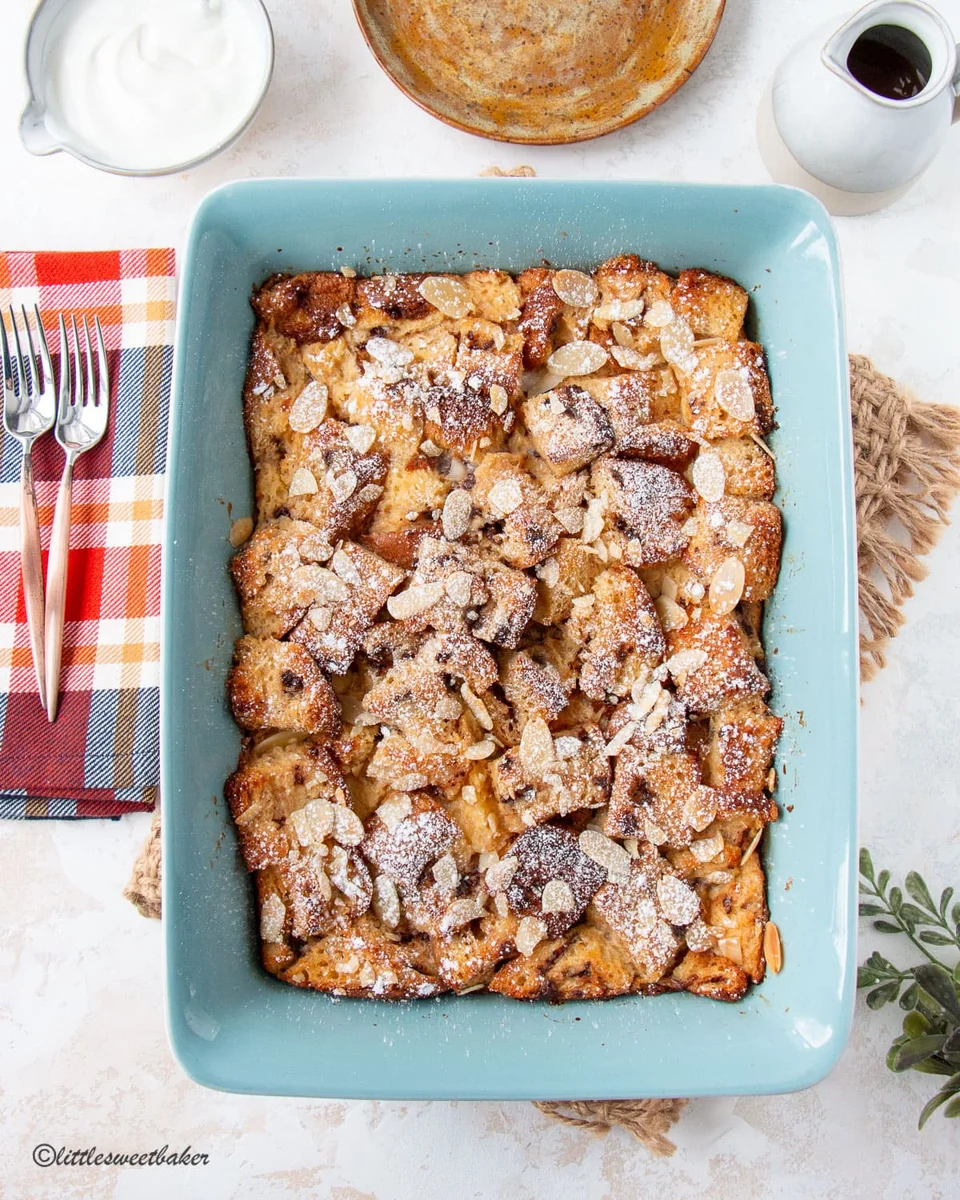
This panettone bread pudding bakes cubes of festive Italian bread in a simple egg-and-milk custard until soft in the middle and golden on top. It is an easy way to turn a loaf into a comforting dessert for a winter evening or holiday gathering.
Ingredients
- 1 loaf (600–680 g; see notes for adjusting the recipe for a partial loaf)panettone
- 6 largeeggs
- 710 ml (3 cups), or 650 ml skimmed milk mixed with 60 ml creamwhole milk
- 67 g (1/3 cup)granulated sugar
- Optional, to tastefruit or nuts for topping
- Optional, to tasteicing sugar, whipped cream or vanilla ice cream, to serve
Instructions
- 1
Cut the panettone
Cut the panettone into large chunks and arrange them in a greased 23 × 33 cm (9 × 13-inch) casserole dish.
- 2
Mix the custard
In a large bowl, whisk the eggs, milk and sugar together until combined.
- 3
Soak the bread
Pour the egg mixture evenly over the panettone. Leave it to stand for 20 minutes.
- 4
Bake until set
Meanwhile, heat the oven to 175°C (350°F). Add any desired fruit or nuts, then bake for 40–45 minutes, until the centre is set and the top is golden brown.
What is panettone bread pudding?
Bread pudding is a baked dish of bread soaked in a sweet egg-and-milk mixture. This version uses panettone, the Italian festive bread often studded with dried fruit, for a tender, fragrant pudding.
The recipe keeps the custard straightforward so the panettone remains the main flavour. A short soak lets the bread take up the mixture before baking.
Nutrition and macros by portion
The nutrition label shows one serving as written: 378 calories, 13g protein, 41g carbs, 19g fat.
| Portion | Adjustment | kcal | Protein | Carbs | Fat |
|---|---|---|---|---|---|
| Lighter | Use the skimmed milk option | 265 kcal | 9g | 29g | 13g |
| This serving | As written | 378 kcal | 13g | 41g | 19g |
| Hungry | Add a larger portion | 567 kcal | 20g | 62g | 29g |
The panettone and sugar provide most of the carbohydrates, while the eggs and milk contribute protein. Panettone, eggs and whole milk also supply much of the fat. Pair a serving with fresh fruit for a simple contrast; the recipe's nutrition figures are per serving before optional toppings.
Choosing the panettone
Bread: Use a loaf weighing 600–680 g, as specified. Cut it into large chunks so it holds some shape as it absorbs the custard.
Partial loaf: If using less bread, the proportions may need adjusting; the recipe notes that a partial-loaf adjustment is available, but does not provide the quantities here.
Getting the custard right
Eggs and milk: Whisk the six eggs, milk and sugar until evenly combined. This mixture sets around the bread as it bakes.
Milk option: Whole milk is the listed choice; the recipe also offers skimmed milk mixed with cream as an alternative.
Allow time to soak
Soak: Leave the assembled pudding for 20 minutes before baking. This gives the chunks time to absorb some of the liquid.
Even coverage: Pour the mixture across the dish rather than in one spot, helping the bread soak more evenly.
Check for doneness
Centre: Bake at 175°C for 40–45 minutes, looking for a set centre rather than a visibly liquid one.
Top: A golden-brown surface is the other cue given in the recipe. If adding fruit or nuts, scatter them over the pudding before it goes into the oven.
Serving ideas
Finish: Serve with a dusting of icing sugar, whipped cream or vanilla ice cream, if desired.
Balance: For a fuller dessert plate, pair a modest portion with fresh fruit; the pudding itself is already rich with egg, milk and sweet bread.
Recipe notes & tips
- Grease the casserole dish before adding the panettone chunks.
- Keep the chunks large so they do not disappear into the custard.
- Whisk the custard until the sugar is dispersed and the mixture looks even.
- Give the pudding the full 20-minute soak before baking.
- Begin checking the centre at 40 minutes, as baking time is given as a range.
- Add optional toppings before baking, rather than after.
Variations
- Add fruit: Scatter fruit over the soaked bread before baking.
- Add nuts: Sprinkle nuts over the pudding for extra texture.
- Use skimmed milk: Mix it with cream as the recipe suggests.
- Finish with icing sugar: Dust the baked pudding just before serving.
- Serve with cream: Offer whipped cream or vanilla ice cream alongside.
Common mistakes to avoid
- Cutting tiny pieces: Large chunks are specified and help the bread keep its shape.
- Skipping the soak: Leave the assembled dish for 20 minutes before baking.
- Pouring unevenly: Spread the custard across the bread so it can soak throughout.
- Baking by the clock alone: Check that the centre is set and the top is golden.
- Adding toppings too late: Put optional fruit or nuts on before baking.
How to store
Cover and refrigerate leftovers once cooled, and eat within 3–4 days. Reheat individual portions in the oven or microwave until warmed through.
Frequently asked questions
Can I use skimmed milk?
Yes. The recipe suggests mixing 650 ml skimmed milk with 60 ml cream as an alternative to 710 ml whole milk.
How long should the bread soak?
Leave the bread and custard together for 20 minutes before baking.
How do I know when it is baked?
The centre should be set and the top golden brown. The recipe gives a baking time of 40–45 minutes at 175°C.
Can I add fruit or nuts?
Yes. They are optional toppings; add them before baking.
What can I serve with it?
The suggested toppings are icing sugar, whipped cream or vanilla ice cream. Fresh fruit is also a simple accompaniment.
Can I make it with part of a loaf?
The recipe refers to a partial-loaf adjustment in its notes, but the quantities for that adjustment are not included here.
Cook it from the original
This recipe comes from littlesweetbaker.com. Their page has the author’s own photos, notes and tips — the best place to cook it from.
Open the recipe on littlesweetbaker.com