
Gumbo with Shrimp and Sausage
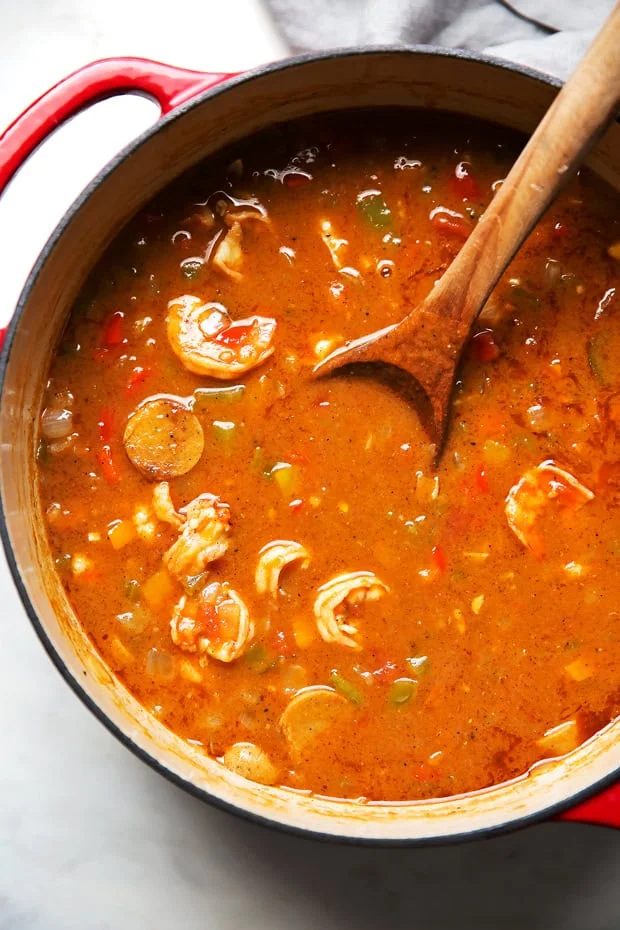
This hearty gumbo brings together a deeply browned roux, vegetables, sausage and shrimp in a boldly seasoned broth. Take your time with the roux, then serve the finished gumbo over rice or quinoa.
Ingredients
- 120 mlhigh-heat oil, such as avocado, rapeseed, corn or vegetable oil
- 60 gplain flour
- 1 mediumonion, diced
- 2bell peppers, any colour, diced
- 3 stalkscelery, diced
- 6 clovesgarlic, minced
- 3bay leaves
- 227 gandouille sausage, sliced (or Tofurky)
- 2 tbspCajun seasoning
- 2 tbsp, or to tasteTabasco sauce
- 1 tbspcayenne pepper (omit for a mild gumbo)
- 950 mllow-sodium chicken stock
- 1 can (411 g)stewed tomatoes (optional)
- 680 graw prawns
- 2 tspgumbo filé
- to tastesalt and black pepper
- to servesliced spring onions
- to servewhite rice or quinoa
Instructions
- 1
Make the roux
Heat the oil in a large Dutch oven or heavy-based pot over a medium-high heat. Whisk in the flour until smooth, then switch to a wooden spoon and stir continuously for 15–22 minutes, until the roux is a rich brown, just darker than peanut butter. Keep the heat steady and do not rush it; if the roux smells burnt, discard it, clean the pot and start again.
- 2
Soften vegetables
Stir the onion, bell peppers and celery into the browned roux. Cook for about 8–10 minutes, stirring as needed to stop them sticking, until softened. Add the garlic, sausage and bay leaves, then cook for 1–2 minutes until fragrant. If using Tofurky, brown it in a separate pan and wait to add it with the prawns.
- 3
Season the broth
Stir in the Cajun seasoning, Tabasco, cayenne, chicken stock and stewed tomatoes, if using. Bring to a high simmer, reduce the heat to medium-low, cover and simmer for 15–20 minutes.
- 4
Cook the prawns
Add the prawns and sausage, if using, and stir. Simmer for a further 10–15 minutes, until the prawns are opaque and the vegetables are soft. Taste and season with salt and pepper as desired, then stir in the gumbo filé and remove the bay leaves.
- 5
Serve the gumbo
Serve warm over white rice or quinoa, topped with sliced spring onions.
What is gumbo?
Gumbo is a Louisiana stew associated with New Orleans, shaped by a blend of culinary traditions and often built around a dark roux. This version combines that toasted flour-and-oil base with the savoury flavour of sausage, prawns and Cajun seasoning.
Roux first: The slow-cooked roux thickens the broth and gives it a rounded, nutty depth. Here, it is cooked to a rich brown before the vegetables go in.
Nutrition and macros by portion
The nutrition label shows one serving as written: 477 calories, 29g protein, 23g carbs, 31g fat.
| Portion | Adjustment | kcal | Protein | Carbs | Fat |
|---|---|---|---|---|---|
| Lighter | Use less rice | 334 kcal | 20g | 16g | 22g |
| This serving | As written | 477 kcal | 29g | 23g | 31g |
| Hungry | Larger rice portion | 716 kcal | 44g | 35g | 47g |
The rice or quinoa and flour provide most of the carbohydrates, while the oil and sausage contribute much of the fat. Prawns and sausage provide protein. Serve a measured portion over rice or quinoa and add a green vegetable alongside to round out the plate.
Getting the roux right
Steady heat: Stir continuously for the full 15–22 minutes and keep the heat at medium-high rather than turning it up to hurry things along. The colour should deepen gradually to just past dark peanut butter.
Watch and smell: A burnt smell means the roux cannot be rescued, so start again in a clean pot. Have the diced vegetables ready so you can stir them in as soon as the roux reaches the target colour.
Why these vegetables matter
The onion, bell peppers and celery soften directly in the roux, bringing sweetness and savoury flavour into the base. Give them 8–10 minutes, stirring when needed so they cook evenly without catching.
Garlic goes in later and needs only 1–2 minutes to become fragrant. Adding it with the vegetables from the start could leave it cooking for longer than this method calls for.
Seasoning and heat
Cajun seasoning, Tabasco and cayenne all contribute to the gumbo’s punch. The recipe calls for a tablespoon of cayenne, but leaving it out makes the dish milder; Tabasco can be adjusted to taste.
Tomatoes: The stewed tomatoes are optional, so the gumbo can be made with or without them. If you include them, add them with the stock before the covered simmer.
When the prawns are done
Prawns: Add them for the final 10–15 minutes and look for opaque flesh as the doneness cue. Avoid relying on the timer alone if they turn opaque sooner.
Filé: Stir the gumbo filé in after the prawns are cooked, then take out the bay leaves before serving. The recipe finishes with a taste and a final adjustment of salt and pepper.
Serving and timing
Rice or quinoa: Spoon the gumbo over either one and finish with sliced spring onions. Their fresh, oniony flavour provides contrast to the rich, slowly cooked base.
Plan on about 90 minutes in total, with much of the active attention going into the roux. The recipe makes six servings and is suitable for preparing ahead, though the prawns need care when reheating.
Recipe notes & tips
- Dice the onion, peppers and celery before starting the roux so they are ready to add promptly.
- Use a heavy-based pot to help maintain steady heat while you stir the roux.
- Keep the wooden spoon moving across the bottom of the pot to reduce the chance of scorching.
- If using Tofurky, brown it separately and add it with the prawns at the end.
- Taste before adding salt, as the Cajun seasoning, sausage and stock may already be salty.
Variations
- Milder gumbo: Omit the cayenne and use less Tabasco.
- Tomato-free: Leave out the optional stewed tomatoes.
- Tofurky option: Brown the Tofurky in a separate pan and add it with the prawns.
- Quinoa base: Serve the gumbo over quinoa instead of white rice.
- Adjust the spice: Add Tabasco to taste rather than using the full amount.
Common mistakes to avoid
- Rushing the roux: Keep the heat steady and stir for the full 15–22 minutes so it browns without burning.
- Leaving the roux unattended: Stir continuously and watch closely as the colour deepens.
- Adding Tofurky too early: Brown it in a separate pan first, then add it with the prawns.
- Overcooking the prawns: Check for opacity during the final 10–15 minutes and stop simmering once they are cooked.
- Forgetting the bay leaves: Remove them before serving.
How to store
Cool leftovers promptly, transfer them to a covered container and refrigerate for up to 3 days. Reheat gently until steaming hot, taking care not to cook the prawns for longer than needed; store rice or quinoa separately if possible.
Frequently asked questions
Can I make the gumbo ahead?
Yes. The recipe is suited to preparing ahead, but the prawns can become overcooked if the gumbo is reheated for too long. Reheat gently and stop once it is steaming hot.
How do I know when the roux is ready?
After 15–22 minutes of continuous stirring, it should be a rich brown, just darker than peanut butter. Do not use it if it smells burnt.
Can I leave out the tomatoes?
Yes. The stewed tomatoes are optional, so you can omit them and follow the rest of the method as written.
How can I make this gumbo milder?
Omit the cayenne and reduce the Tabasco to taste. The recipe also lets you adjust the Tabasco amount to suit your preference.
Can I use Tofurky instead of andouille?
Yes. Brown the Tofurky in a separate skillet first, then add it to the gumbo with the prawns at the end.
What should I serve with gumbo?
Serve it warm over white rice or quinoa and top it with sliced spring onions.
Cook it from the original
This recipe comes from littlespicejar.com. Their page has the author’s own photos, notes and tips — the best place to cook it from.
Open the recipe on littlespicejar.com