
Grandma's Cinnamon Rolls
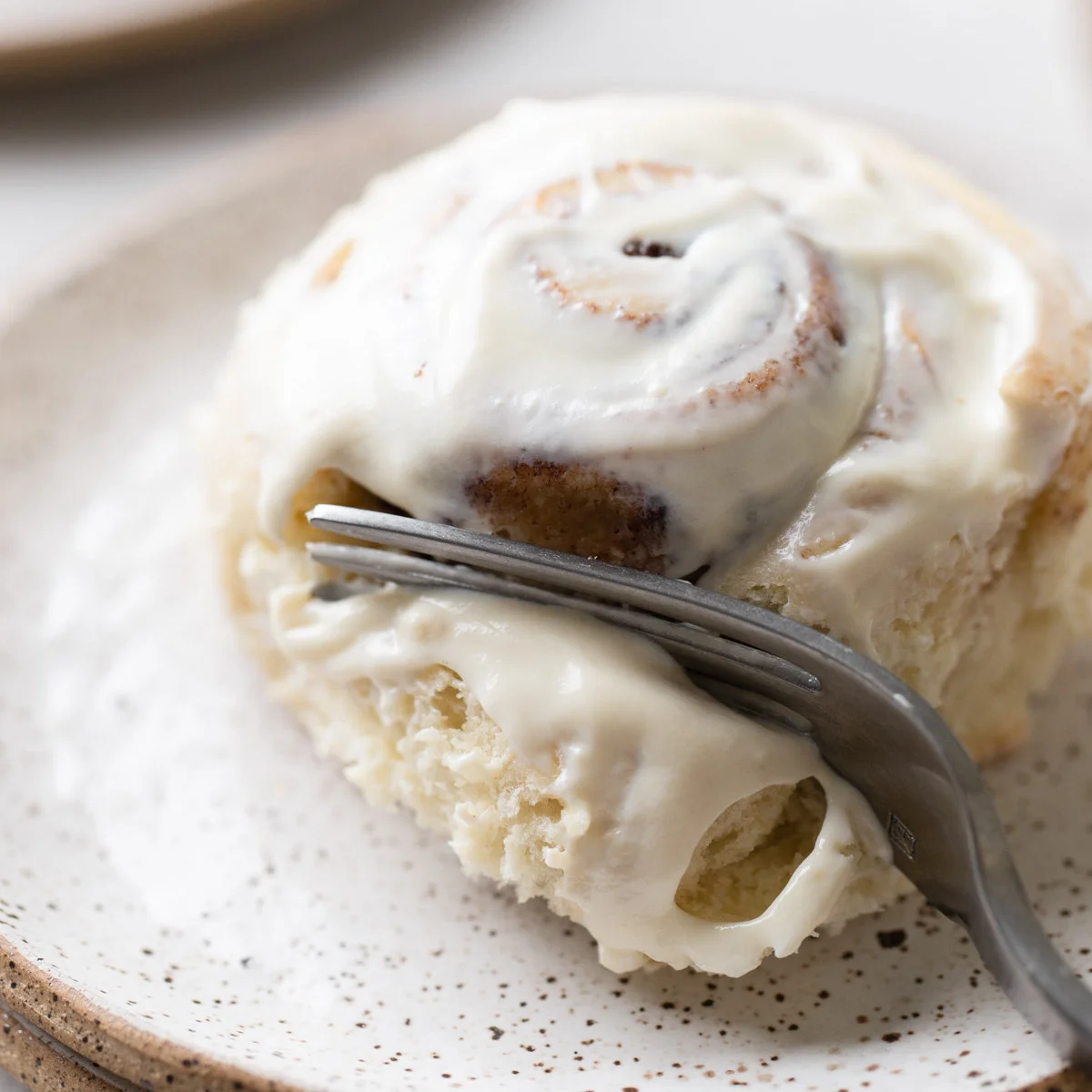
These soft, yeasted cinnamon rolls are filled with butter, brown sugar and cinnamon, then finished with a smooth cream cheese frosting. They take time to rise, but can be prepared ahead for a comforting breakfast or treat.
Ingredients
- 60 ml (¼ cup) warm water at 43–46°C (110–115°F), plus 1 teaspoon granulated sugarwarm water and granulated sugar
- 1 packet (2¼ teaspoons)active dry yeast
- 62 g (5 tablespoons)granulated sugar
- 32 g (3 tablespoons)shortening
- 1¼ teaspoonssalt
- 240 ml (1 cup)whole milk, scalded
- 1 large, at room temperatureegg
- 500–625 g (4–5 cups), spooned and levelledplain flour
- 60 g (4 tablespoons), softened to room temperaturebutter
- 150 g (¾ cup), packedbrown sugar
- 1½ tablespoonsground cinnamon
- 85 g (3 ounces), softened to room temperaturebrick-style cream cheese
- 30 g (2 tablespoons), softened to room temperaturebutter
- 60 g (½ cup)icing sugar
- ½ teaspoonvanilla extract
- 15–30 ml (1–2 tablespoons), plus more as neededmilk
Instructions
- 1
Activate the yeast
Whisk the warm water with the teaspoon of sugar until dissolved. Sprinkle the yeast over the water and stir gently. Leave for 5–10 minutes, until foamy.
- 2
Cool the milk
Put the 62 g sugar, shortening and salt in a heatproof mixing bowl or stand-mixer bowl. Pour over the scalded milk and whisk to combine. Leave until warm rather than hot, about 43°C (110°F).
- 3
Mix the dough
Add 250 g (2 cups) of flour to the cooled milk mixture by hand or with a dough hook. Mix in the yeast mixture until combined, then add the egg.
- 4
Knead until smooth
Mix in another 250 g (2 cups) of flour. Add 1–2 tablespoons of flour at a time until the dough is easy to handle. Knead on a lightly floured surface or with a stand mixer on low for 5–10 minutes, until smooth and elastic, adding a little more flour if needed.
- 5
Let dough rise
Shape the dough into a ball and put it in a lightly greased bowl. Cover and leave in a warm place for about 1 hour, or until doubled in size.
- 6
Roll out dough
Punch down the risen dough. On a lightly floured surface, roll it into a rectangle measuring 30 × 46 cm (12 × 18 inches), about 6 mm (¼ inch) thick.
- 7
Add the filling
Spread the softened butter over the dough. Mix the brown sugar and cinnamon together, scatter the mixture over the butter, and press it down gently.
- 8
Cut the rolls
Starting from one of the 46 cm (18-inch) sides, roll the dough up tightly. Cut it into 12 equal pieces and arrange them in a greased 23 × 33 cm (9 × 13-inch) baking pan. Cover and leave in a warm place for about 45 minutes.
- 9
Bake until done
After the rolls have risen for about 30 minutes, preheat the oven to 190°C (375°F). Bake for about 25 minutes, until cooked through in the centre. After 10–15 minutes of baking, loosely cover with foil to prevent excessive browning. Remove from the oven and set aside to cool.
- 10
Make the frosting
Beat the cream cheese and butter in a medium bowl until smooth. Mix in the icing sugar and vanilla until combined, then add the milk, using more if needed to reach your preferred consistency.
- 11
Frost and serve
When the rolls have cooled slightly, spread over the frosting and serve.
What are cinnamon rolls?
Cinnamon rolls are sweet, yeasted dough spirals filled with butter, sugar and cinnamon, then baked together in a pan. This American-style version uses a soft dough and a cream cheese frosting.
The recipe’s two rises help make the rolls tender, while the tightly rolled dough keeps the cinnamon-sugar filling tucked into each spiral.
Nutrition and macros by portion
The nutrition label shows one serving as written: 395 calories, 7g protein, 63g carbs, 13g fat.
| Portion | Adjustment | kcal | Protein | Carbs | Fat |
|---|---|---|---|---|---|
| Lighter | Use less frosting | 277 kcal | 5g | 44g | 9g |
| This serving | As written | 395 kcal | 7g | 63g | 13g |
| Hungry | Serve two rolls | 593 kcal | 11g | 95g | 20g |
The flour and sugars provide most of the carbohydrates, while the butter, shortening and cream cheese contribute much of the fat. Flour, milk, egg and cream cheese supply some protein. Pair a roll with fruit or yoghurt for a more balanced plate.
A dough that needs time
Yeast: Give it 5–10 minutes in the warm, lightly sweetened water. A foamy surface is a useful sign that it has activated.
Flour: Start with the specified 500 g, then add more a little at a time until the dough is manageable. The full amount can vary with how the flour is measured and how the dough feels.
Watch the temperature
Milk: Scalded milk needs to cool until warm, not hot, before it meets the yeast mixture. The method gives about 43°C (110°F) as a guide.
Water: Use warm water in the 43–46°C (110–115°F) range to activate the yeast. A thermometer can help avoid water that feels deceptively hot.
Rolling and shaping
Rectangle: Roll the dough to roughly 30 × 46 cm (12 × 18 inches), keeping the thickness even so the rolls bake at a similar rate.
Cutting: Roll from the long side into a snug log, then divide it into 12 equal pieces. A sharp knife helps keep the spirals from being squashed.
How to judge the rise
First rise: Look for dough that has doubled in size, rather than relying only on the one-hour estimate. A cooler room may slow the process.
Second rise: The shaped rolls should have time to puff in the pan, around 45 minutes. For baking, check the centre is cooked through; foil after 10–15 minutes helps limit excess browning.
Frosting and serving
Consistency: Add the milk to the cream cheese frosting gradually, stopping when it is easy to spread. The amount can be adjusted to suit a thicker or looser finish.
Serving: These rolls are rich and sweet, so they work well with fresh fruit or a simple, unsweetened drink alongside.
Recipe notes & tips
- Measure flour by spooning it into the cup and levelling it, rather than packing it down.
- Let the milk mixture cool before adding the yeast mixture.
- Add the final flour gradually so the dough does not become unnecessarily stiff.
- Use a lightly floured surface when rolling, adding only enough flour to prevent sticking.
- Cover the pan loosely with foil if the rolls are browning too quickly.
- Let the rolls cool slightly before frosting so the icing does not melt away.
Variations
- Vanilla icing: Replace the cream cheese frosting with a simple icing made to your preferred consistency.
- Make ahead: Prepare the rolls ahead and refrigerate them before baking; allow time for them to rise before they go into the oven.
- Extra cinnamon: Increase the cinnamon in the filling slightly for a more pronounced spice flavour.
- Nut topping: Scatter chopped pecans over the frosting for added crunch.
- Plain finish: Leave off the frosting and serve the warm rolls as they are.
Common mistakes to avoid
- Hot milk mixture: It can interfere with the yeast; let it cool to warm before combining.
- Too much flour: A stiff dough can make dense rolls; add flour gradually and stop when the dough is easy to handle.
- Rushing the rise: The dough may need longer than the stated time; wait for it to double before shaping.
- Loose rolling: The filling can separate into gaps; roll the dough snugly from the long side.
- Uneven pieces: Rolls of different sizes can bake unevenly; divide the log into 12 similar pieces.
- Frosting hot rolls: The topping may turn runny; wait until they have cooled slightly.
How to store
Store cooled rolls in an airtight container in the refrigerator for up to 3 days because of the cream cheese frosting. Warm individual rolls gently in the microwave or in a low oven until heated through.
Frequently asked questions
Can I prepare the rolls ahead of time?
Yes. Shape the rolls and arrange them in the greased pan, then cover and refrigerate before baking. Allow them time to rise before baking; the timing will depend on how cold they are.
Can I use instant yeast?
This recipe specifies active dry yeast, which is activated in warm water first. If using instant yeast, follow the yeast packet’s guidance for adapting the method.
How do I know when the dough has risen enough?
For the first rise, it should be about double its original size. The shaped rolls should look puffy after their second rise.
Why is my dough sticky?
Dough can feel sticky before it is fully kneaded. Add flour a tablespoon at a time as directed, stopping once it is easy to handle and smooth.
Can I freeze the baked rolls?
Freeze them in an airtight container, ideally without the frosting, and thaw before reheating. Add freshly made frosting after warming if you prefer.
Can I use vanilla icing instead of cream cheese frosting?
Yes. The recipe description suggests vanilla icing as an alternative; use it in place of the cream cheese frosting.
Cook it from the original
This recipe comes from livewellbakeoften.com. Their page has the author’s own photos, notes and tips — the best place to cook it from.
Open the recipe on livewellbakeoften.com