
Perfect One Hour Whole Roasted Chicken
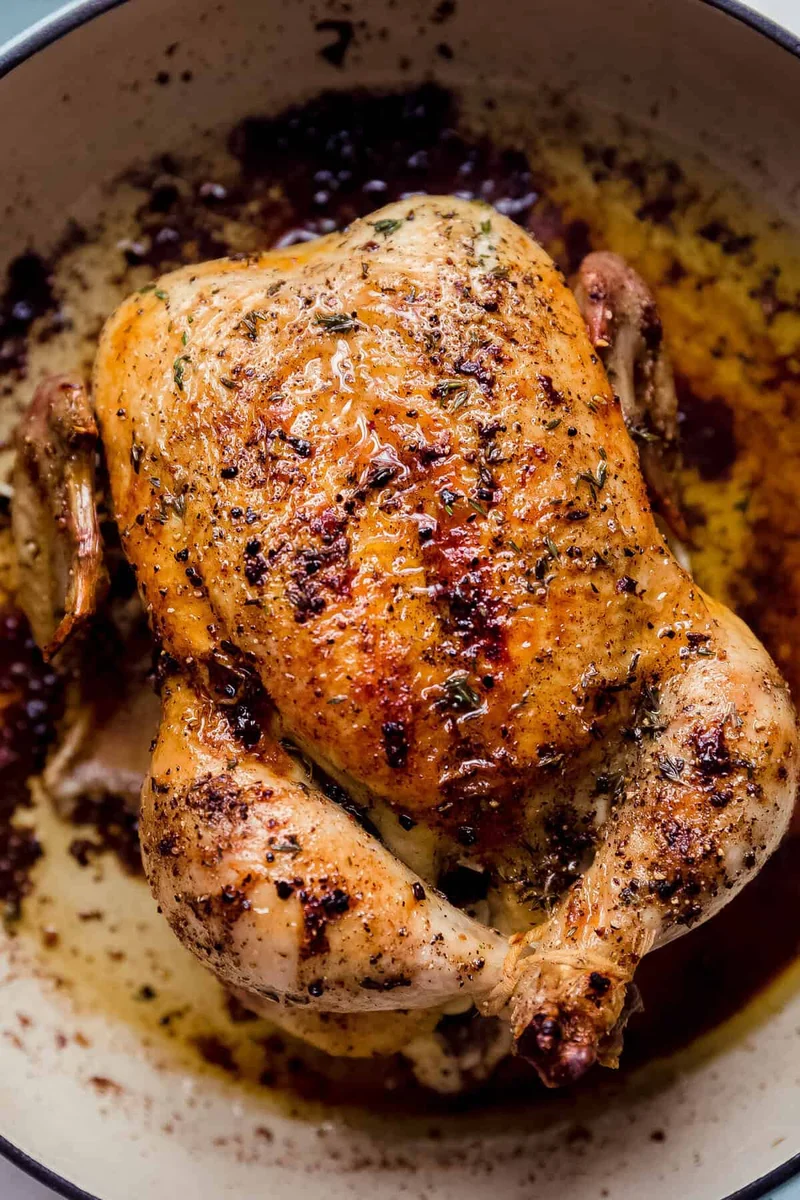
A whole chicken is roasted breast-side up with lemon, garlic and herbs in the cavity, then basted with butter for crisp skin and juicy meat. It makes a straightforward Sunday-style roast, with a thermometer to help you judge when it is done.
Ingredients
- 1.6–2 kg (3½–4½ lb)whole chicken, neck and giblets removed
- 1lemon, halved
- 1 headgarlic, halved
- A few sprigsthyme (or rosemary, parsley, sage or other herbs)
- 75 ml (5 tablespoons)salted butter, melted
- 10 ml (2 teaspoons)kosher salt
- 10 ml (2 teaspoons)lemon pepper seasoning, with no added salt
- 5 ml (1 teaspoon)fresh thyme leaves
Instructions
- 1
Prepare the chicken
Position a rack in the centre of the oven and heat it to 220°C (425°F). Pat the chicken dry with kitchen paper, then season the cavity with 2.5 ml (½ teaspoon) of salt. Put the lemon, garlic and herb sprigs inside. Set the chicken breast-side up in a large cast-iron skillet or oven-safe frying pan, and sprinkle the remaining 7.5 ml (1½ teaspoons) of salt over the outside.
- 2
Butter and season
Melt the butter in the microwave. Brush half of it generously over the chicken, keeping the rest for later. Sprinkle over the thyme leaves and lemon pepper seasoning.
- 3
Roast and rest
Roast for 20 minutes, then remove the pan from the oven and brush the chicken with the remaining butter. Return it to the oven for another 25 minutes. Insert a meat thermometer into the thickest part of the thigh; it should read 74°C (165°F). If needed, roast for a further 10–15 minutes. Take the chicken out and leave it to rest for 15–30 minutes before carving.
What is a whole roasted chicken?
A whole roasted chicken is cooked intact in the oven, then carved and served in portions. Roasting a bird this way is a familiar home-cooking tradition in many places, rather than a dish tied to one particular origin.
Here, lemon, garlic and herbs flavour the cavity while butter and lemon pepper season the outside. The two-stage basting and hot oven are intended to give the skin colour while keeping the meat tender.
Nutrition and macros by portion
The nutrition label shows one serving as written: 484 calories, 33g protein, 3g carbs, 38g fat.
| Portion | Adjustment | kcal | Protein | Carbs | Fat |
|---|---|---|---|---|---|
| Lighter | Less butter, more vegetables | 339 kcal | 23g | 2g | 27g |
| This serving | As written | 484 kcal | 33g | 3g | 38g |
| Hungry | Larger chicken portion | 726 kcal | 50g | 5g | 57g |
The chicken provides most of the protein, while the butter contributes much of the fat; the lemon, garlic and herbs add very little carbohydrate. Pair a portion with vegetables and potatoes or another starchy side for a more balanced plate.
Preparing the bird
Dry skin: pat the chicken thoroughly with kitchen paper before seasoning. Removing surface moisture helps the skin roast rather than steam.
Cavity aromatics: place the halved lemon, garlic and herb sprigs inside the chicken. They add aroma as the bird cooks, but are not a replacement for seasoning the meat itself.
Getting the butter on evenly
First coating: brush half the melted butter over the chicken before roasting, distributing it across the skin. Sprinkle on the thyme leaves and lemon pepper afterwards so they cling to the surface.
Second coating: keep the remaining butter for the midway baste. Use a pastry brush to reach the sides and any exposed areas.
Checking doneness
Thermometer check: insert the thermometer into the thickest part of the thigh and avoid touching bone. The recipe calls for a reading of 74°C (165°F).
Extra roasting: if it has not reached that temperature, return the chicken to the oven for 10–15 minutes, then check again. The time needed can vary with the bird and the oven.
Allowing time to rest
Resting: leave the roasted chicken for 15–30 minutes before carving, as directed in the method. Keep this resting period in mind when planning the meal; the stated cooking time does not include it.
Carving: transfer the chicken carefully to a board, then carve once it has rested. Serve the portions with some of the pan juices if desired.
What to serve alongside
Vegetables: serve with roasted potatoes, carrots or greens for a classic roast-style plate. A sharp salad can provide a fresh contrast to the buttery skin.
Sauce: spoon over the pan juices, or serve with gravy if you have it. Add bread or another side to make the meal more filling.
Recipe notes & tips
- Dry the skin well before adding the butter.
- Use a large oven-safe pan that can hold the chicken without crowding it.
- Measure out the salt before seasoning so you can reserve the stated amounts for the cavity and the outside.
- Keep the remaining butter aside for the midway baste.
- Check the thickest part of the thigh with a meat thermometer rather than relying on colour alone.
- Allow time for the chicken to rest before carving.
Variations
- Change the herbs: use rosemary, parsley or sage in place of thyme sprigs.
- Add garlic aroma: tuck the halved garlic into the cavity as directed.
- Use unsalted butter: keep the listed salt quantity and choose lemon pepper seasoning with no added salt.
- Add a fresh side: serve with a crisp salad alongside the roast.
- Make it a roast dinner: add potatoes and vegetables as separate accompaniments.
Common mistakes to avoid
- Leaving the skin damp: pat it dry before buttering so it can roast properly.
- Using all the butter at once: reserve half for the second baste.
- Skipping the thermometer: check the thickest part of the thigh for 74°C (165°F).
- Touching bone with the thermometer: reposition the probe in the thickest meat for a useful reading.
- Carving straight away: rest the chicken for 15–30 minutes first.
- Forgetting the resting time: allow for it in your meal schedule, as it comes after roasting.
How to store
Refrigerate leftover chicken in a covered container within 2 hours and use within 3–4 days. Reheat portions until steaming hot throughout, or use the cold meat in salads and sandwiches.
Frequently asked questions
Can I use dried herbs instead of fresh thyme?
The recipe specifies fresh thyme leaves and sprigs of herbs for the cavity. You can use another fresh herb for the sprigs, such as rosemary, parsley or sage.
How do I know when the chicken is cooked?
Check the thickest part of the thigh with a meat thermometer. The recipe gives 74°C (165°F) as the target reading.
What if the chicken is not ready after 45 minutes?
Return it to the oven for an additional 10–15 minutes, as the method directs, then check the thigh temperature again.
How long should the chicken rest?
Rest it for 15–30 minutes before carving.
Can I prepare the chicken ahead?
You can pat it dry and prepare the lemon, garlic and herbs ahead, then refrigerate them separately. Season and roast the chicken when you are ready to cook.
Cook it from the original
This recipe comes from littlespicejar.com. Their page has the author’s own photos, notes and tips — the best place to cook it from.
Open the recipe on littlespicejar.com